

The dignity of labor: the invisible hands that hold up the world
Why every honest job deserves respect, why we stopped noticing those who carry the world on their shoulders, and what a society that scorns manual work loses.
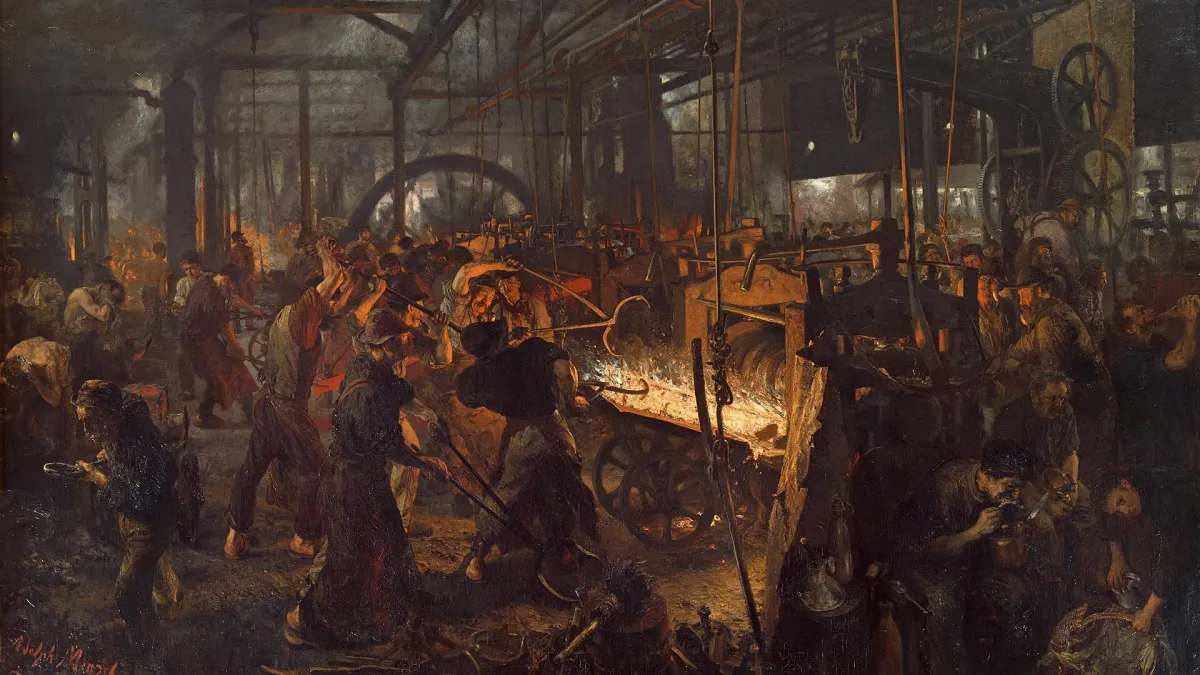
Almost everything around you was made by someone’s hands. The bread, the road, the wall, the light in the room, the screen you are reading this on — behind every object stands a person whose face you will never see. A century and a half ago Menzel painted these people beside molten metal — and reminded us of what we have unlearned to notice.
The world rests on those who are not shown
We know the names of performers, officials, and bloggers, but not the name of the one who brought water into our home or assembled the machine our clothes were made on. Their labor becomes visible only when it suddenly is not there: when the lights go out, transport stops, there is no one to bake bread. Society is like a building: the façade gleams on top, and it is held up by those below, in the concrete and rebar — quietly and unseen.
Contempt for manual work is a costly mistake
There is a dangerous ladder in our heads: “mental labor” at the top, “physical” somewhere at the bottom. But this ladder lies. A surgeon, a welder, and a baker do different things, but equally necessary ones, and skill of the hands is not a “lower” form of intelligence, merely another. A people that taught its children to be ashamed of working with their hands one day finds it has unlearned how to build, to repair, and to feed itself — and is forced to buy from others what it could make on its own. Respect for labor is not sentimentality but a condition of survival.
“All labor that uplifts humanity has dignity and importance.”
— Martin Luther King Jr.
My opinion: ask yourself whose work you last noticed and thanked. The street sweeper, the driver, the shopkeeper, the repairman? We are used to thanking for the grand and overlooking what every day of ours stands on. A person’s dignity lies not in whether their hands are clean or calloused, but in whether they do their work honestly. And a society grows up when it begins to respect not only those at the top, but those who hold it up.
Cover: Adolph Menzel, “The Iron Rolling Mill” (1875).
Comments (0)
Log in to leave a comment →
No comments yet. Be the first.