Shanraq’s open course teaches Python through one continuous project. Learners collect data from official sources, validate and analyse it, then turn their work into a reproducible report. Here is who the 57 lessons are for, how the learning path works, and why money is a subject to investigate rather than a conclusion supplied in advance.
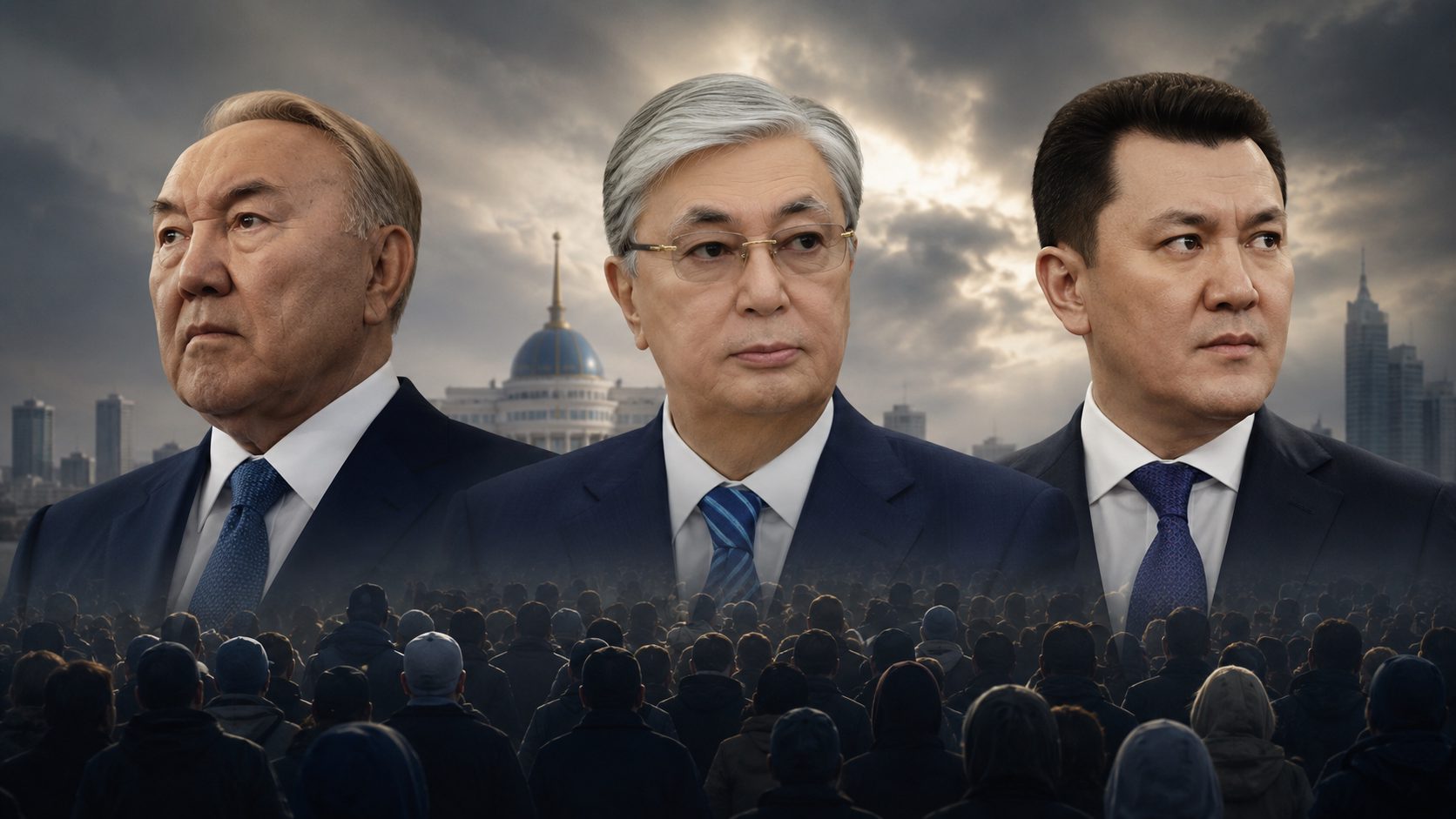
On 31 August the Kurultai confirmed Erlan Karin as Kazakhstan's first vice-president by 141 votes of 145. He is now first in line for power. He was chosen not for what he has but for what he lacks: no party, no business, no mandate — all of it forbidden to a vice-president by law.
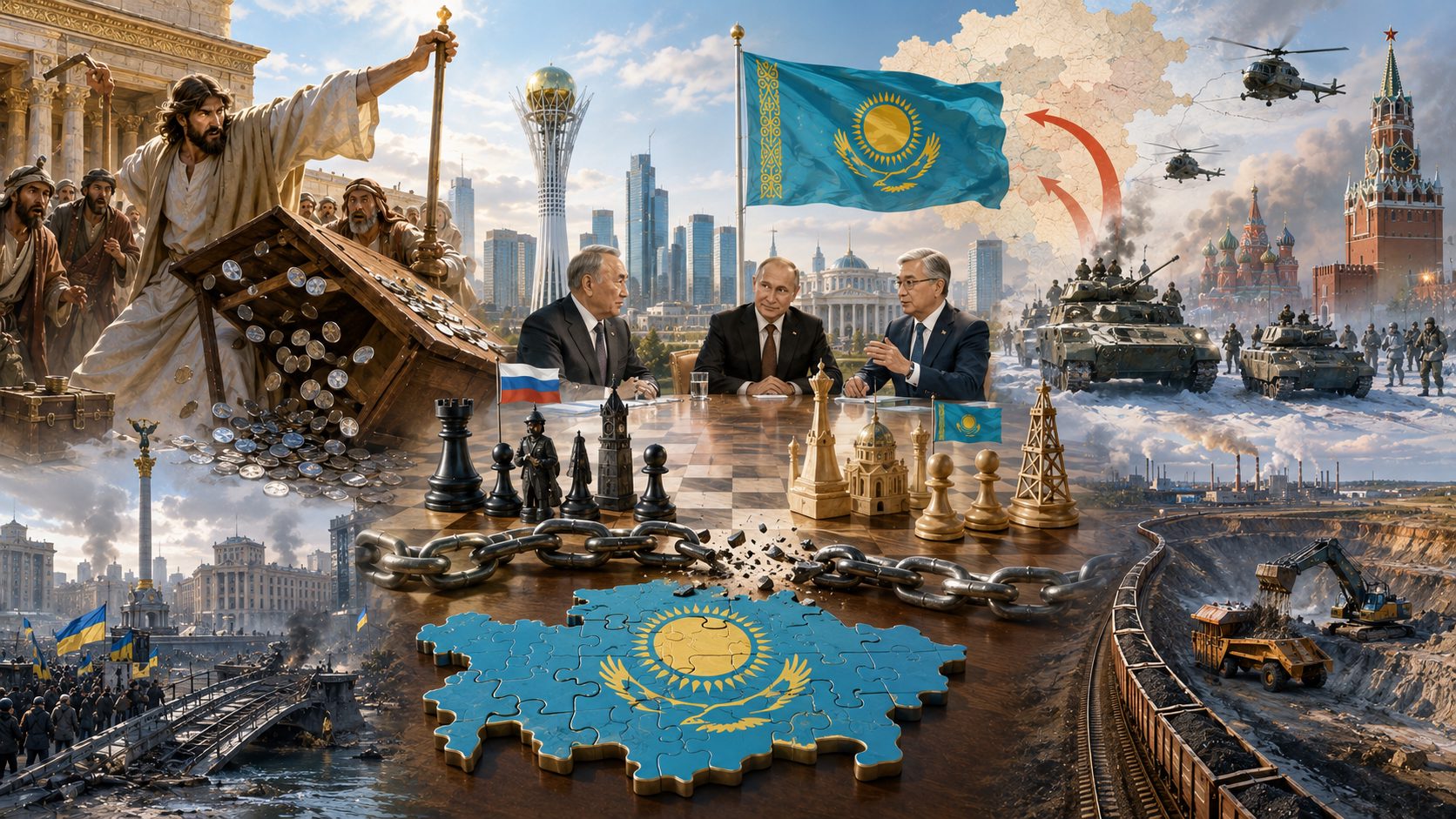
Crimea in 2014, January 2022 in Kazakhstan and Russia's blitzkrieg against Kyiv are usually examined separately. They are links in one chain, and our regions from Kostanay to East Kazakhstan stood next in it. The chain did not break in talks or under sanctions. It broke outside Kyiv.
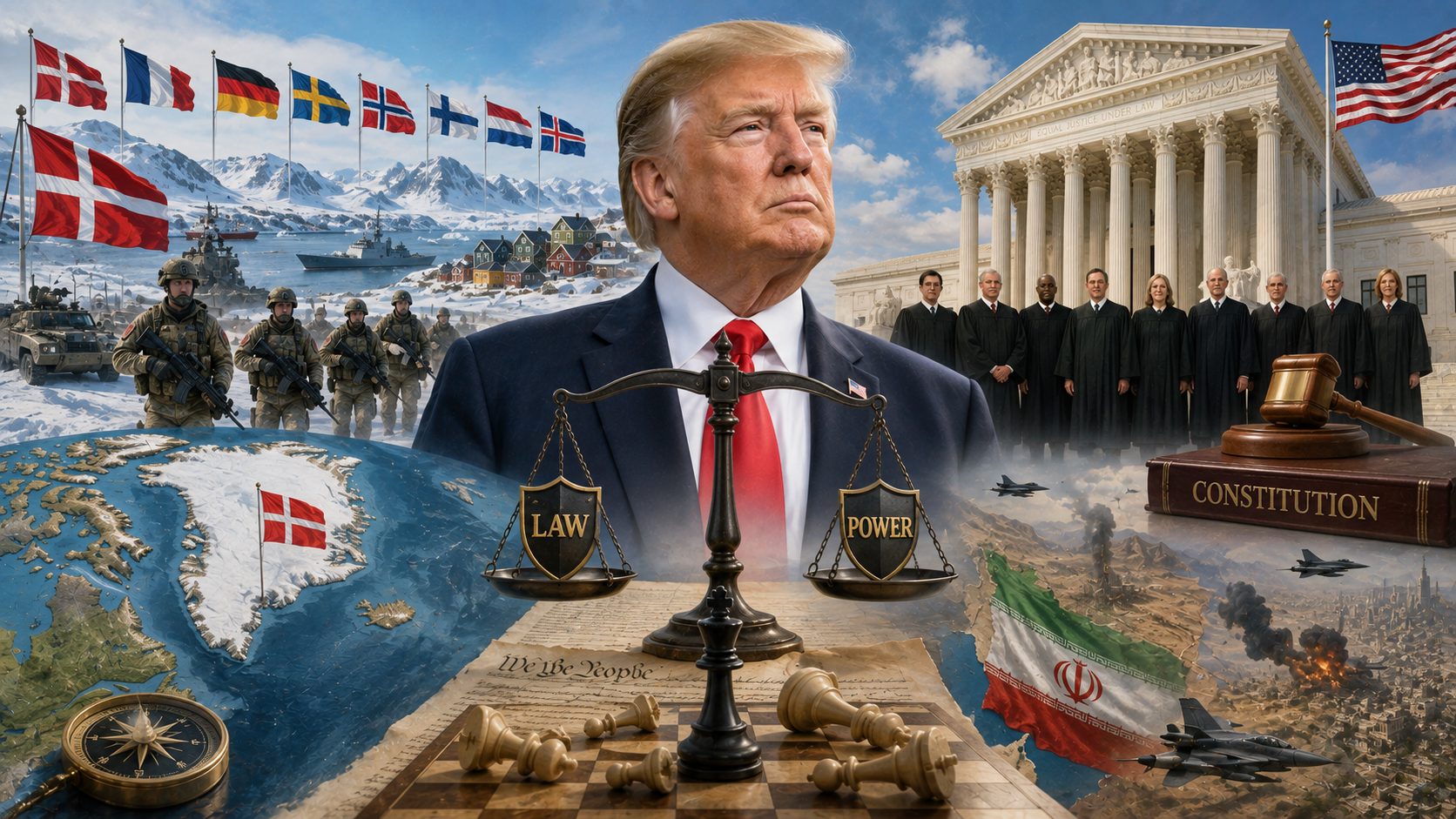
For weeks he refused to rule out military force against Greenland. European troops arrived and eight governments publicly backed Denmark. On 21 January he ruled force out. Greenland, tariffs, Iran, a third term — four times he reached a wall, and not once did he stop himself.
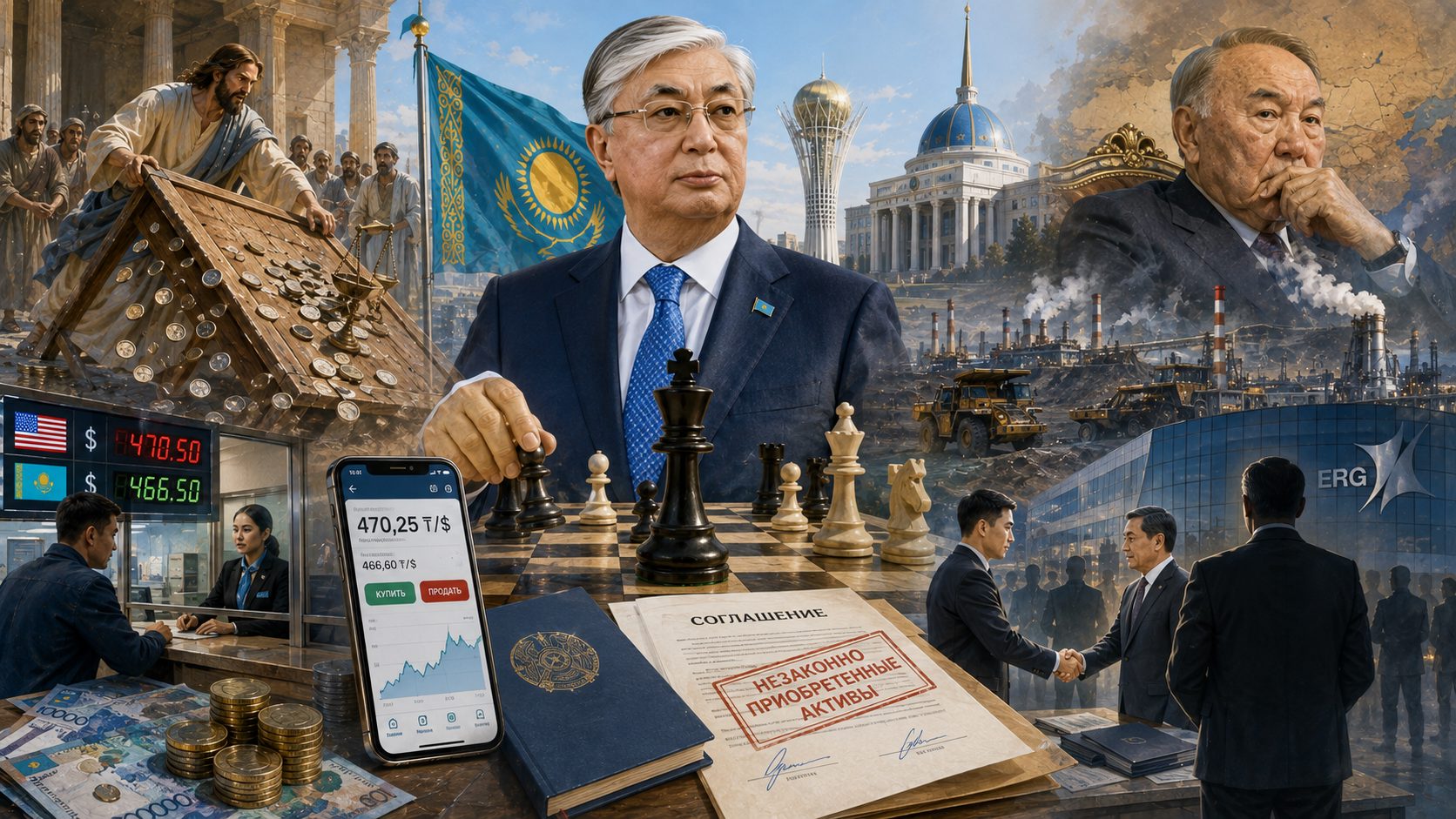
In three months Tokayev gained the right to rule until 2036 and a vice-presidency he fills himself, one that inherits power without an election. In the same months 40% of ERG changed hands for 1.4 billion dollars, to a man of thirty-five. The state has called these assets illegal — and is negotiating the price.
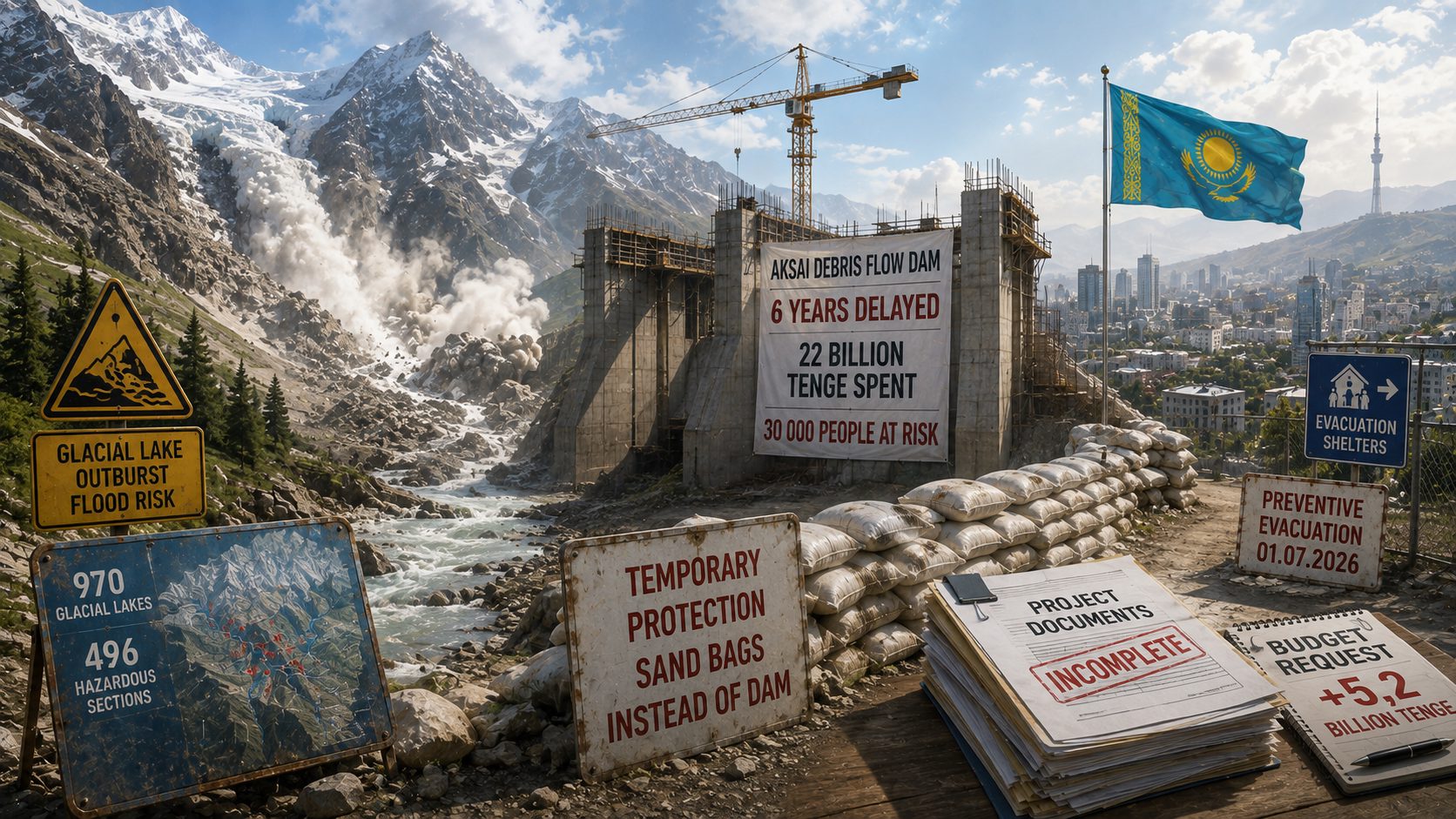
A glacier collapse in Nepal killed more than 350 people, with almost no warning possible. The mudflow dam above Almaty is the opposite: its danger is known in advance. It should shield thirty thousand people, and has stood unfinished for six years. 22 billion tenge spent, the site mothballed, its bank reinforced with sandbags.
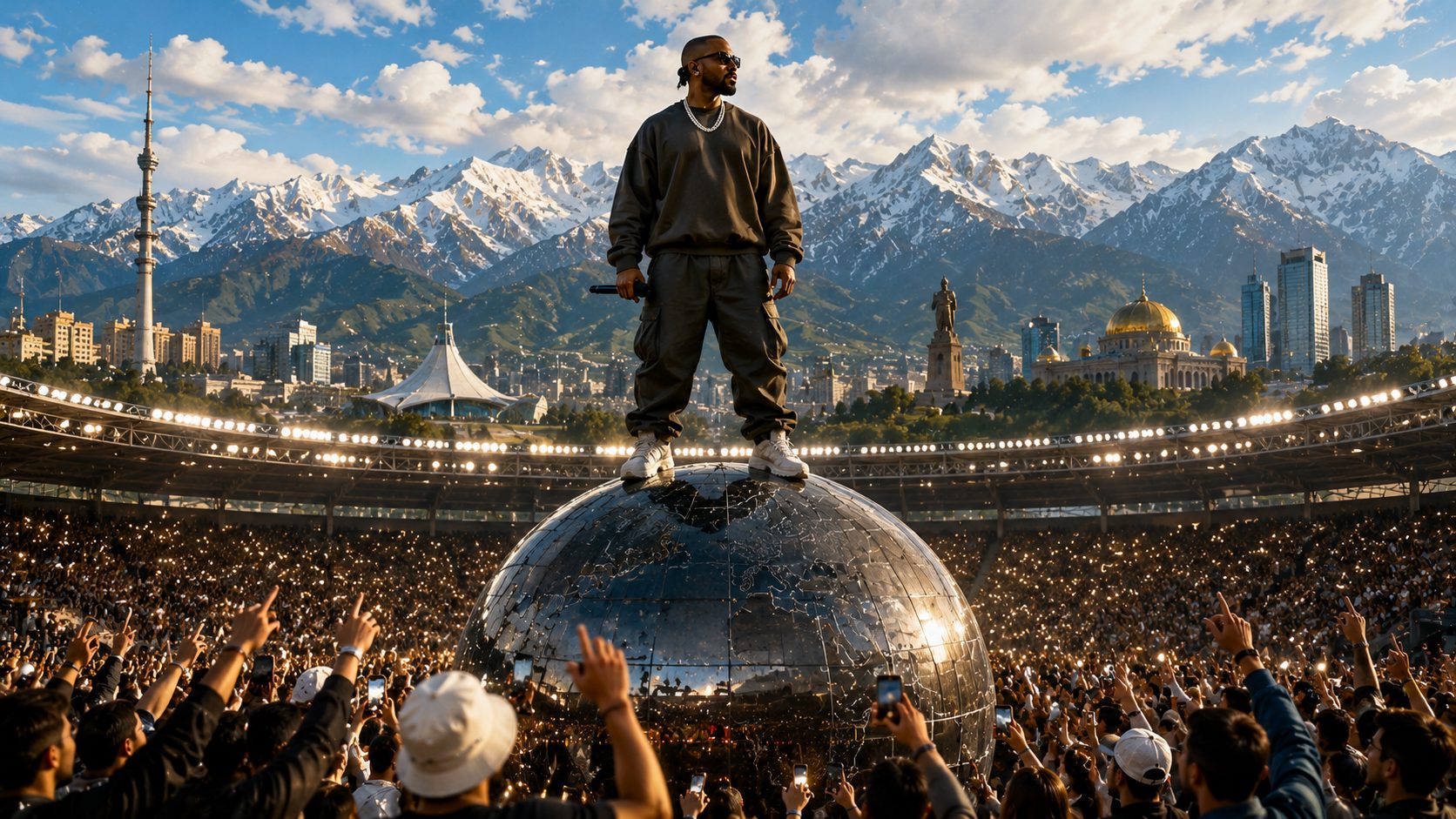
Britain, Australia, Poland and Switzerland each said publicly why they would not let Ye in. On 15 August he walked onto the Central Stadium in Almaty: 31,000 people, five billion tenge. He played the old hits — nothing he was barred for. What Kazakhstan argued about for a week was the grass.
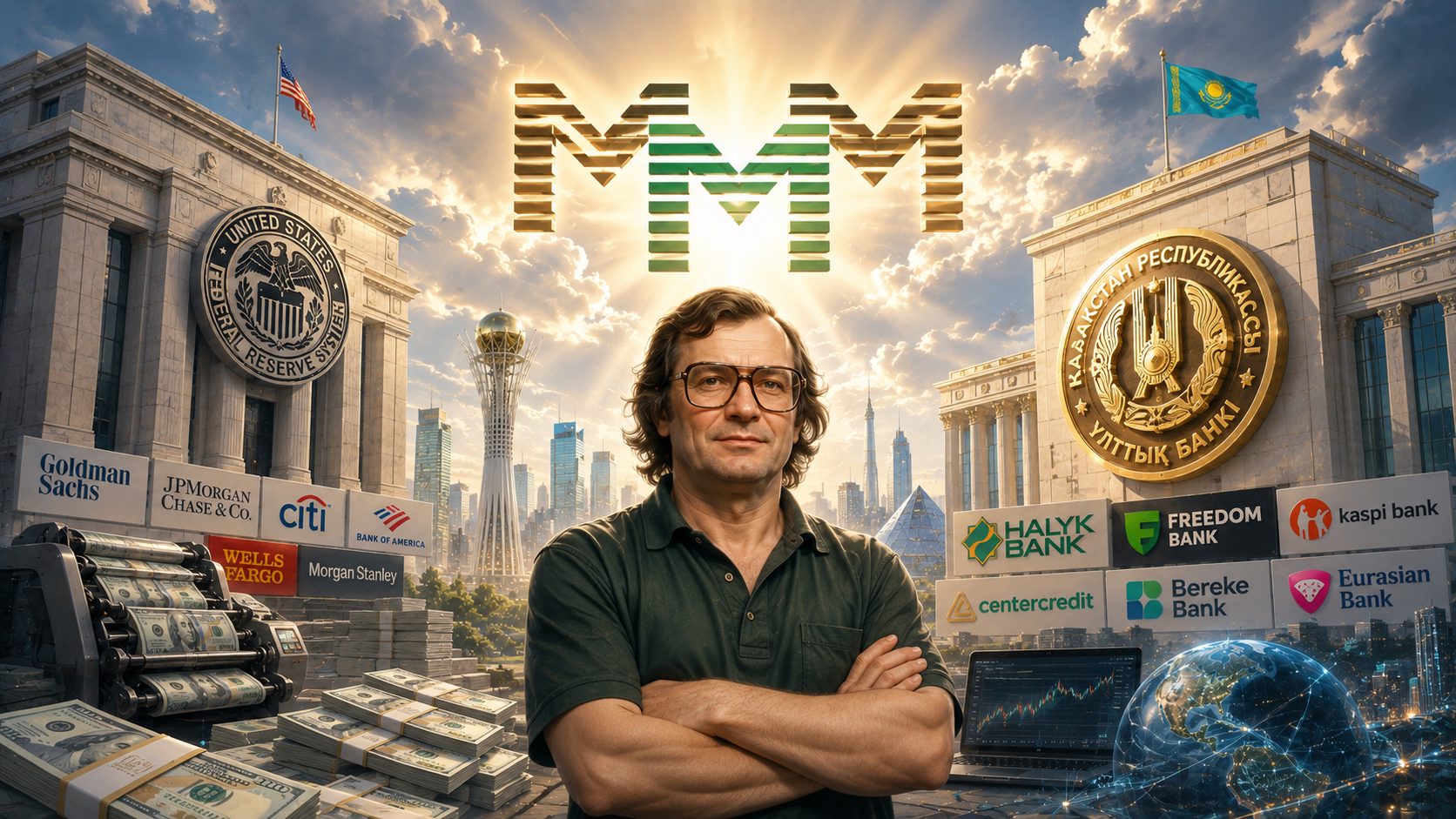
Mavrodi set the price of his own tickets twice a week, and his pyramid did not collapse — it was stopped from outside. He was seventy-six years late: the initials MMM already belonged to a Federal Reserve workbook describing how banks make money out of thin air. The US national debt stands at 40 trillion.
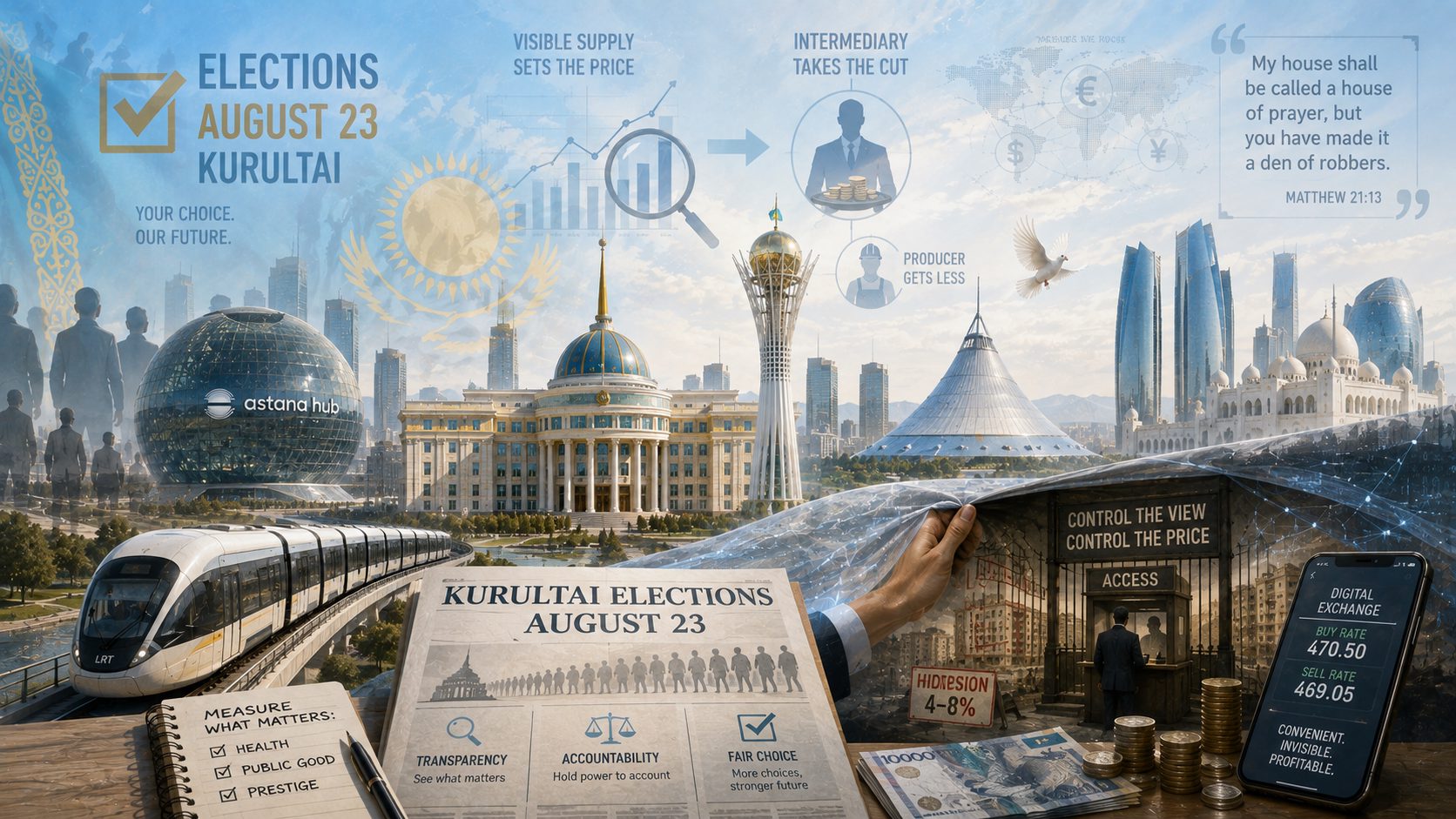
Why rents rise when no apartment has disappeared, and why power grows dearer when there is nobody to replace it. The mechanism is one and the same, uncovered on airline screens in 1981: price is set not by how much exists but by how much is visible. The earnings go not to whoever produces, but to whoever stands in the doorway.
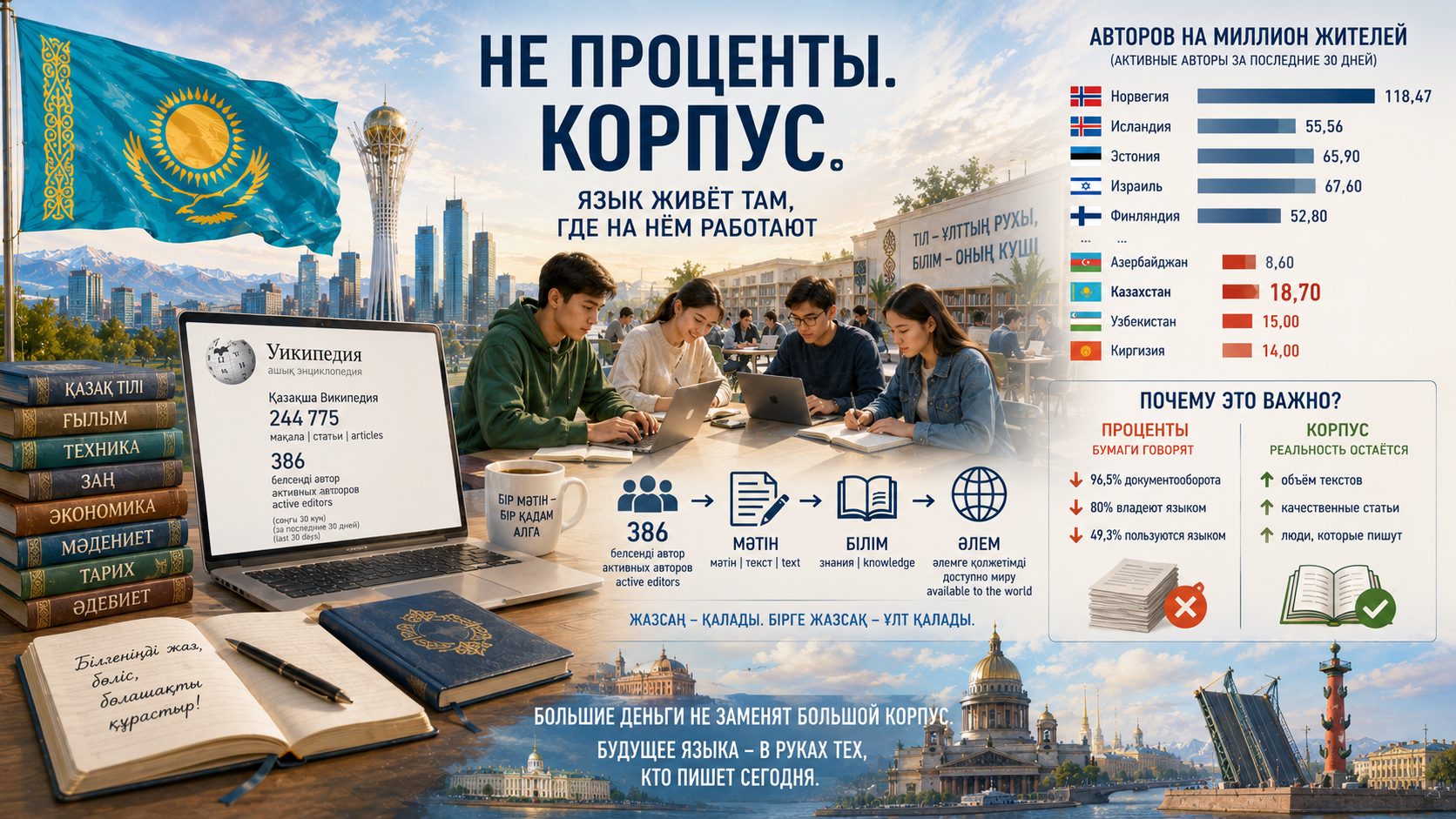
A language was safe as long as enough people spoke it. That rule has stopped working: machines learn from text, and a machine's ability to speak a language depends on how much has been written in it. Iceland, with 386,000 people, has 215 active encyclopedia editors; Kazakhstan, with twenty million, has just 386.
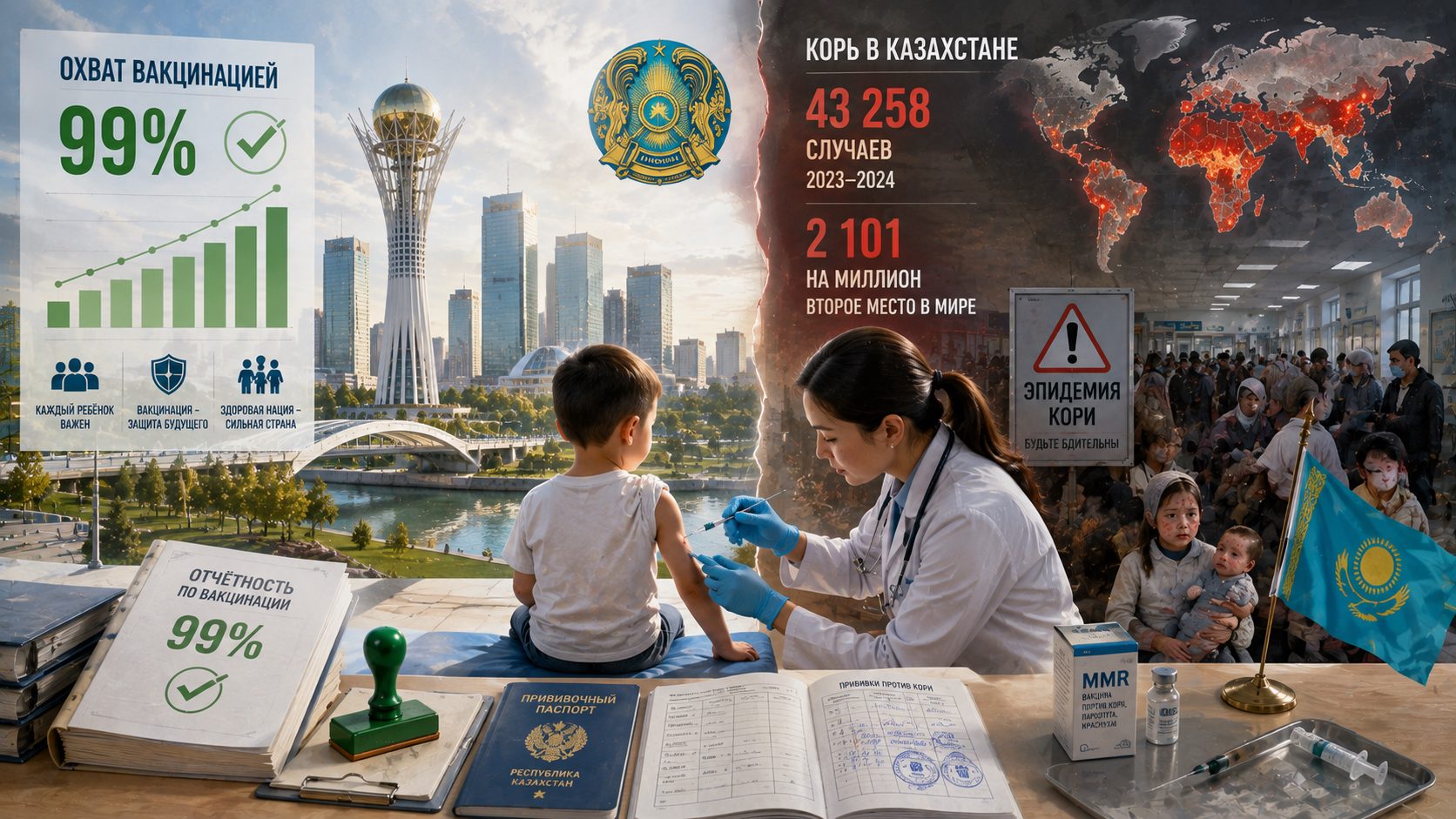
The WHO records 15,111 measles cases in Kazakhstan for 2023 and 28,147 for 2024 — forty-three thousand people. Beside that stands the official vaccination coverage figure: 99%. The two do not add up. We recounted the whole world and examine how the discrepancy surfaced and what it says about official reporting.
On 5 December 1994 in Budapest three near-identical papers were signed — with Ukraine, Kazakhstan and Belarus. Ukraine gave up 1,900 warheads, Kazakhstan 1,410. Both started from the same point: $1,483 per head there, $1,442 here. The difference turned out not to be money, but whether power ever retreated before the street.
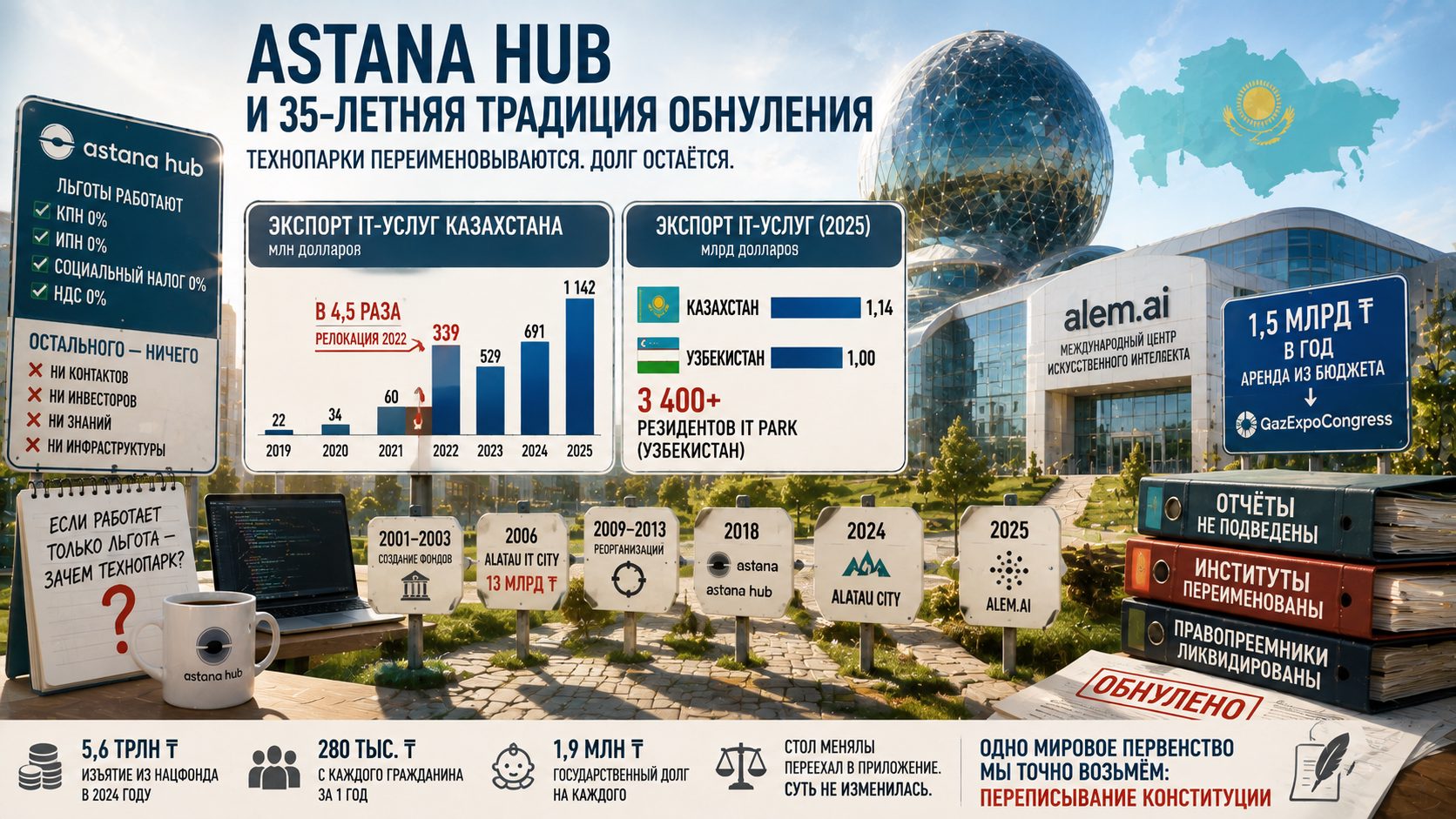
I am a member of Astana Hub, and I will say it plainly: the tax exemption works and a startup needs it — the rest gave me nothing. Hence the question: if only the exemption works, why does it need a technology park, a building and 1.5 billion tenge of rent a year? And why has no such project been audited in thirty-five years.
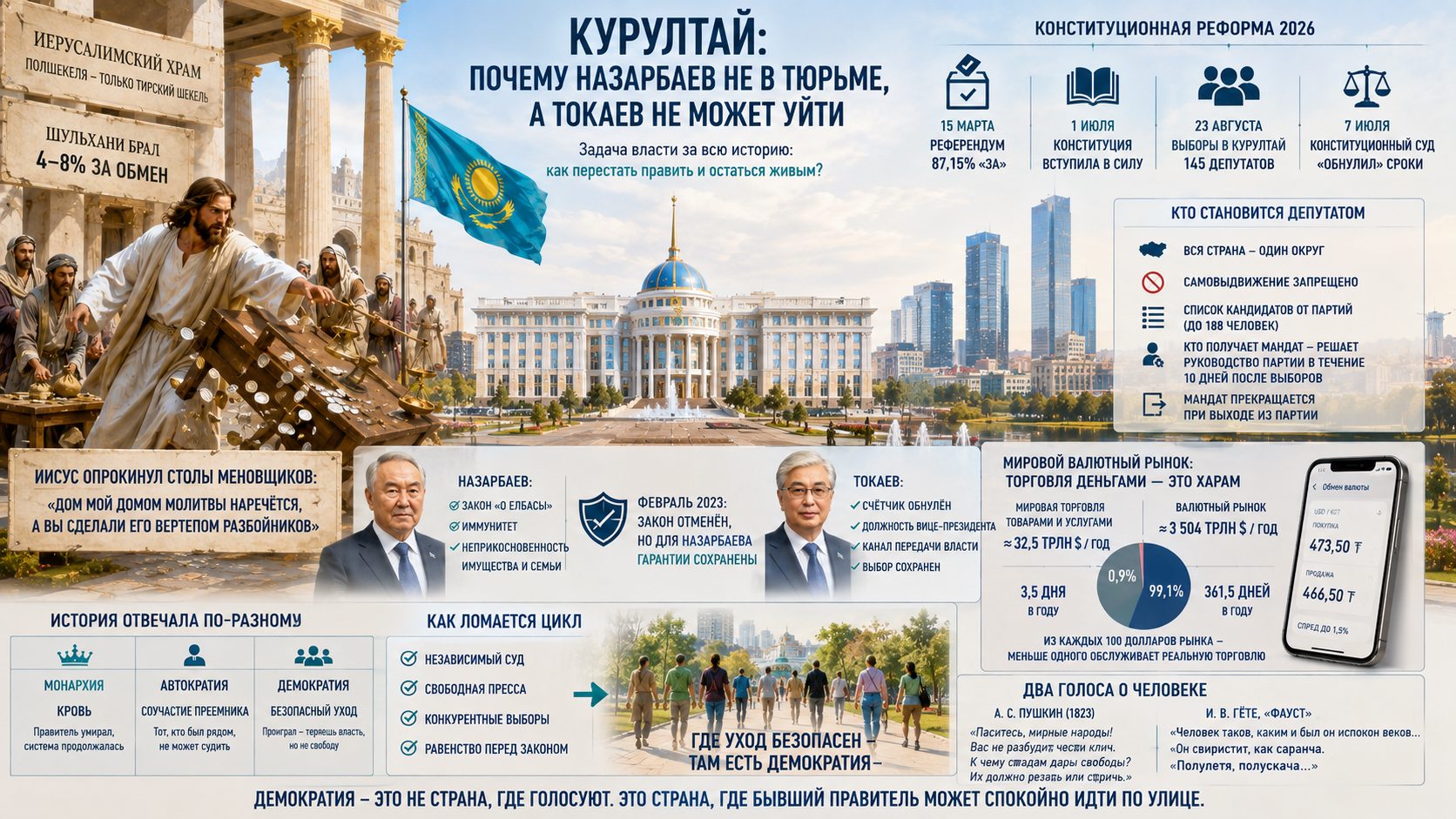
On 23 August Kazakhstan elects its Kurultai for the first time — a single-chamber parliament under a new constitution in which some 84% of the text was rewritten. The argument is about the reset of presidential terms, but that is a consequence. No system has solved how a ruler stops ruling and survives.
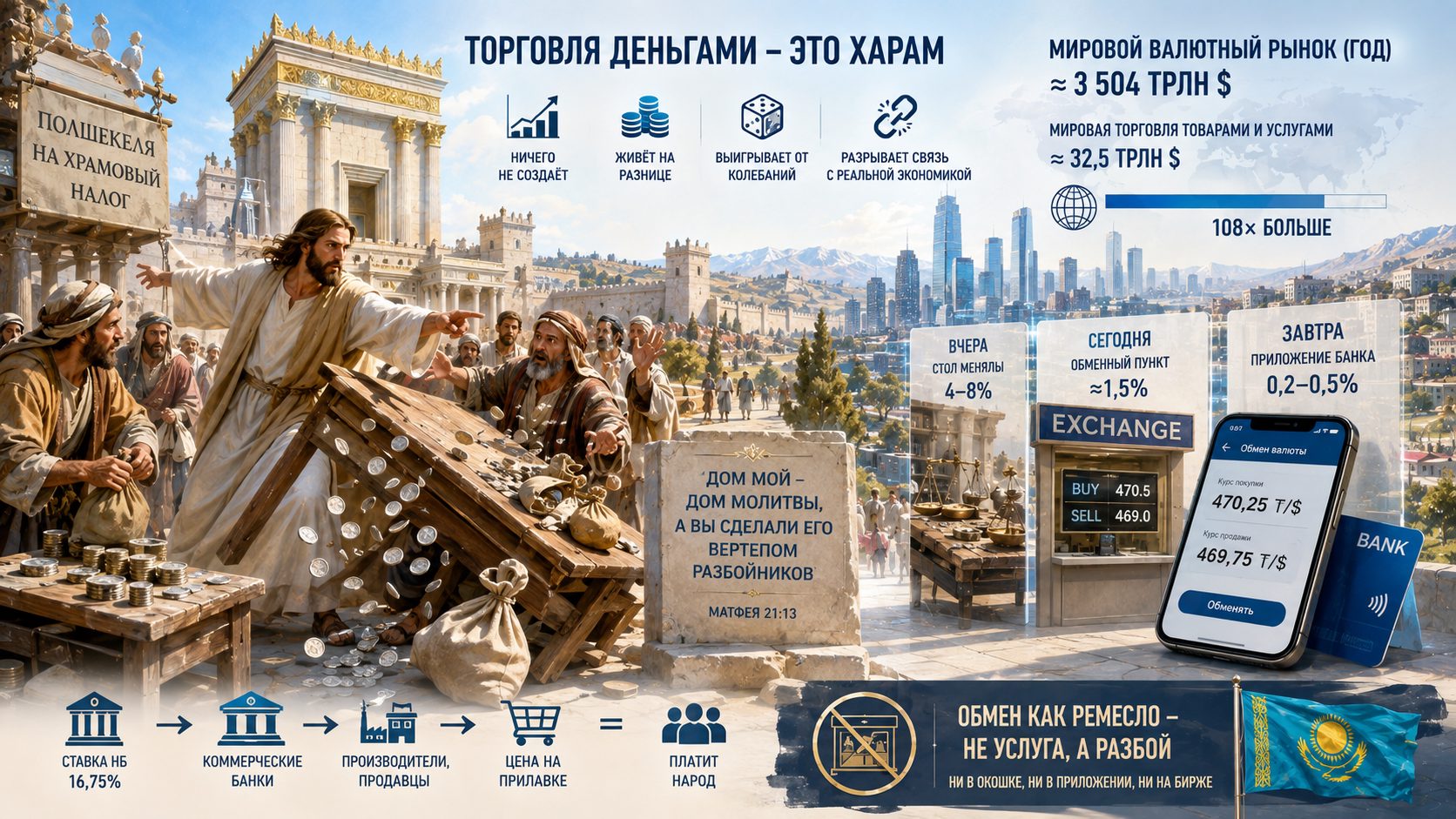
The shulhani was the money changer at his table in the Temple of Jerusalem, swapping foreign coin for the Tyrian shekel — the only currency the temple tax could be paid in. He took four to eight per cent and produced nothing: his income came from the fact that somebody else's payment was compulsory. Jesus overturned his tables.
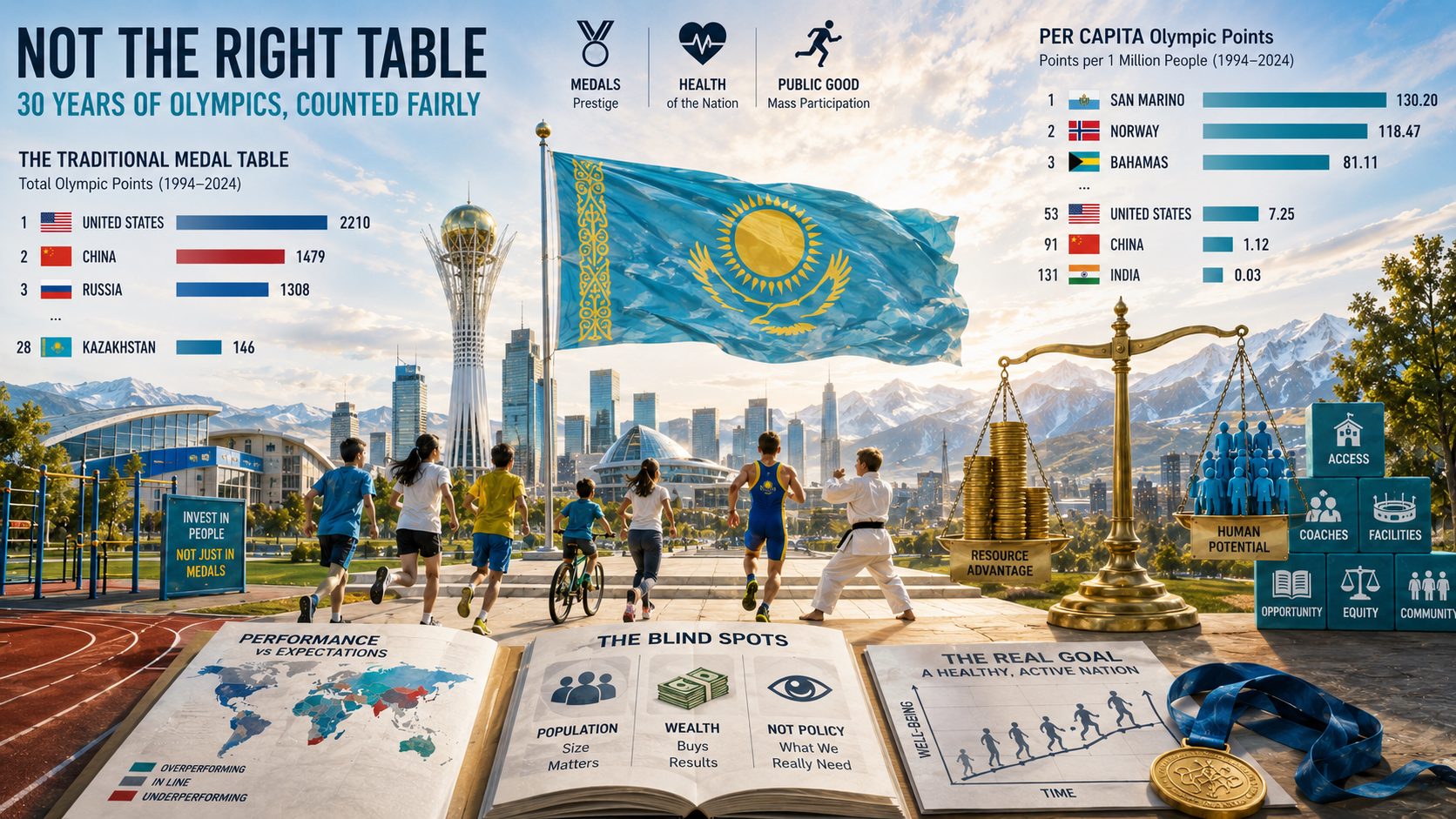
The medal table measures the size of a country before anything else: economists showed the result is predicted almost entirely by population and GDP. We recalculated all sixteen Olympics from 1994 to 2024 per head of population — the United States falls from 1st to 53rd, China from 2nd to 91st, India lands 131st of 132.
People have argued about Palantir for twenty years, but about the wrong thing. It started in 2003 on money from the CIA's venture fund and hides nothing about what it does — its chief executive says so publicly. What matters is not the founders' rhetoric but the charter: one class of shares gives them 49.999999% of the vote.
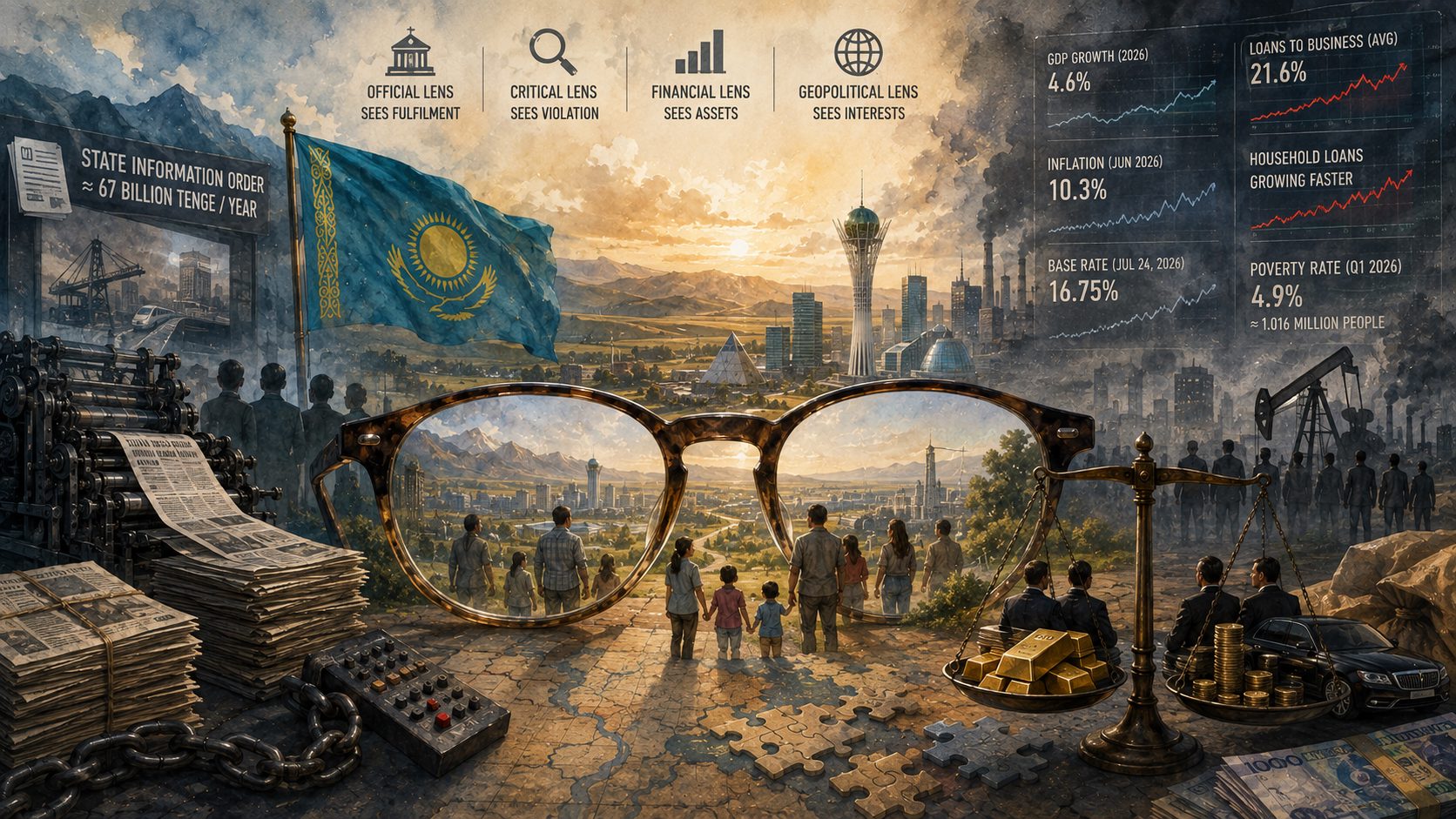
Four lenses write about Kazakhstan — the official, the critical, the business and the geopolitical — and each is built not to notice something. We gather the figures without a lens and examine what none of them sees: the country measures its summit, while the strength of an economy is decided at its floor, not its peak.
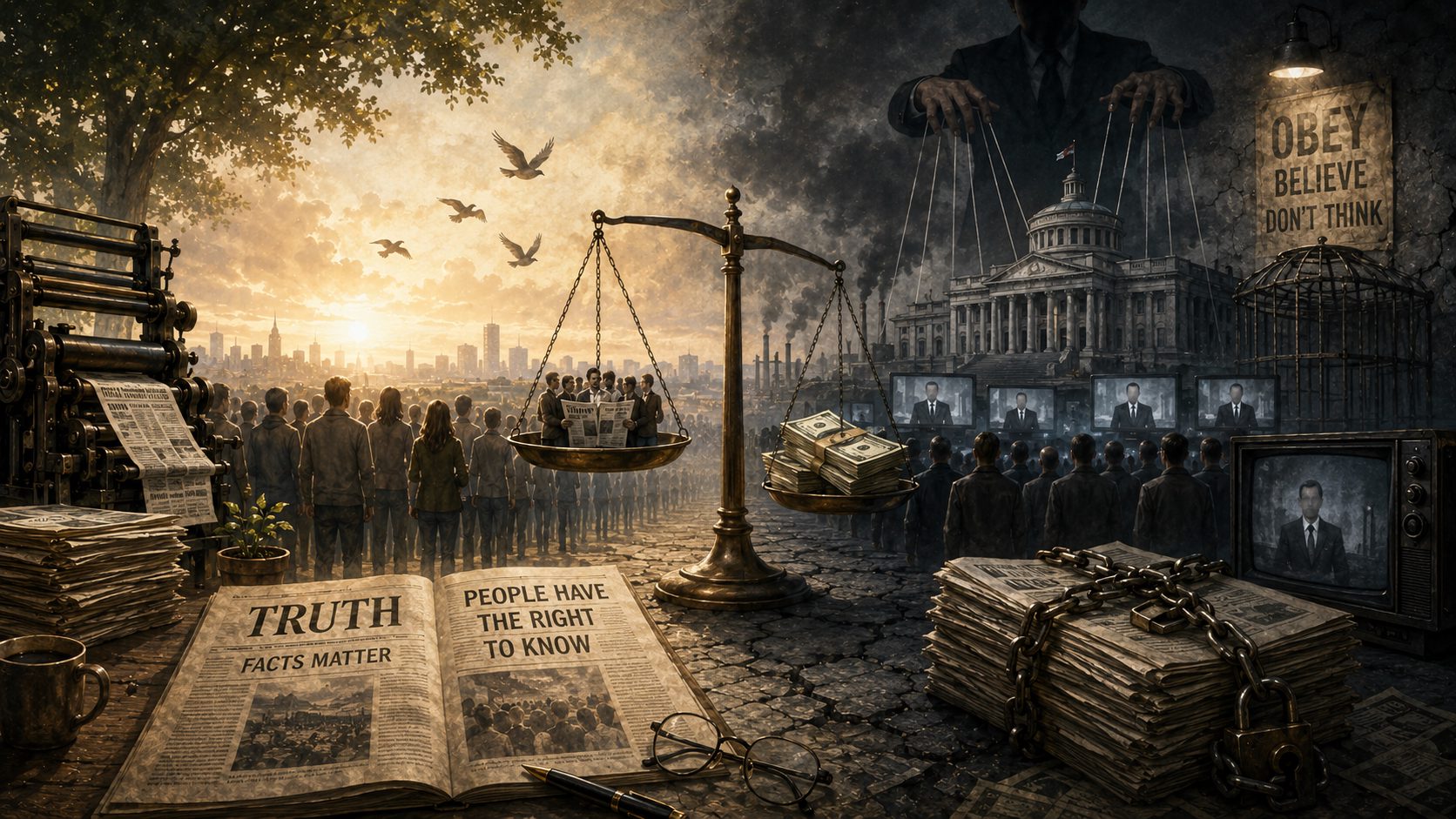
Kazakhstan's state information order runs to about 67 billion tenge a year, while schools, hospitals and local administrations are still handed subscription quotas from above. What that money buys, how support for the press differs from a leash, and why the famine and Semipalatinsk are stories about a silent press.
From the height where borders disappear, no war looks like a clash of good and evil. The mechanism is always the same: a people is told it is chosen, the chosenness is sanctified by race, nation or God, and then they are sent to die for somebody else's wealth. Goering at Nuremberg, and where the machine breaks.
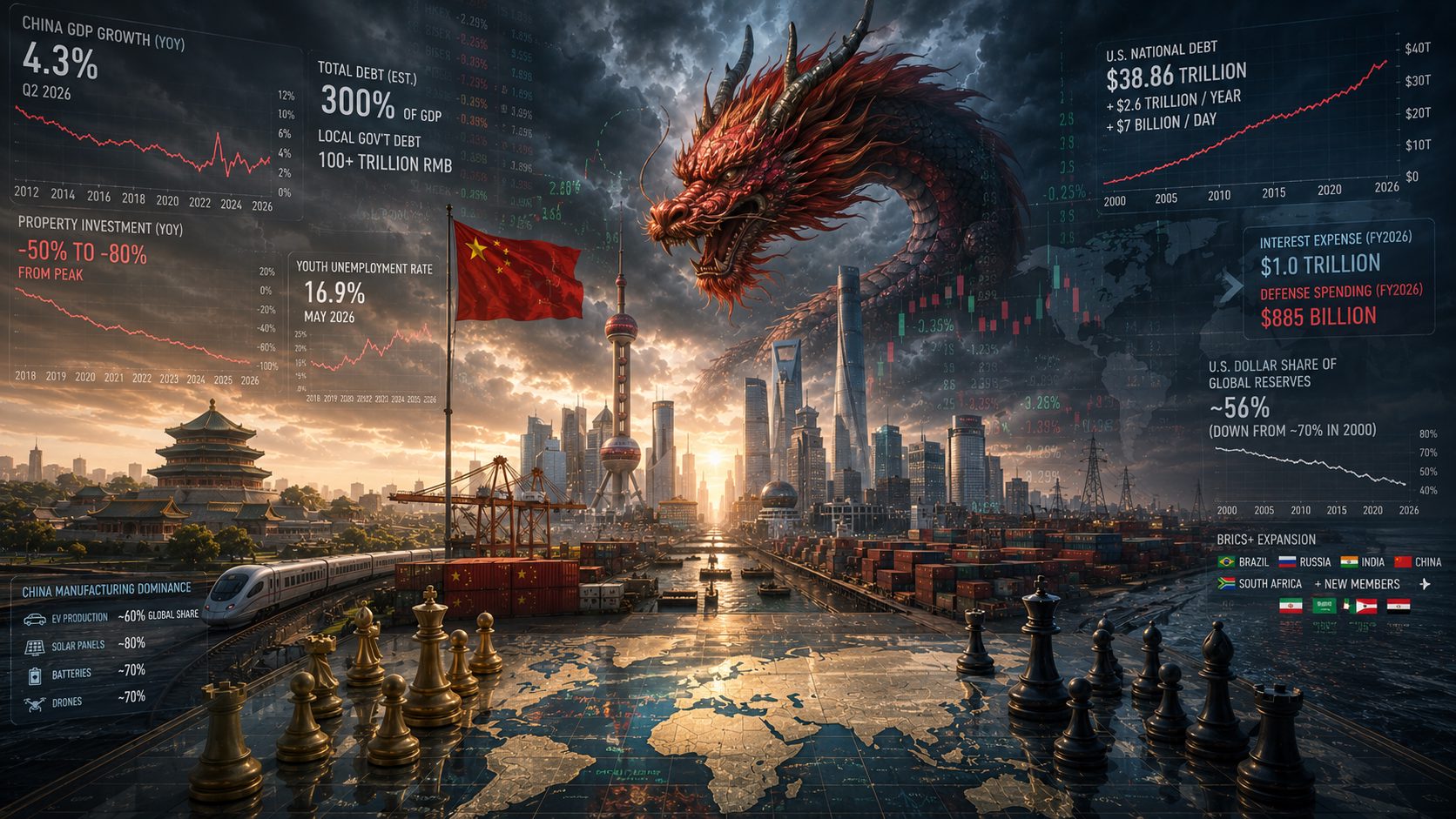
For thirty years the argument was when China would overtake America; in 2026 the question is whether it has already passed its peak. A rising power is patient; one that suspects time is against it becomes impatient. Four camps of experts and the blind spot of each, an independent diagnosis, and a forecast for 2026-2036.


 Society