

FAO says 1.56 billion hectares are degraded: why forest restoration is about food and income
FAO's new report estimates 1.56 billion hectares of degraded land, including 460 million hectares of forest land. Ninety-one countries have pledged to restore 190 million hectares, linking the task to food security, rural income, climate resilience and wildfire protection.
Forests are part of the food system
FAO presented the 2026 State of the World’s Forests report at the opening of its 28th Committee on Forestry session. The organization estimates that 1.56 billion hectares of land are degraded worldwide, including 460 million hectares of forest land.
The connection to food is direct. More than five billion people rely on forests to some extent for their livelihoods. In some forest-dependent communities, forest foods provide up to 80% of daily protein and half of all food by weight.
What trees provide beyond forests
Forests and trees protect soil, support pollinators, cycle nutrients, provide fodder and shade, and buffer crops and animals from extreme weather. Much of that value is missing from market prices and national statistics.
FAO and partners identify more than 50,000 wild species used for food, medicine, materials or energy, including at least 10,000 species eaten as food.
The scale of restoration
Ninety-one countries have committed to restore 190 million hectares of degraded forests. The 2030 targets remain difficult, but FAO describes restoration as a strategic investment in rural development, resilient food systems and the environment.
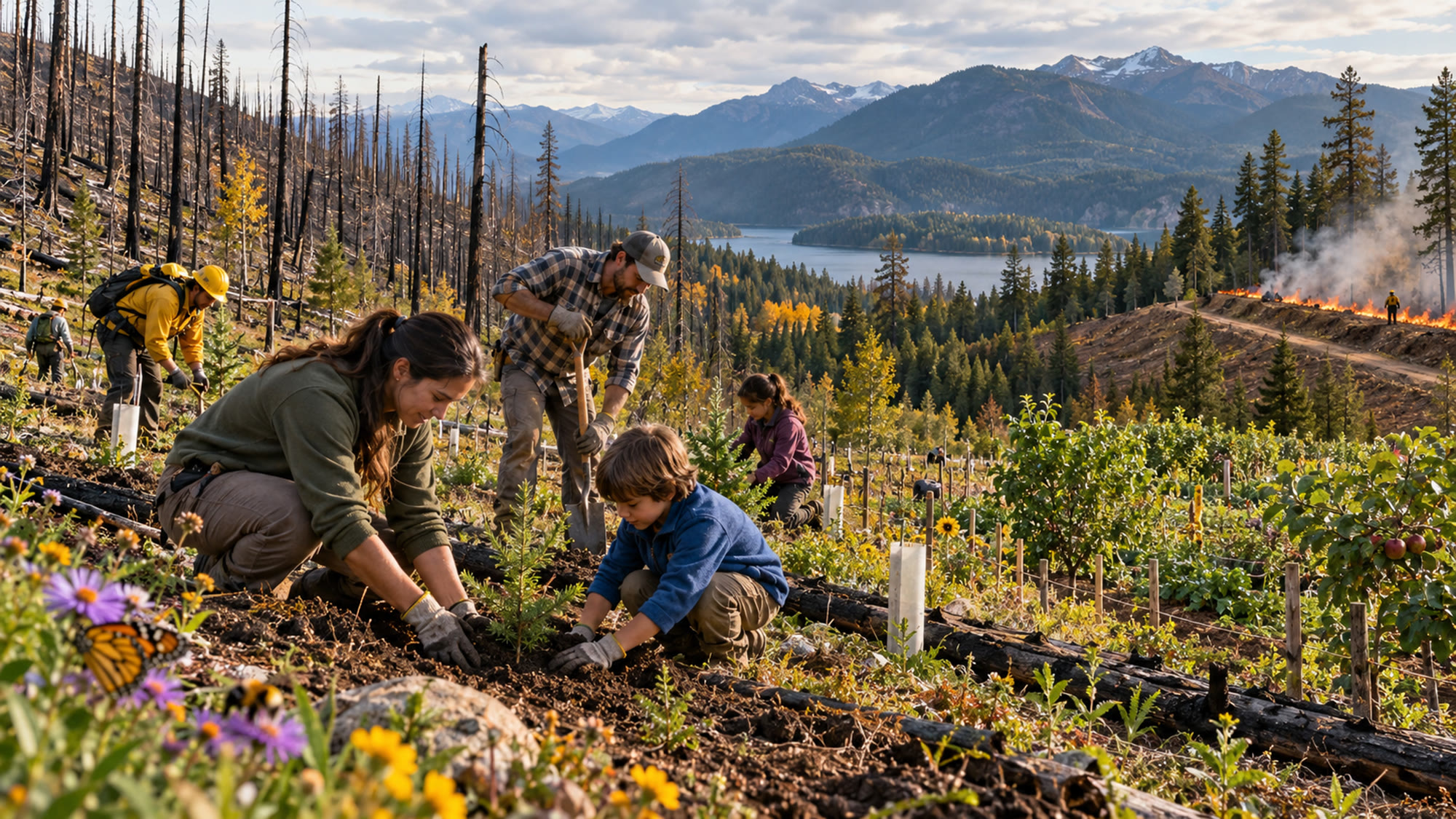
Restoration is more than planting identical trees in rows. Projects must account for native species, water, soil, wildfire risk and the people who use the land. Otherwise seedlings die and the project survives only as a reported number.
Wildfire is a separate risk
FAO says wildfires affect at least 127 million hectares of forest each year and are becoming more frequent and severe in many regions. Restoration must therefore include prevention through firebreaks, early detection, management of dry vegetation and cross-border cooperation.
For Kazakhstan the lesson is practical: shelterbelts, saxaul, mountain forests and urban green zones serve different purposes and need different care. Success should be measured by survival after three to five years, soil condition, reduced fire damage and benefits to local residents.
Source: Food and Agriculture Organization of the United Nations.
If you have found a mistake or a typo in this article, tell us about it
Comments (0)
Log in to leave a comment →
No comments yet. Be the first.