

AI without an LLM: build your own AI model Lesson 27 of 30
Lesson 27. Check misspellings and unrelated topics
A receptionist checks a visitor’s name against a list. If the name is unclear or two passes are requested at once, the receptionist asks rather than guessing. Our classifier should likewise stop on an unknown word, a typo, or a question asking for both time and place.
Why this matters
A receptionist checks a visitor’s name against a list. If the name is unclear or two passes are requested at once, the receptionist asks rather than guessing. Our classifier should likewise stop on an unknown word, a typo, or a question asking for both time and place.
Before the code
examples.json contains the 13 open training and tuning cards from lesson 24; test labels stay out. The code learns the same counts and adds an input guard. The club_forms dictionary links two known name forms to their stems: шахматтың → шахмат and суреттің → сурет. This is a small closed bridge from the morphology in lessons 9–11 to the final system, not a general analyzer. Braces without colons make a set named allowed: it holds permitted words, while in and not in test membership. def classify(question): defines a reusable function with question as its input. return ends that function and returns a result dictionary. if __name__ == "__main__": runs examples only when this file is executed directly; importing classify from another file does not print them. These are Python’s special names; leave them unchanged.
Files in this step: examples.json, checks.py.
From the project root, enter the step folder and run the program:
cd course/kazakh-ai/step-27
python3 checks.py
On Windows, replace python3 with py.
import json

with open("examples.json", encoding="utf-8") as file:
    rows = json.load(file)
weights = {}
club_forms = {"шахмат": "шахмат", "шахматтың": "шахмат",
              "сурет": "сурет", "суреттің": "сурет"}
for row in rows:
    if row["split"] == "train":
        words = row["text"].lower().replace("?", "").split()
        for word in words:
            for feature in [word, word[:4]]:
                if feature not in weights:
                    weights[feature] = {"уақыт": 0, "орын": 0}
                weights[feature][row["label"]] += 1


def classify(question):
    text = question.lower().replace("?", "").replace(",", "").replace(".", "")
    words = text.split()
    allowed = set(club_forms) | {"қашан", "қайда", "уақыты", "орны", "өтеді", "болады"}
    for word in words:
        if word not in allowed:
            return {"status": "refuse", "reason": "білмеймін: таныс емес сөз"}
    words = [club_forms.get(word, word) for word in words]
    clubs = []
    for word in words:
        if word in ["шахмат", "сурет"]:
            clubs.append(word)
    if len(clubs) != 1:
        return {"status": "refuse", "reason": "нақтылаңыз: бір үйірме керек"}
    scores = {"уақыт": 0, "орын": 0}
    for word in words:
        for feature in [word, word[:4]]:
            if feature in weights:
                scores["уақыт"] += weights[feature]["уақыт"]
                scores["орын"] += weights[feature]["орын"]
    time_cue = "қашан" in words or "уақыты" in words
    place_cue = "қайда" in words or "орны" in words
    if time_cue and not place_cue and scores["уақыт"] > scores["орын"]:
        return {"status": "ready", "club": clubs[0], "kind": "уақыт"}
    if place_cue and not time_cue and scores["орын"] > scores["уақыт"]:
        return {"status": "ready", "club": clubs[0], "kind": "орын"}
    return {"status": "refuse", "reason": "нақтылаңыз: бір сұрақ түрі керек"}


if __name__ == "__main__":
    for question in ["Шахмат қашан?", "Шахматтың уақыты қашан?", "Шахмаат қашан?", "Шахмат неге?",
                     "Шахмат қашан интернет?", "Шахмат қашан қайда?"]:
        print(question, "→", classify(question))
How the program works
Input is lowercased and ?, ,, . are removed. Every word is then checked against a closed list. A known form is replaced by its stem, so Шахматтың уақыты қашан? is processed like Шахмат қашан?. Шахмаат is not silently corrected to шахмат; it yields білмеймін: таныс емес сөз. An unrelated topic also stops. Next come the one-club check, learned counts, and explicit cues: two question types request clarification. This strict list will also refuse some phrases a person can understand; that is an honest limit of a tiny model. ready means only “question type identified,” not “fact found.”
Support map
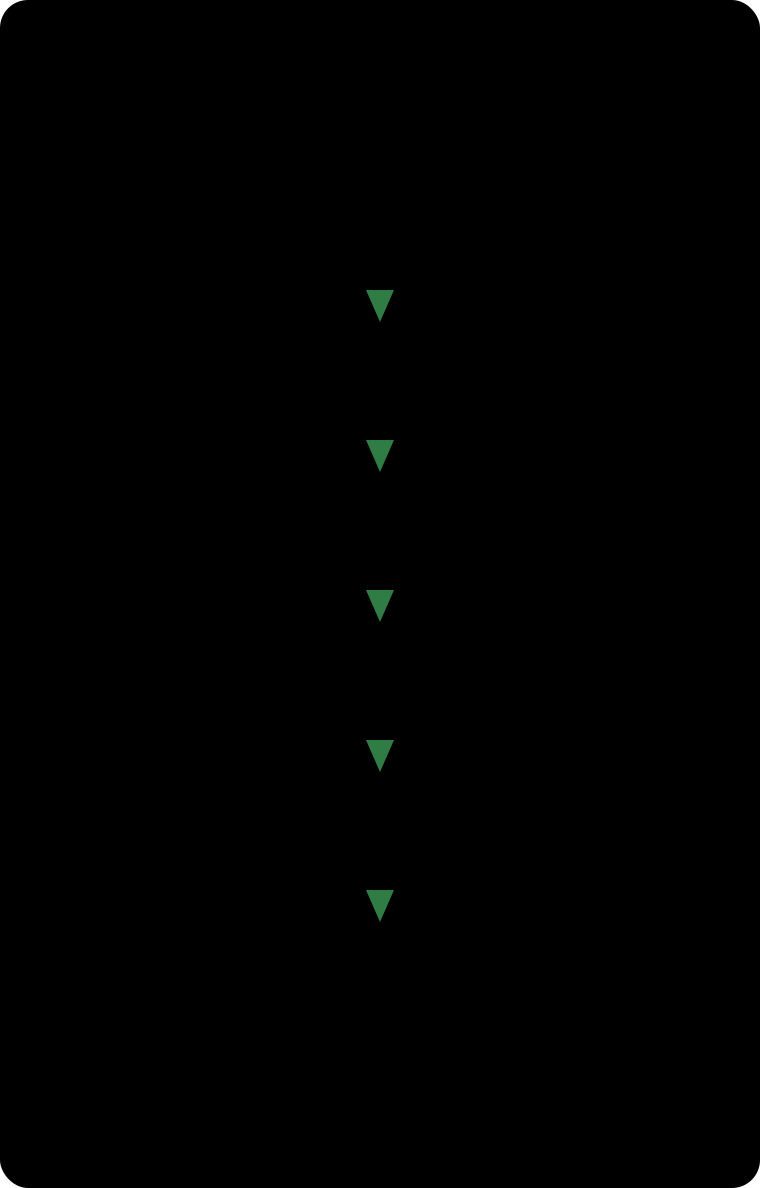
Words → all allowed? → map a known form to its stem → exactly one club? → one clear scored type? → ready; otherwise a refusal reason.
Recall and check
Hide the code and recall the checks in order. Expected: Шахмат қашан? and Шахматтың уақыты қашан? return the same ready; Шахмаат қашан? and Шахмат қашан интернет? refuse an unfamiliar word; Шахмат қашан қайда? asks for one type. Hint: the first failed check returns and ends the function. Common mistake: treating the four listed forms as a complete morphology dictionary; every other form remains unknown.
If you have found a mistake or a typo in this article, tell us about it
Comments (0)
Log in to leave a comment →
No comments yet. Be the first.