

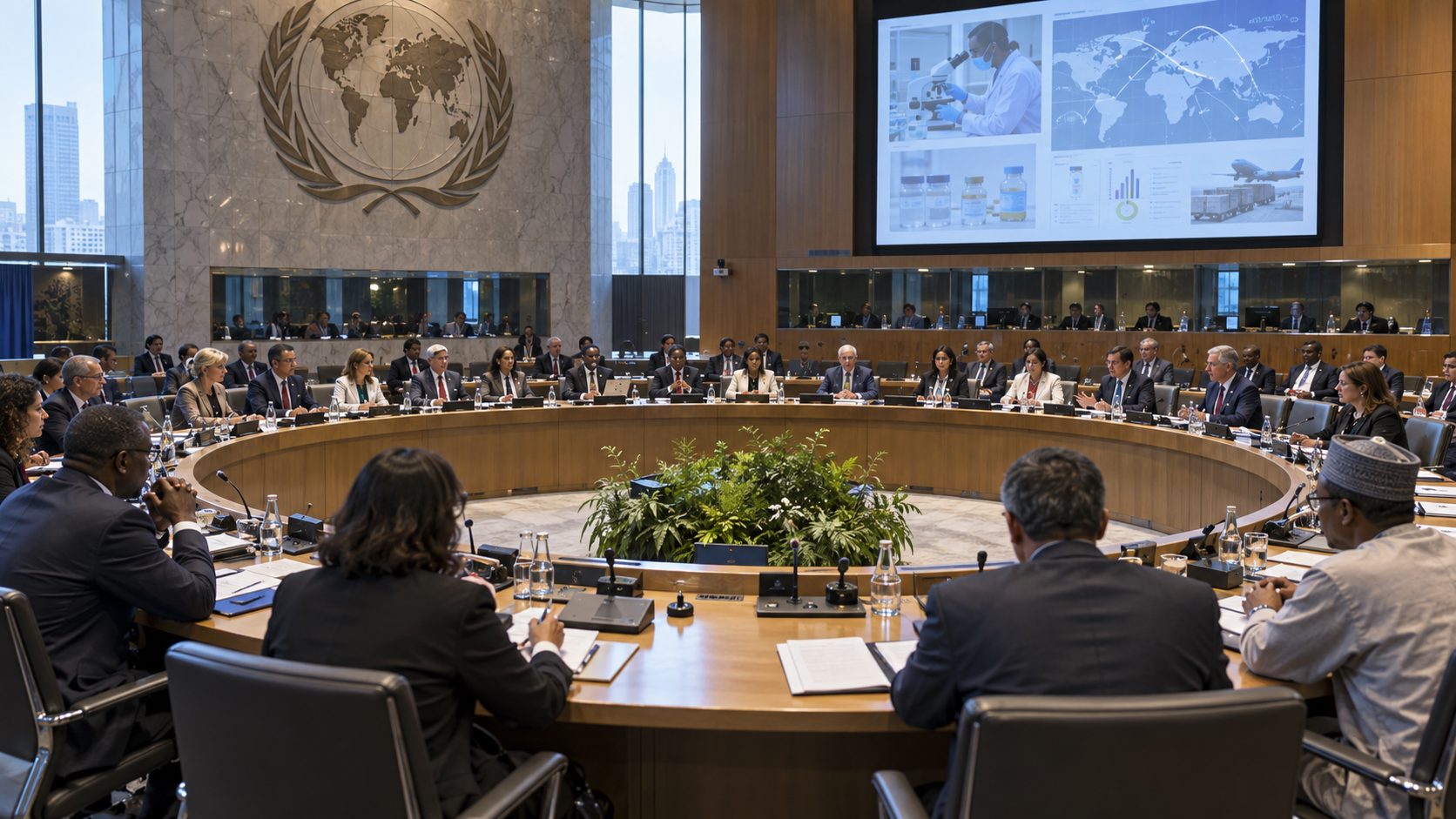
Preparing for the next pandemic: What leaders agreed at the UN General Assembly
Countries renewed commitments to pandemic prevention, preparedness, and response at a UN General Assembly high-level meeting. The agenda centers on sustained financing, resilient health systems, early detection, and equitable access to vaccines, diagnostics, and treatment. We explain what has been adopted and which part of the global framework remains under negotiation.
Political leaders renewed their commitment to stronger pandemic prevention, preparedness, and response at the second UN General Assembly high-level meeting on the issue. The session took place in New York on September 25.
Participants linked national health security to international cooperation. Outbreaks cross borders, and delays in sharing information or medical tools increase risk for everyone.
What changed after the first meeting
The first high-level meeting was held in 2023 as governments examined the gaps exposed by COVID-19. Since then, countries have adopted the WHO Pandemic Agreement and amendments to the International Health Regulations (2005). Surveillance centers, pathogen-sharing infrastructure, and local production capacity for vaccines, treatments, and diagnostics have also expanded.
WHO describes the scale of the previous crisis in stark terms: COVID-19 was linked to more than 20 million excess deaths between 2020 and 2023 and over US$10 trillion in global economic losses.
What the renewed commitment covers
The political declaration stresses investment in resilient health systems, early warning, workforce preparation, and equitable access to essential products. It also highlights One Health, which treats human, animal, and environmental health as connected.
A declaration sets direction but does not replace national budgets, preparedness plans, or exercises. Implementation can be measured through detection speed, laboratory capability, stockpiles, hospital readiness, and access to care.
What remains unfinished
Countries are still negotiating an annex to the WHO Pandemic Agreement that would establish the Pathogen Access and Benefit-Sharing system, known as PABS. It is intended to support rapid sharing of pathogen samples and information while distributing vaccines, medicines, diagnostics, and other benefits more fairly.
The annex is expected to be considered at the World Health Assembly in May 2027. Until its text is agreed, the full framework needed for national consideration of the Agreement is incomplete.
What this means for individuals
Preparedness is rarely visible before a crisis. It appears in how quickly a doctor receives guidance and tests, a laboratory identifies a new pathogen, a hospital expands capacity, and authorities communicate consistently.
Equity also has a practical effect. If diagnostics and treatment reach only some countries, a pathogen can circulate longer and gain more opportunities to change.
How to test the promises
The declaration needs to be followed by public national plans, budgets, timelines, and exercise reports. Key developments to watch include the PABS negotiations, implementation of the amended International Health Regulations, and data from regional surveillance systems.
The meeting’s central message is that preparedness must be funded between crises. The real test begins when pandemics are no longer headline news and prevention spending must still be maintained.
Source
If you have found a mistake or a typo in this article, tell us about it
Comments (0)
Log in to leave a comment →
No comments yet. Be the first.