

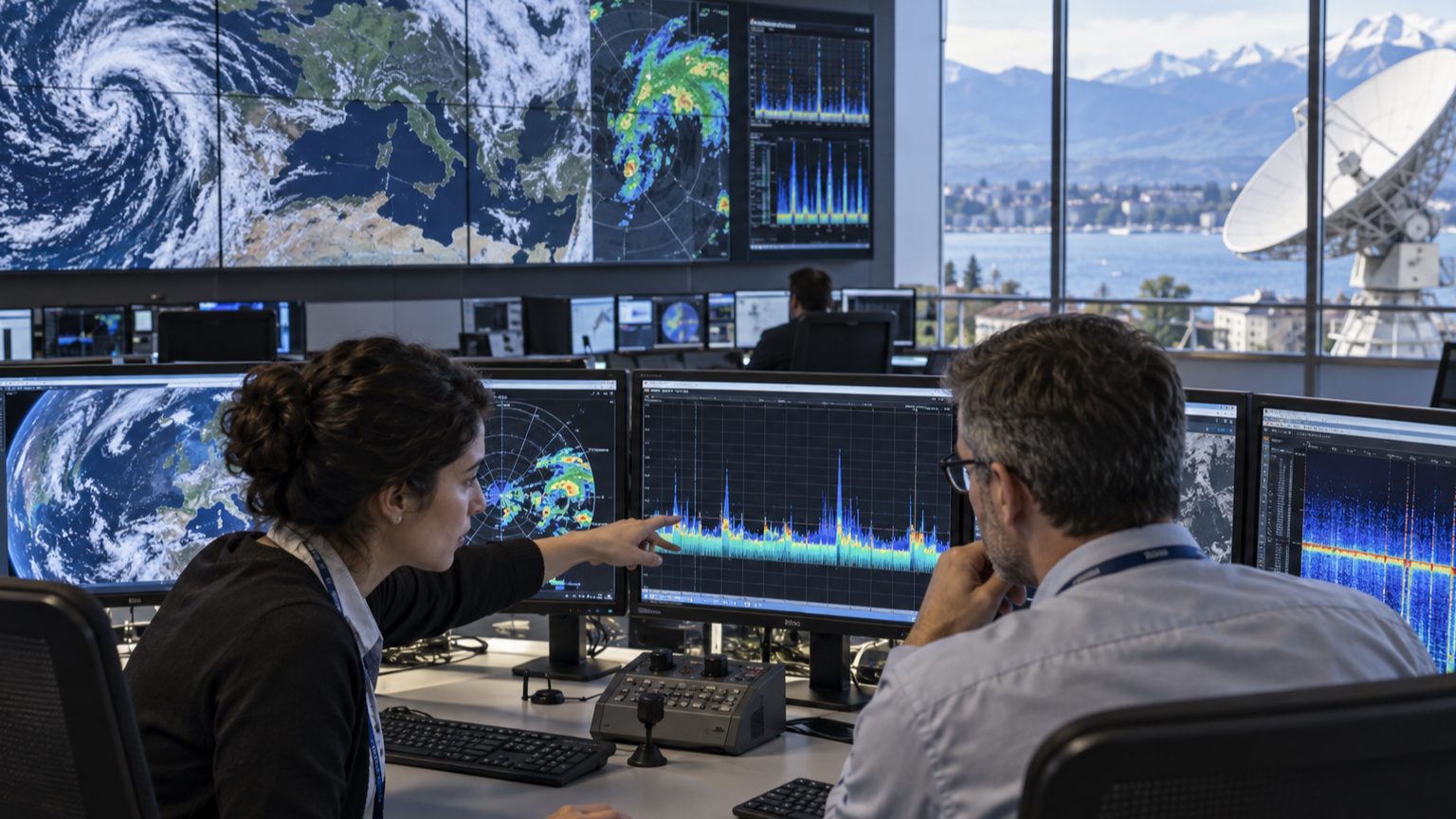
Weather Forecasts Need Clean Radio Frequencies: Why ITU and WMO Are Protecting Spectrum
Weather satellites, radars, and early warning systems rely on frequencies also sought by expanding wireless and satellite services. At a September 28–30 seminar, ITU and WMO are launching guidance and examining how interference can weaken forecast inputs before an ordinary user notices anything is wrong.
Invisible infrastructure
Satellites measure the atmosphere, radar tracks rain, and sensors transmit observations. Many links use frequencies that must stay clean. ITU and WMO brought regulators, weather services, and satellite specialists to Geneva from September 28 to 30.
Where interference comes from
Demand for mobile and satellite connectivity is growing. Even an authorized transmitter near a sensitive band can disturb instruments receiving weak emissions from Earth. Users will not see it directly; it appears as missing observations and poorer forecast input.
Balancing both needs
The organizations are launching updated guidance on protecting frequencies for meteorology and Earth observation. The goal is to expand connectivity while preserving spectrum for forecasts, climate records, and early warnings.
Source: WMO.
If you have found a mistake or a typo in this article, tell us about it
Comments (0)
Log in to leave a comment →
No comments yet. Be the first.