

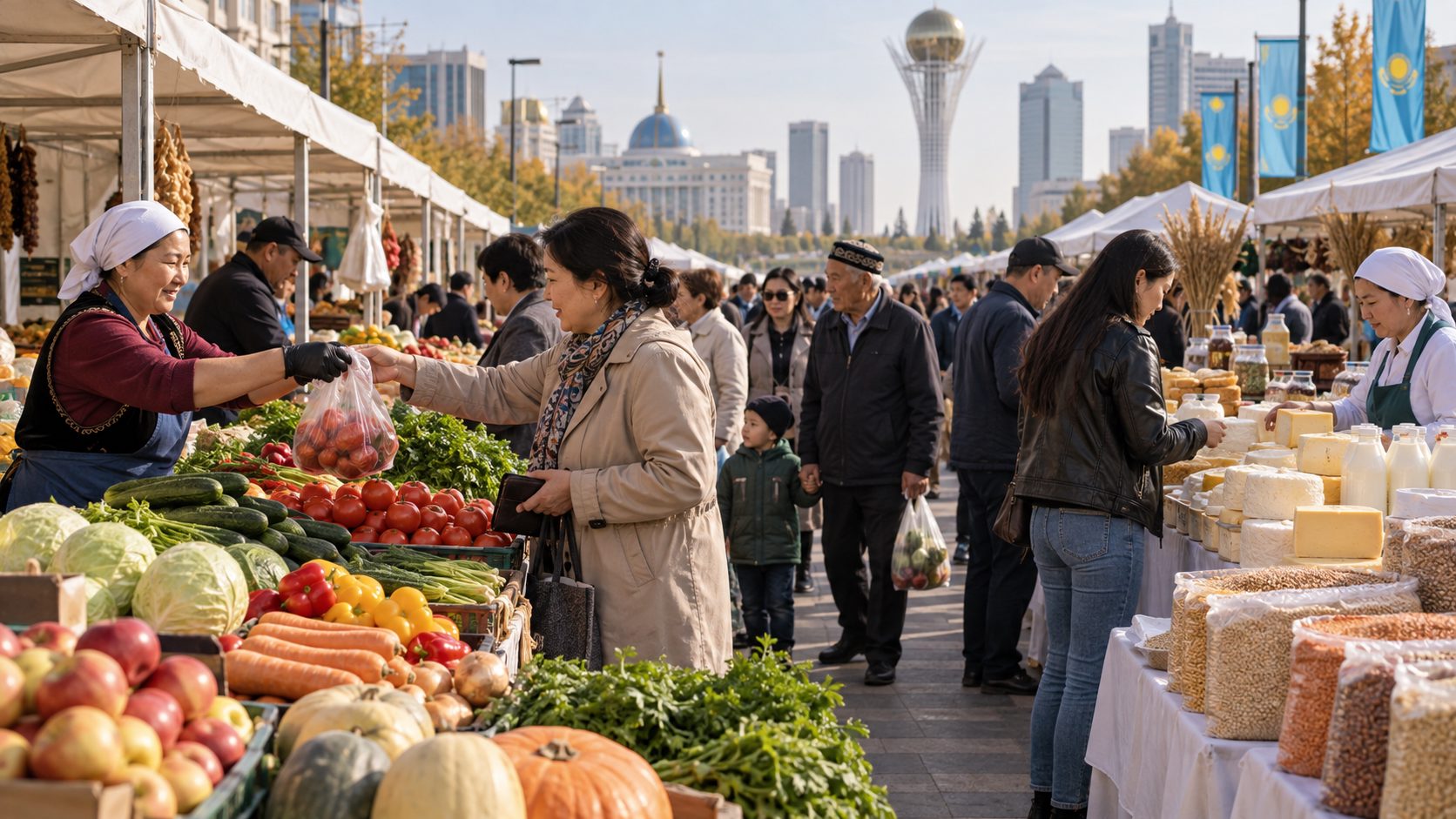
Dala Dämi fairs offer 3,500 tonnes of food across Kazakhstan: How the model works
Around 3,500 tonnes of domestic farm produce were offered at Dala Dämi fairs across Kazakhstan this weekend, nearly twice the previous week’s volume. We explain how direct sales and free stalls are intended to help farmers, why delivered volume is not the same as sales, and which figures are needed to measure any effect on household food costs.
Kazakhstan’s Ministry of Trade and Integration says about 3,500 tonnes of domestic agricultural products were brought to Dala Dämi fairs across the country this weekend. More than 2,000 tonnes were offered one week earlier.
The unified weekly format began on September 19. Fairs run on Saturday and Sunday in Astana and Almaty and on Saturday elsewhere. Producers receive stalls free of charge, with priority given to socially important food products.
Why the volume increased
The rise from more than 2,000 tonnes to around 3,500 tonnes shows that supply expanded in the project’s second weekend. It measures goods brought to the sites, not necessarily the amount sold. Final sales and remaining stock are needed to assess demand.
The ministry lists vegetables, fruit, meat, dairy, grain, and other seasonal products. In Kostanay, for example, beef was advertised at 3,200–3,500 tenge per kilogram, with horsemeat and lamb starting at 3,000 tenge.
Prices from one location should not be treated as national averages. Cost varies by region, product grade, logistics, and available supply.
What direct sales change
Direct trading removes some links between producer and buyer. A free stall reduces the farmer’s selling cost, while several producers in one location make price comparison easier for shoppers.
Intermediaries, however, do more than add a margin. They may handle storage, sorting, delivery, and the risk of unsold goods. Fairs can work especially well for seasonal produce and short supply chains but do not replace permanent retail.
How to test household savings
The ministry quotes an Aktau resident who estimates saving 5,000–10,000 tenge on a shopping trip. This is an individual example, not a national average.
An objective assessment needs three data sets:
- prices for the same grade of product at the fair and nearby stores;
- the volume actually sold rather than delivered;
- regional price trends over several weeks.
If the gap persists and volumes grow without higher waste or shortages, the model is expanding access to lower-priced seasonal food.
What to watch next
Useful indicators include the number and location of fairs, participating farmers, sell-through rates, average prices, and repeat participation.
For shoppers, the practical information is simpler: the local address and schedule, available products, and a price-per-kilogram comparison. Those figures turn the national total of 3,500 tonnes into a clear household decision.
Source
If you have found a mistake or a typo in this article, tell us about it
Comments (0)
Log in to leave a comment →
No comments yet. Be the first.