

Kazakhstan's Khalyk Kenesi: Membership, Powers and What Changes
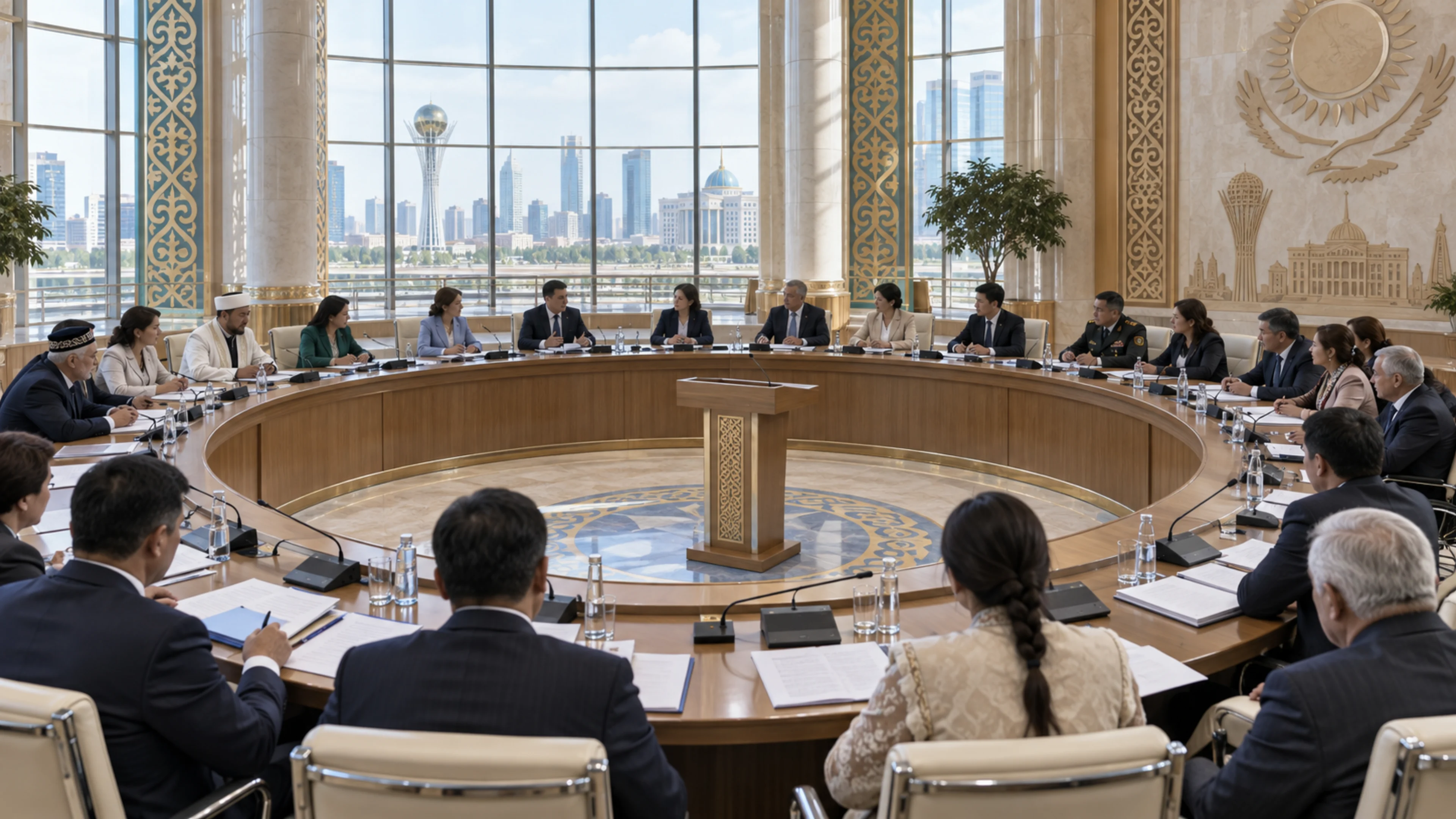
Kazakhstan has held the first session of the Khalyk Kenesi, its new highest constitutional advisory body. Using the Constitution and enabling law, this guide explains who sits on the council, how it can introduce bills, how its authority differs from binding state decisions, and which outcomes can reveal its real public influence. It also distinguishes the one-third initiation threshold from the two-thirds submission vote.
The first session of the Kazakhstan Khalyk Kenesi brought the new institution into the public spotlight. In his September 24 address, President Kassym-Jomart Tokayev described it as the country’s highest advisory body with constitutional status. Understanding what that means in practice requires separating public statements from the powers expressly written into the Constitution and constitutional law.
The Khalyk Kenesi represents the people’s interests in public administration through an advisory role in forming and implementing state policy. Its enabling law took effect on July 1, 2026.
Who sits on the Khalyk Kenesi
Members are citizens of Kazakhstan selected with consideration for recommendations from civil-society and local-government institutions. The law establishes three equal groups of 42 people:
- representatives of ethnocultural associations;
- representatives of public associations and other nonprofit organizations;
- representatives of maslikhats and public councils from the capital, regions and cities of national significance.
The statutory base membership is therefore 126. Equal quotas are intended to prevent any one group from obtaining a majority through its allocation alone.
What powers the council has
Its most prominent power is legislative initiative. At least one third of all members, or the Presidium, may initiate the drafting of a bill. Committees, commissions or working groups must discuss the draft first.
A session needs support from at least two thirds of the full membership to submit a bill to the Kurultai. This creates a high internal threshold: one 42-member group cannot carry a final submission without support from others. The council’s rules of procedure will matter for exact calculations and process.
The new Constitution also allows a nationwide referendum to be held by a decision of the president acting on his own initiative or on an initiative from the Kurultai, government or Khalyk Kenesi.
Does the council pass laws or advise
The title “highest constitutional advisory body” does not make the council a parliament or government. It can prepare and introduce bills, participate in policy discussions and use other mechanisms provided by law. The Kurultai passes legislation through the prescribed procedure, and state bodies implement it.
This distinction matters when reading the news. A council proposal, discussion or recommendation does not mean a rule has entered into force. Readers should look for the next step: Was a bill submitted? Was its text published? Did a vote take place? Was the final act signed?
How to measure real influence
During the first months, counting meetings and statements will be easier than measuring outcomes. Four public indicators would provide a more meaningful picture:
- how many initiatives reach a published bill;
- how members voted and whether minority positions were recorded;
- which public proposals entered the final document;
- whether implementation deadlines and state-agency responses are published.
The law requires members to act honestly, independently and impartially, put the public interest above personal interests, and maintain open, constructive dialogue. Transparent minutes and reasons for decisions will therefore be a way to test the model itself.
Author’s analysis
The power of legislative initiative gives the Khalyk Kenesi a more substantial instrument than an ordinary advisory letter. Its influence will not be established by its title or number of meetings. It will be shown by a clear path from a citizen’s proposal to a draft, public discussion, a Kurultai decision and a verifiable outcome.
Sources
- Constitutional Law on the Kazakhstan Khalyk Kenesi
- Constitution of the Republic of Kazakhstan, 2026 text
- Official report on the first Khalyk Kenesi session
The factual legal provisions come from official acts. The proposed measures of influence and concluding assessment are the author’s analysis.
If you have found a mistake or a typo in this article, tell us about it
Comments (0)
Log in to leave a comment →
No comments yet. Be the first.