

Nuclear risk returns to the center of the UN agenda at 29 September high-level meeting
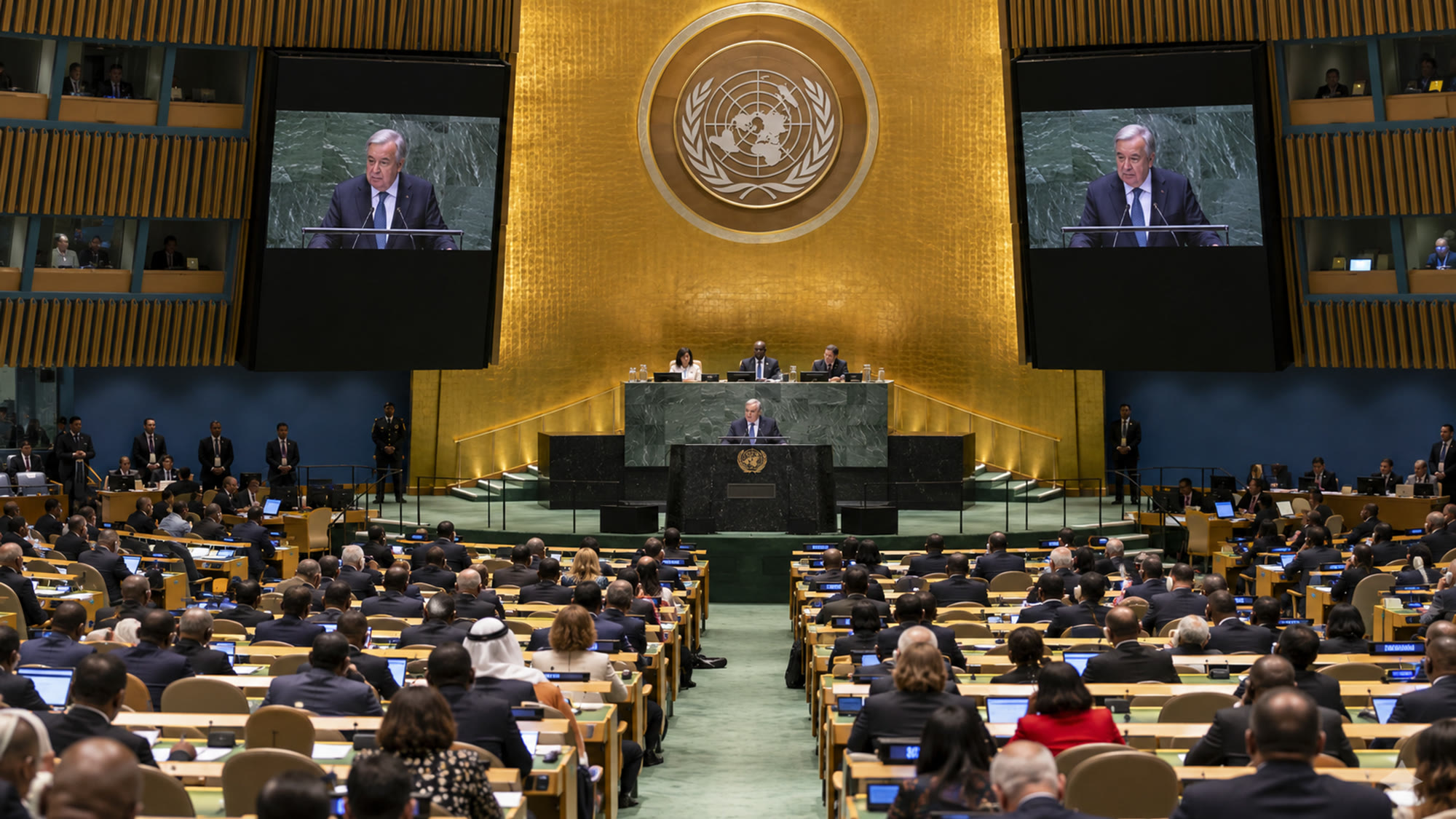
The UN General Assembly closed its High-Level Week with a meeting on the total elimination of nuclear weapons. Against wars and strikes on nuclear infrastructure, states returned to safeguards, arms control and the principle that a nuclear war cannot be won and must never be fought.
Why the issue is urgent again
UN member states held a high-level meeting on 29 September for the International Day for the Total Elimination of Nuclear Weapons. It came amid wars, rising tension and strikes affecting nuclear infrastructure in Ukraine and Iran.
The danger is not limited to a deliberate decision to use a weapon. Higher military tension increases the risk of miscalculation, a misunderstood signal, technical failure or escalation after an attack on dual-use infrastructure.
What “a nuclear war cannot be won” means
The President of the General Assembly’s 81st session repeated the Pact for the Future’s premise that a nuclear war cannot be won and must never be fought. It is a political guide that requires practical mechanisms.
Those include reliable communications, notifications of exercises and launches, verifiable agreements, physical protection of material and a reduced role for nuclear weapons in military doctrines.
Disarmament and non-proliferation
The tasks are connected but different. Non-proliferation seeks to prevent additional nuclear-armed states and diversion of nuclear material. Disarmament requires states with arsenals to reduce them and create conditions for verified elimination.
When disarmament stalls, other countries find it harder to believe the rules are fair. When non-proliferation weakens, more potential actors enter a crisis.
Why Kazakhstan has a distinct voice
Kazakhstan closed the Semipalatinsk test site and relinquished the nuclear arsenal inherited after the Soviet Union collapsed. That history gives it moral and diplomatic standing on test bans, nuclear-weapon-free zones and support for affected communities.
Symbolic history alone is insufficient. In the current environment, diplomacy must produce functioning crisis channels, renewed arms control and verifiable steps. The UN meeting restores attention to the issue; security depends on whether agreements follow the speeches.
Sources: United Nations, President of the 81st UN General Assembly.
If you have found a mistake or a typo in this article, tell us about it
Comments (0)
Log in to leave a comment →
No comments yet. Be the first.