

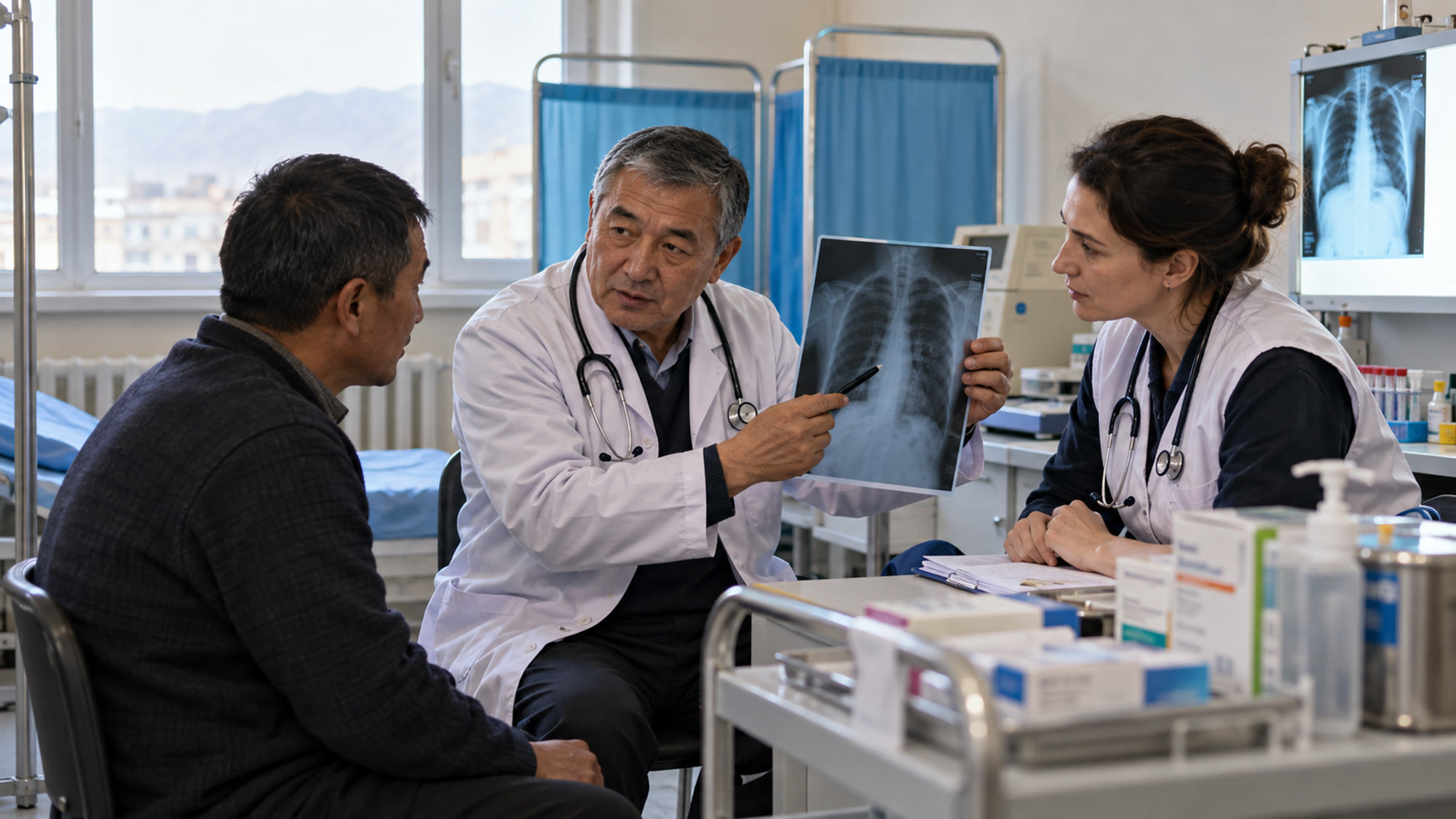
WHO and MSF join forces on TB and HIV care across Eastern Europe and Central Asia
WHO Europe and Médecins Sans Frontières are strengthening care for people with tuberculosis and HIV across Eastern Europe and Central Asia. The practical priorities are early diagnosis, drug resistance, uninterrupted treatment and a patient pathway that does not break between institutions.
Why the two infections are addressed together
WHO’s Regional Office for Europe and Médecins Sans Frontières announced cooperation on 29 September to improve tuberculosis and HIV care in Eastern Europe and Central Asia. The connection matters because HIV weakens the immune system and increases the risk that TB infection develops into active disease.
Patients need one coordinated pathway rather than two separate queues: screening, diagnosis, medication selection, management of side effects and support until treatment is completed.
Finding the disease is only the beginning
TB is curable, but treatment lasts for months. If someone stops because of side effects, relocation, travel costs or fear of disclosure, the disease may return and the bacteria can develop drug resistance.
Continuity is equally important for HIV treatment. A useful program is therefore measured not by the number of tests performed, but by the share of people who start treatment, remain in care and achieve a confirmed result.
What WHO and MSF can combine
WHO develops guidance, helps countries organize systems and compare outcomes. MSF contributes direct clinical experience, including difficult and drug-resistant cases. Together they can test care models and turn effective practice into regional standards more quickly.
Promising areas include rapid molecular testing, integrated TB/HIV care, outpatient treatment, psychological support and delivering medicine closer to where patients live.
Why this matters to Kazakhstan
Central Asia is explicitly part of the initiative’s geography. Kazakhstan needs compatible registries, continuity when a patient moves between regions or countries, and strong protection of medical confidentiality.
The verifiable outcomes are earlier diagnosis, fewer patients lost from care, higher treatment success and lower transmission of resistant TB. Those indicators should measure the partnership, rather than the number of documents signed.
Source: WHO Regional Office for Europe.
If you have found a mistake or a typo in this article, tell us about it
Comments (0)
Log in to leave a comment →
No comments yet. Be the first.