

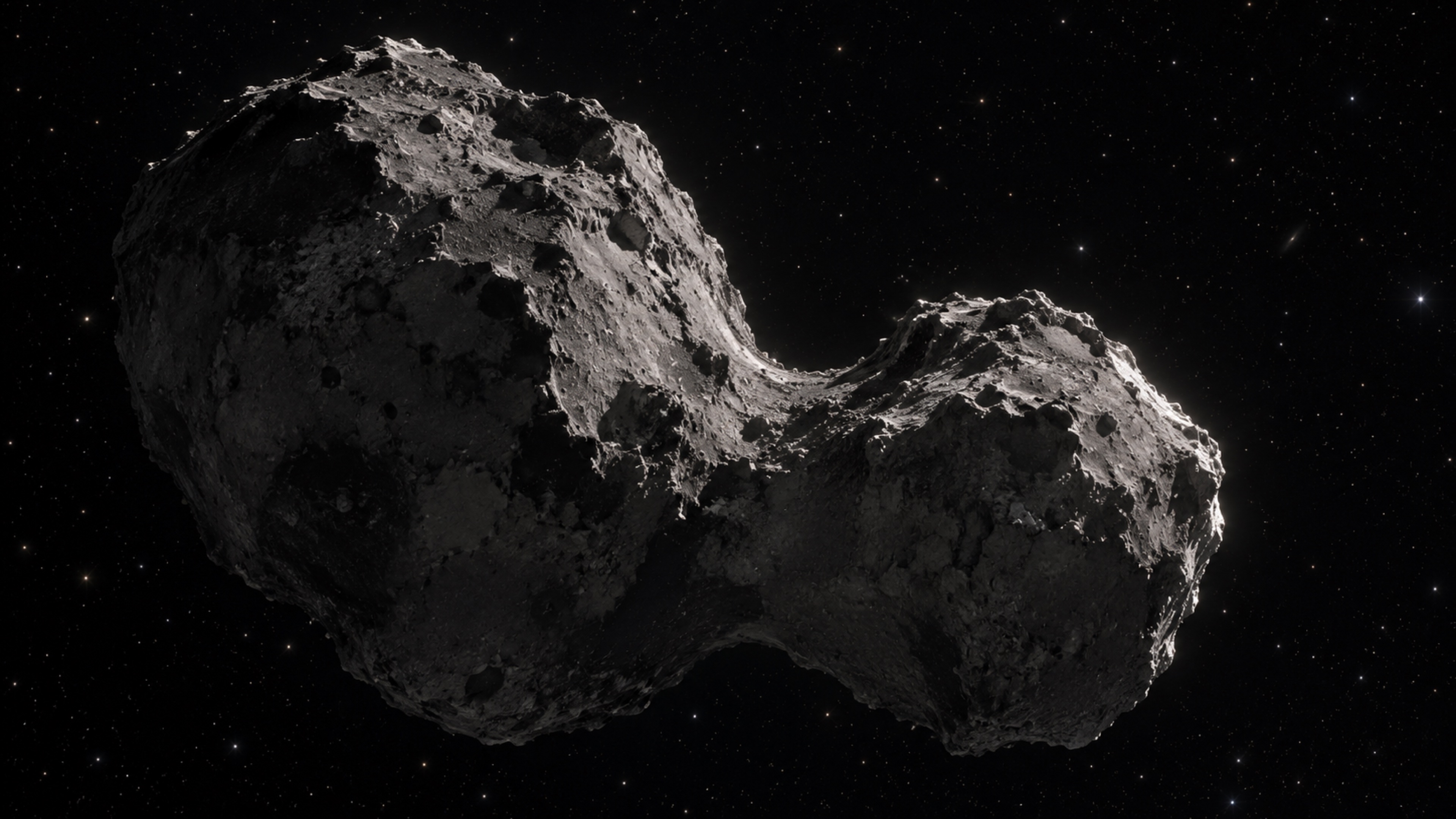
The “rubber duck” comet in 3D: NASA revisits Rosetta’s view of 67P
The October 17 image uses photographs taken in 2015. Here is what stereo vision adds and what is actually new.
NASA selected a stereo view of comet 67P/Churyumov–Gerasimenko for its October 17 Astronomy Picture of the Day. The view combines two frames from Rosetta’s narrow-angle OSIRIS camera taken on July 25, 2015, from 184 kilometres away. This is a fresh presentation of earlier data, not an image of a newly discovered comet.
The nucleus consists of two rugged lobes joined by a narrow neck, a shape often compared with a rubber duck. The larger lobe is about four kilometres across and the smaller about 2.5 kilometres. Jets of material are visible from the period when the comet approached the Sun.
Why two frames matter
Our eyes sense depth by comparing slightly different views. A stereo pair offers similar clues about ridges, cliffs and depressions. NASA’s version is an anaglyph designed for red-blue glasses. The cover image here conveys the shape but does not replace the original scientific photograph.
Rosetta’s mission ended with a controlled descent to the comet in September 2016. The value of today’s presentation is that data gathered then can still illuminate small Solar System bodies long after the spacecraft’s flight ended.
Source: https://science.nasa.gov/image-article/apod-2026-october-17-3d-67p/.
If you have found a mistake or a typo in this article, tell us about it
Comments (0)
Log in to leave a comment →
No comments yet. Be the first.