

2026 Chemistry Nobel: why mirror-image molecules matter for medicines
Henri B. Kagan and Kenso Soai won the 2026 Nobel Prize in Chemistry for discoveries in asymmetric synthesis. Their work helps explain how a reaction can favour one of two mirror-image forms of a molecule, a distinction that matters when making compounds for medicines.
Chemistry has left and right hands
On 7 October, the Royal Swedish Academy of Sciences awarded the 2026 Nobel Prize in Chemistry to Henri B. Kagan and Kenso Soai “for the discovery of non-linear effects and autocatalysis in asymmetric organic synthesis”.
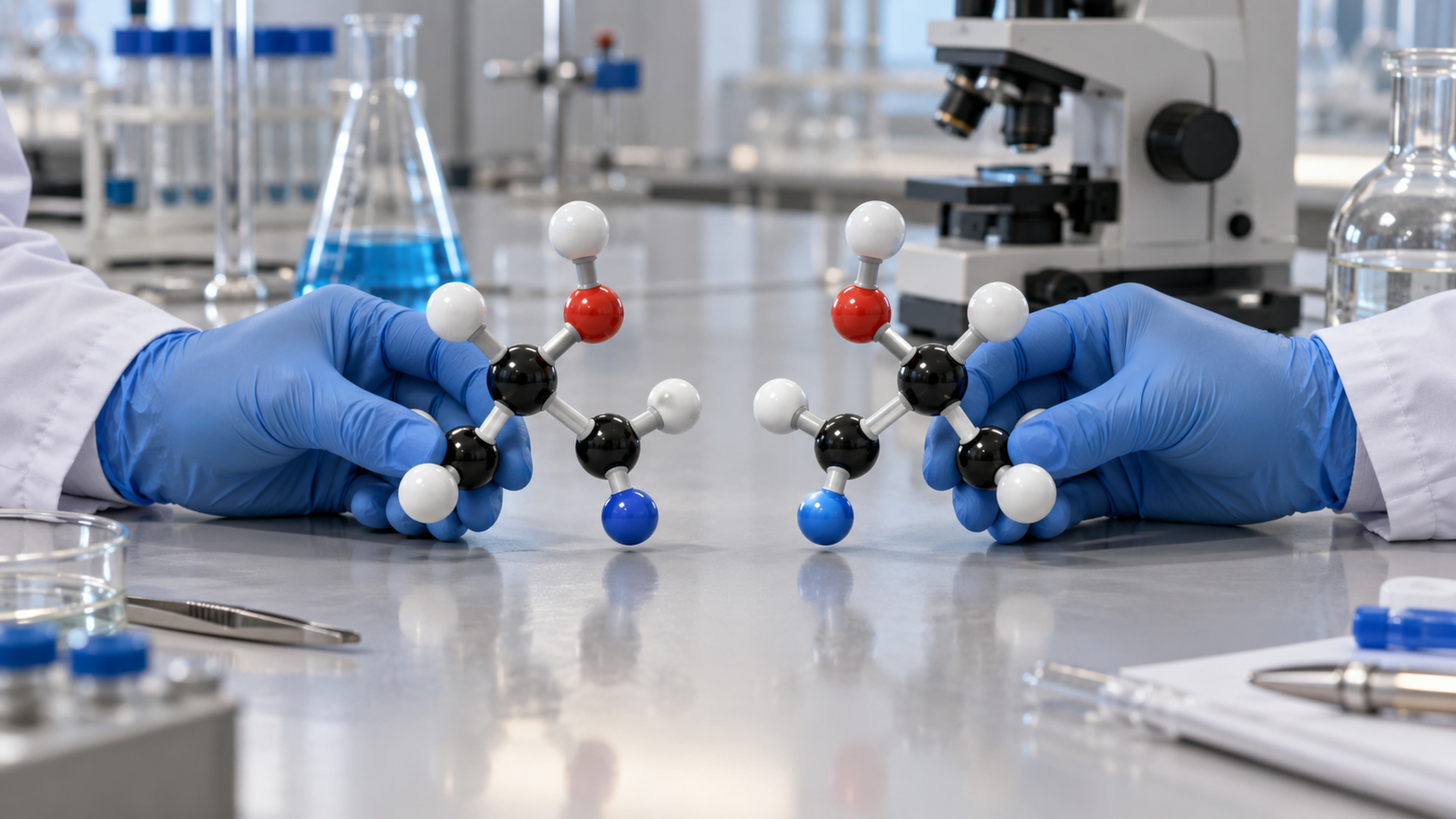
Think of left- and right-handed gloves: they look alike, but one cannot simply replace the other. Some molecules likewise come in mirror-image forms. In living systems, that difference can be crucial. When making compounds for medicines, chemists often need one form rather than a mixture.
What the laureates found
In 1986, Kagan showed that a small imbalance between two forms could be amplified more than expected during a reaction. Soai later developed a reaction in which the product helps make more of itself, reinforcing the preferred form. In 2003 he reported a result producing just one of the two mirror forms.
The award does not mean the scientists invented a new drug this year. Their fundamental findings helped explain chemical selectivity and influenced synthesis methods important to pharmaceutical chemistry. The 12 million Swedish krona prize is shared equally.
Source: https://www.kva.se/en/news/the-nobel-prize-in-chemistry-2026/
Cover image: a thematic illustration, not a photograph of the reported event.
If you have found a mistake or a typo in this article, tell us about it
Comments (0)
Log in to leave a comment →
No comments yet. Be the first.