

From Strangers to Deepfakes: Kazakhstan Updates 140 Child Safety Topics
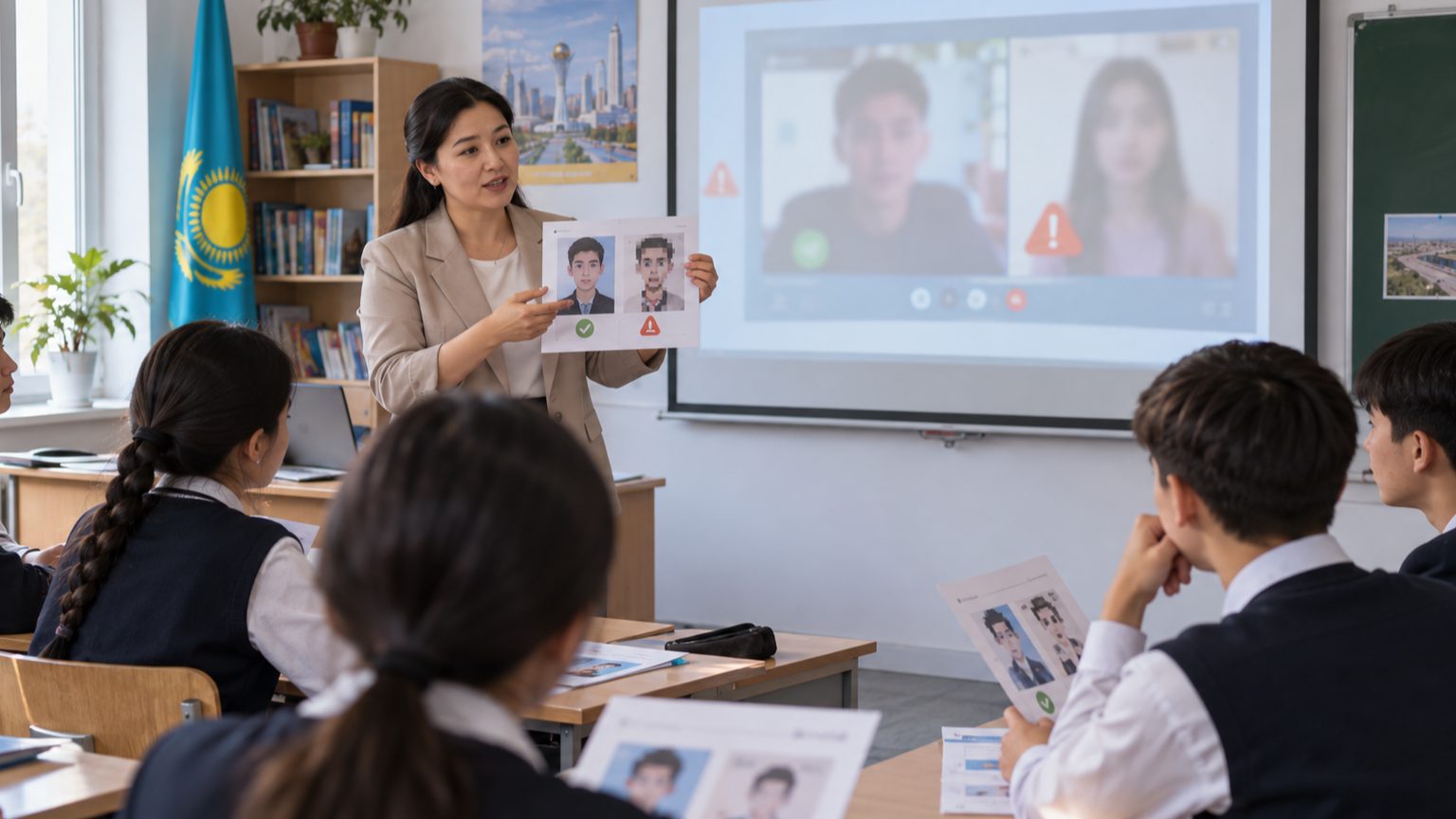
Kazakhstan has revised short weekly safety lessons across kindergartens, schools, and colleges. More than 140 age-based topics teach young children to seek help, teenagers to recognize deepfakes and coercion, and older students to avoid money-mule schemes and “easy money” traps.
Age-based lessons
The education ministry developed more than 140 topics with UNICEF and government agencies. Preschoolers learn to seek help and respond when lost. Primary pupils cover boundaries, suspicious links, fire, and evacuation. Teenagers discuss bullying, scams, personal data, false news, deepfakes, and safe AI use.
What older students cover
High school and college students learn about money mules, “easy money,” employment scams, dangerous contacts, grooming, stalking, blackmail, and recruitment into illegal activity. The weekly lesson lasts ten minutes and is most useful when students work through a scenario and identify whom to contact.
What families can do
A response should be rehearsed: end a pressured conversation, send no money, reveal no code, preserve evidence, and contact an adult. Families can agree on a verification word for cloned-voice calls. Success depends less on the topic count than on applying the sequence under stress.
Source: Ministry of Education of Kazakhstan.
If you have found a mistake or a typo in this article, tell us about it
Comments (0)
Log in to leave a comment →
No comments yet. Be the first.