

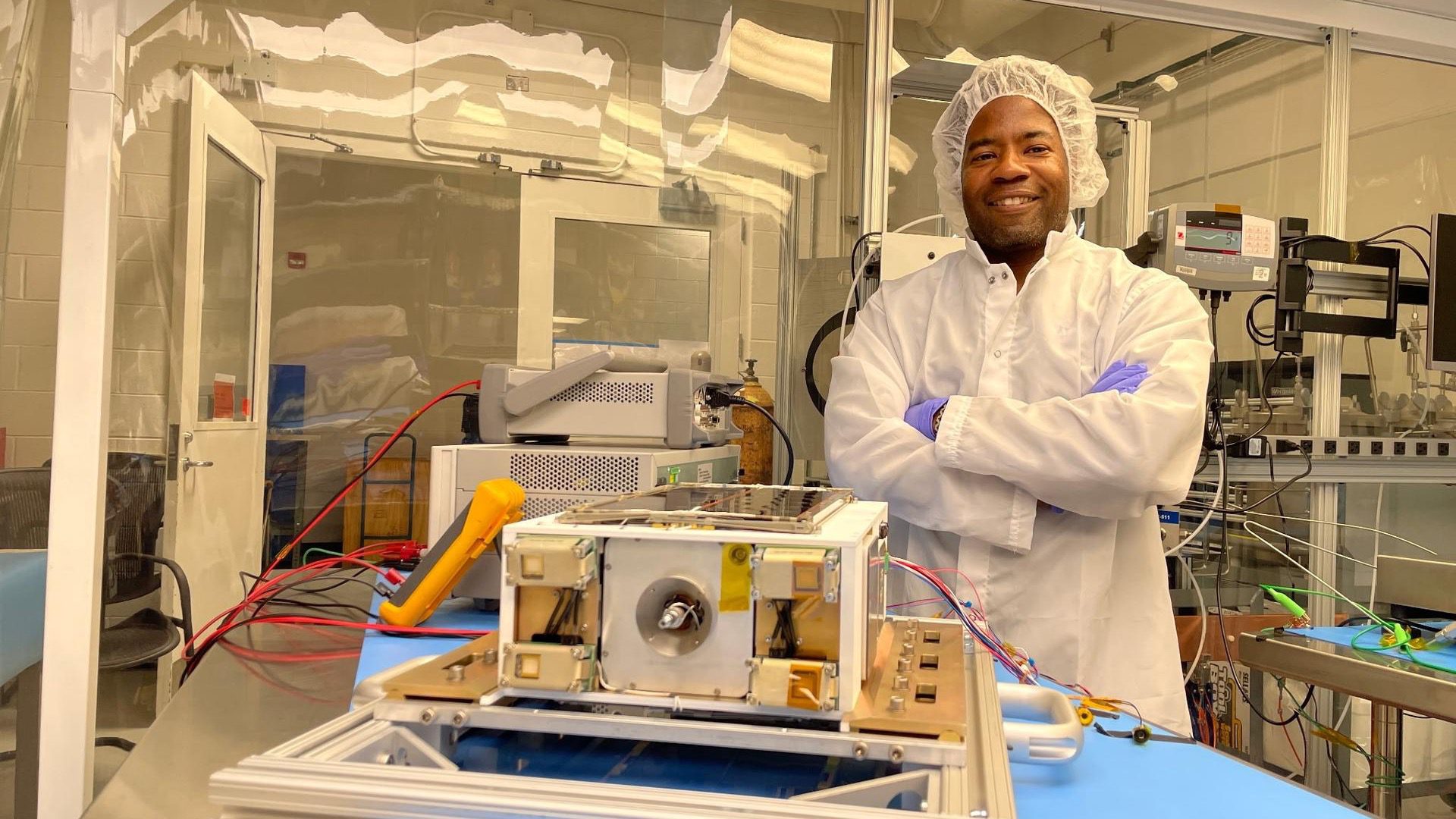
NASA tests CubeSat with two thruster types and one tank: Why ASCENT matters
NASA has completed ground testing of the ASCENT Propulsion Dual Mode CubeSat. The large-shoebox-sized spacecraft feeds one non-toxic propellant to both a high-thrust chemical engine and efficient electric microthrusters. Here is how the system works, what testing it passed, and what the nine-month orbital demonstration must prove.
Engineers at NASA’s Marshall Space Flight Center have completed environmental and physical tests of the ASCENT Propulsion Dual Mode small satellite. The demonstration will test an integrated propulsion architecture with one fuel tank and two types of thrust in space.
Launch is scheduled no earlier than October 1 as a rideshare payload on a Falcon 9 from Vandenberg Space Force Base in California. Once deployed at an altitude of about 325 miles, or 523 kilometers, the spacecraft is expected to conduct a nine-month mission.
Why a spacecraft needs two modes
Spacecraft perform different kinds of maneuvers. A rapid trajectory change calls for relatively high thrust. Slow, precise adjustments can use low thrust if it consumes propellant more efficiently.
These tasks often require separate chemical and electric systems with different tanks and plumbing. ASCENT feeds one non-toxic propellant to a high-thrust combustion engine and low-thrust electrospray thrusters.
If validated in orbit, the design could reduce the mass and volume of support systems. That would leave more room for science instruments or allow a smaller spacecraft and launch vehicle.
What testing the spacecraft passed
The team performed pressurized helium leak testing in a vacuum chamber. Seals, valves, and lines are critical when one tank supports two propulsion paths.
Thermal-vacuum testing recreated the lack of atmosphere and extreme temperature changes. A spin test measured mass properties and center of gravity. Proper balance is necessary for stable attitude control, antenna communication, and solar-array pointing.
Final system checks and solar-array integration remain before shipment to the launch site.
What will be tested in orbit
After initial checkout, operators will alternate short chemical and electric maneuvers. The satellite is expected to raise and lower its orbit repeatedly, demonstrating that both thruster types can operate reliably from the common propellant system.
Ground testing supports launch readiness but does not prove the mission’s outcome. The main engineering result will come after real maneuvers and analysis of propellant use, thrust, temperature, and spacecraft condition.
Why non-toxic propellant matters
ASCENT was developed as a less hazardous alternative to traditional highly toxic spacecraft propellants. Lower handling risk may simplify ground operations and launch preparation, although exact savings depend on mission design and launch-site rules.
The project combines work from NASA Marshall, MIT, Plasma Processes, and Georgia Tech. Its value lies in flight-testing the integrated architecture rather than demonstrating either thruster in isolation.
Source and image credit
Cover image: NASA / Charles Beason. Used for factual editorial reporting under NASA Media Usage Guidelines; cropped and color-corrected without changing the meaning of the scene.
If you have found a mistake or a typo in this article, tell us about it
Comments (0)
Log in to leave a comment →
No comments yet. Be the first.