

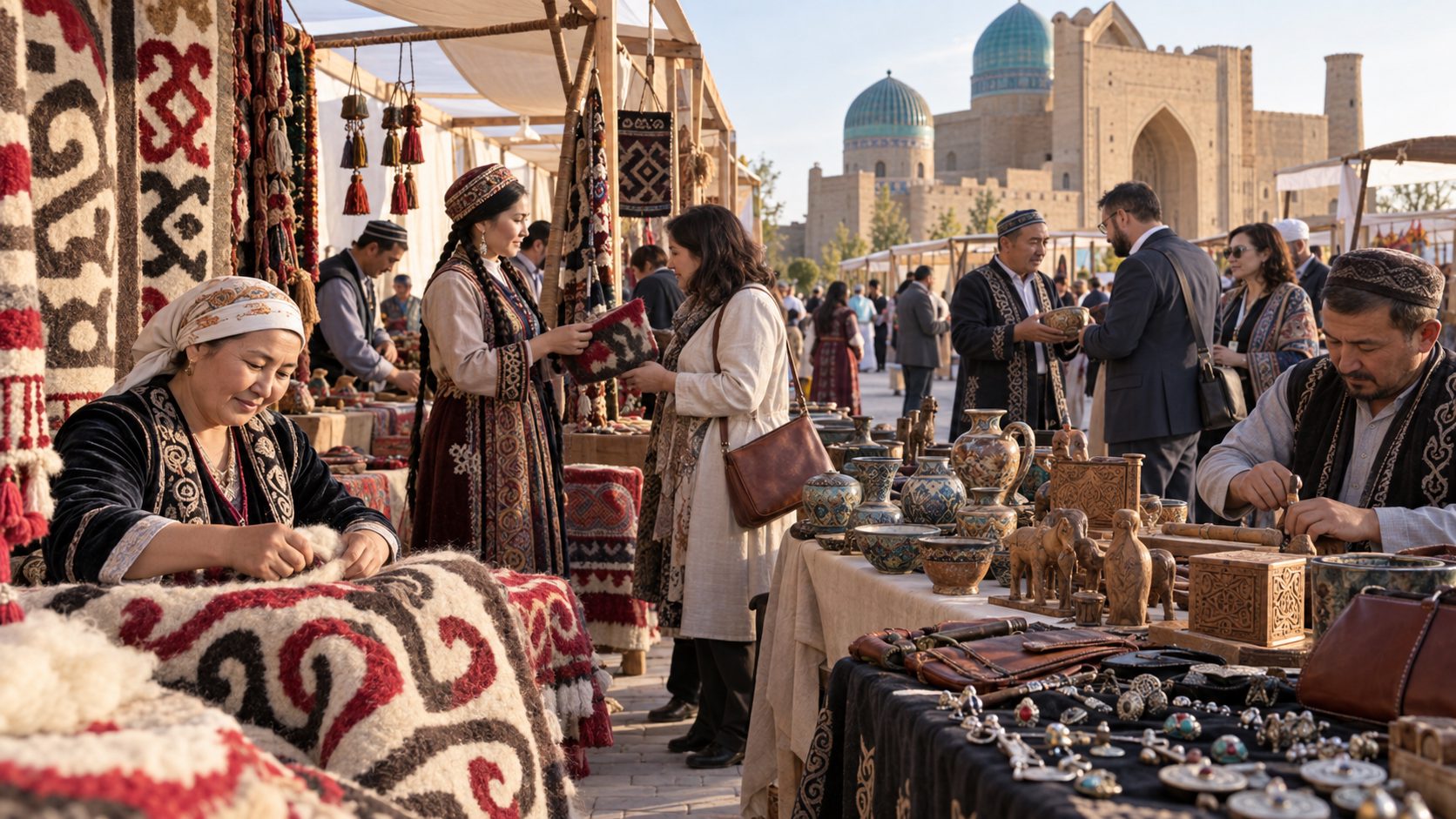
Turkistan Brand Craft Fair 2026: Nearly 200 makers seek a path from craft to export
Turkistan is hosting an international fair for craftspeople and eco-products from September 26 to 28, with nearly 200 makers expected from Kazakhstan and abroad. The format combines direct sales, tourism, and business meetings. We examine how organizers hope to turn traditional craft into durable brands and export-ready products.
Turkistan Brand Craft Fair 2026 is underway in Turkistan, bringing together craftspeople and eco-product makers. The official program expects nearly 200 participants from across Kazakhstan and other countries.
Products include ceramics, woodwork, leather, metal, felt and textiles, national and designer clothing, jewelry, original souvenirs, and natural and environmentally positioned goods.
How this differs from an exhibition
Organizers emphasize direct sales. A maker is expected to do more than display work: they should find buyers or partners. Visitors can learn an item’s origin and buy directly from its creator, while producers can test demand without maintaining a standalone store.
The initiative describes a path from maker to product, design, brand, sales, and export. Between those stages lie practical requirements: consistent quality, repeatable production, packaging, pricing, digital marketing, delivery, and intellectual-property protection.
Who is taking part
Finalists from the national One Village, One Product project have been invited. For rural producers, the fair offers access to tourists, buyers, and distributors beyond their home district.
International participation encourages exchange, but does not by itself make an export platform. Export begins when meetings lead to orders and producers can meet volume, labeling, and logistics requirements.
Why tourism and B2B are included
The Business Tourism Trend Forum was scheduled within the fair on September 26, bringing producers, tour operators, entrepreneurs, buyers, distributors, and potential partners together.
The tourism link is natural: a craft product carries the story of a place, and a traveler can become its first customer and promoter. For lasting impact, the goods must remain available after the event through workshops, stores, catalogs, or online channels.
What results should be published
After September 28, useful measures would go beyond attendance:
- retail sales volume;
- B2B meetings and agreements;
- repeat or wholesale orders;
- the geography of participants and buyers;
- projects receiving packaging or promotion support.
Those figures would distinguish a successful cultural event from a working channel for the creative economy.
What visitors should ask
The fair continues through September 28. Buyers should ask about materials, production methods, and care. For eco-products, they should ask what supports the environmental claim: composition, raw-material origin, or certification.
Craft survives when makers can earn a durable income and pass on their skills. Direct sales and business contacts are therefore part of the cultural mission rather than a distraction from it.
Source
If you have found a mistake or a typo in this article, tell us about it
Comments (0)
Log in to leave a comment →
No comments yet. Be the first.