

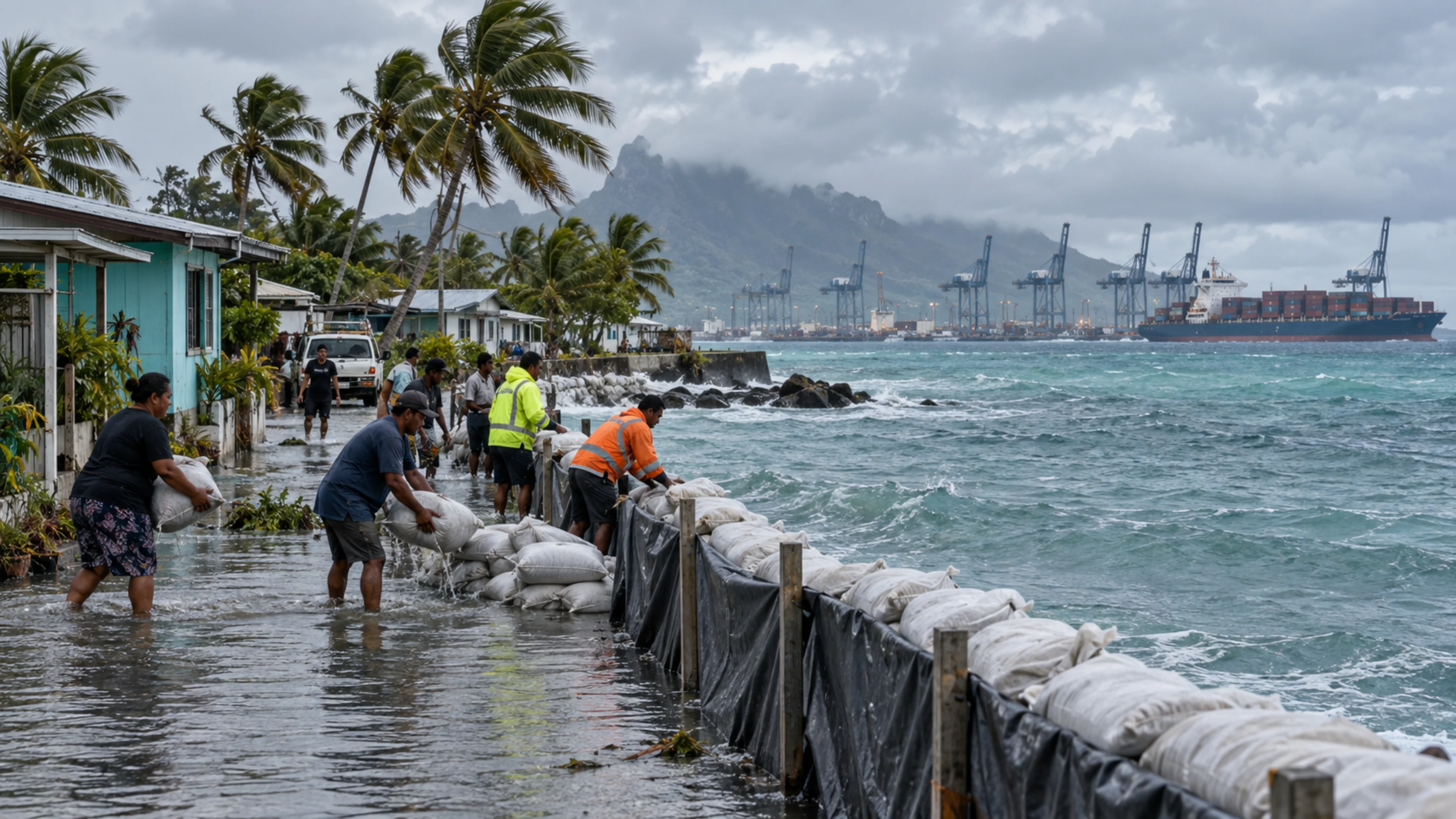
Sea Level Rise Has More Than Doubled: What the UN Decided in 2026
The UN General Assembly has adopted a political declaration on the threat of sea-level rise. Figures presented at the meeting show the annual rate increasing from 2.1 to 4.7 millimetres, while more than one billion people could face coastal hazards by 2050. Here is what the decision means for ports, global trade, prices and countries located far from the ocean.
The United Nations General Assembly held a high-level meeting on sea-level rise on September 24 and adopted a political declaration. The document is intended to guide cooperation over the next decade, including protection for people and infrastructure, adaptation finance, support for relocation where impacts cannot be avoided, and safeguards for affected communities’ rights.
One figure presented at the meeting explains the urgency. Global mean sea level rose by 2.1 millimetres a year from 1993 to 2002 and by 4.7 millimetres a year from 2015 to 2024. The observed annual rate therefore more than doubled.
Who is at risk from rising seas
About 900 million people live in low-lying coastal zones. According to the figure cited by the President of the General Assembly’s 81st session, more than one billion people could be exposed to coastal hazards by 2050.
For small island states, the issue extends beyond flooded homes. Salt water enters freshwater aquifers, erosion damages roads and facilities, and inhabited land may become unviable. Communities can lose cultural heritage, their connection to place and their livelihoods along with the land.
The Oceania subcategory reflects the particular exposure of Pacific islands, but the problem is global. The official speech gives examples ranging from Saint Kitts and Nevis to New York and Prince Edward Island.
Why landlocked countries are affected
Seaports handle more than 80 percent of global merchandise trade. Flooding or erosion that disrupts a port, road, power system or warehouse propagates through supply chains. The effects can reach food, medicine, equipment and transport prices in countries thousands of kilometres from the sea.
For Kazakhstan, this creates an indirect risk through global logistics and trade. That is an editorial inference from the role of ports in international supply chains, not a separate UN forecast for Kazakhstan.
What the UN meeting established
The meeting followed General Assembly decision 78/558. Its goals included political leadership, international cooperation and practical measures to protect people, economies and infrastructure.
A declaration does not itself build barriers or relocate homes. Its value will depend on later budgets, projects, deadlines and public reporting. The official address identified three implementation needs: turn promises into national plans, provide predictable finance, and connect work on climate, oceans, development and disaster-risk reduction.
How to read the figures accurately
The 4.7 millimetre figure is a global mean for the stated period. Relative change at a particular location can differ because of currents, winds and land movement. It also does not mean that every shoreline retreats by the same distance every year.
The more than twofold increase in the mean rate still shows the direction of travel and shortens the time available for adaptation. Decisions about new ports, roads, housing and freshwater systems therefore need to consider risk over an asset’s full lifetime, rather than today’s shoreline alone.
Sources
- United Nations: High-level Meeting on Sea-Level Rise
- UN General Assembly President’s address and sea-level figures
Figures and the declaration’s status come from UN materials dated September 24, 2026. The explanation of implications for Kazakhstan is identified as an editorial inference.
If you have found a mistake or a typo in this article, tell us about it
Comments (0)
Log in to leave a comment →
No comments yet. Be the first.