

Astana and the Holy See Discuss Sick Children’s Rights—and the Ethics of AI in Paediatrics
Kazakhstan and the Holy See are holding a colloquium on the rights and dignity of vulnerable children. Family support, incurable illness and the ethical limits of artificial intelligence are central to the agenda.
Where faith, medicine and rights meet
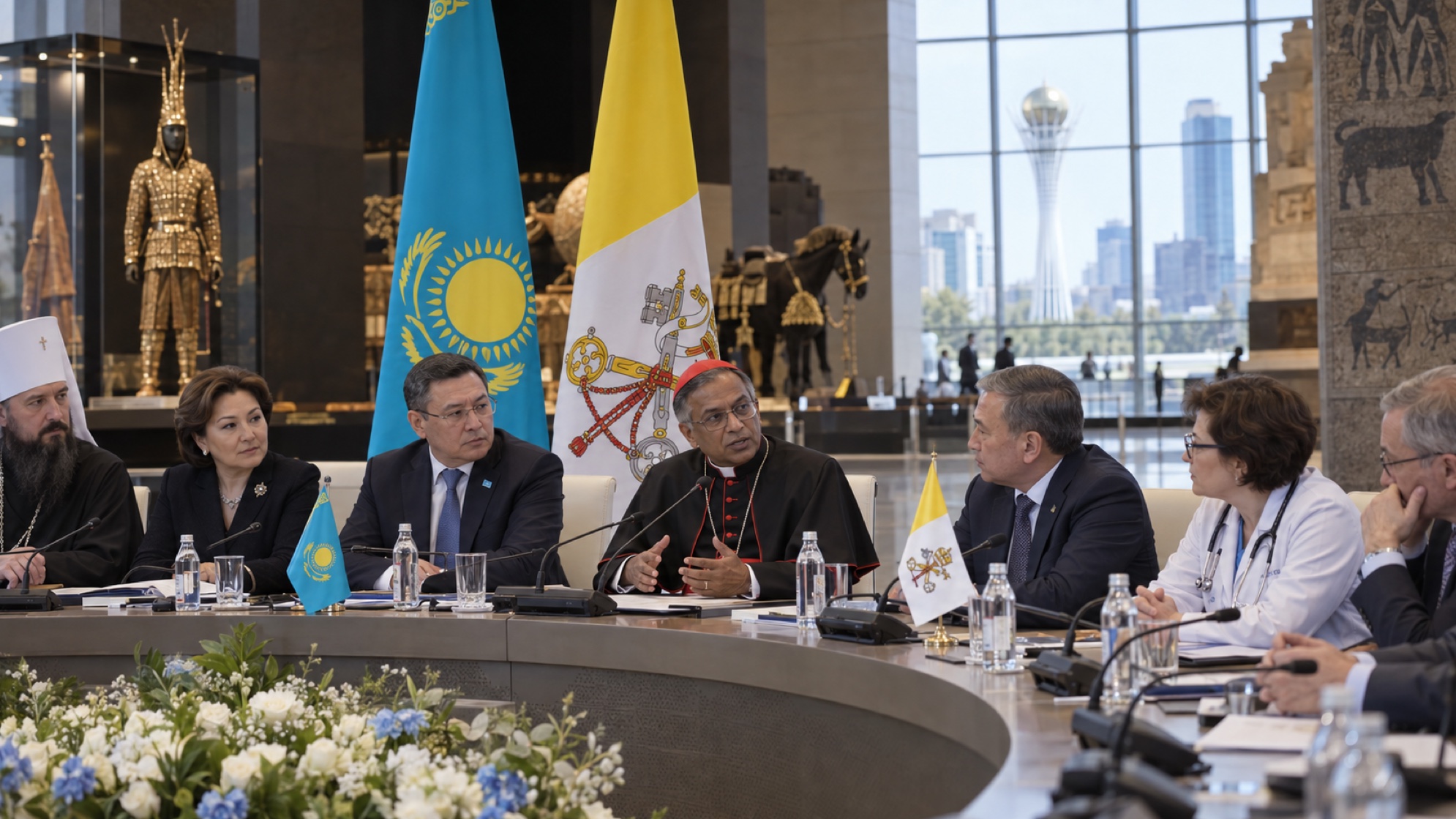
Kazakhstan and the Holy See are holding their second joint colloquium at the National Museum in Astana on 2–3 October. It focuses on the rights and dignity of children who are seriously ill or otherwise vulnerable.
Religious leaders are meeting paediatricians, bioethics specialists, international organisations and public officials. Cardinal George Jacob Koovakad, prefect of the Holy See’s Dicastery for Interreligious Dialogue, is co-chairing the event.
Why artificial intelligence is on the agenda
AI can help clinicians detect patterns in images and tests, assess risk and plan follow-up. The cost of error is particularly high in paediatrics: a child may not be able to describe symptoms precisely, and each decision affects a family.
The ethical question therefore goes beyond accuracy. Who is responsible for a recommendation? How are medical records protected? Can a system’s conclusion be explained to parents, and could technology displace human attention? The colloquium is considering these limits alongside AI’s potential.
Dignity beyond diagnosis
The Charter of the Rights of the Incurable Child is one reference point. Its central idea is that respect, comprehensive care and family support remain essential even when medicine cannot promise a cure.
Kazakhstan is also presenting lessons from the Zhusan humanitarian operation. Children and families returning from conflict zones needed sustained medical, psychological and social support rather than a single intervention.
The meeting’s practical value will depend on whether its ethical principles become clear rules for hospitals, developers and child-protection bodies. Technology helps only when it strengthens care instead of making it impersonal.
If you have found a mistake or a typo in this article, tell us about it
Comments (0)
Log in to leave a comment →
No comments yet. Be the first.