

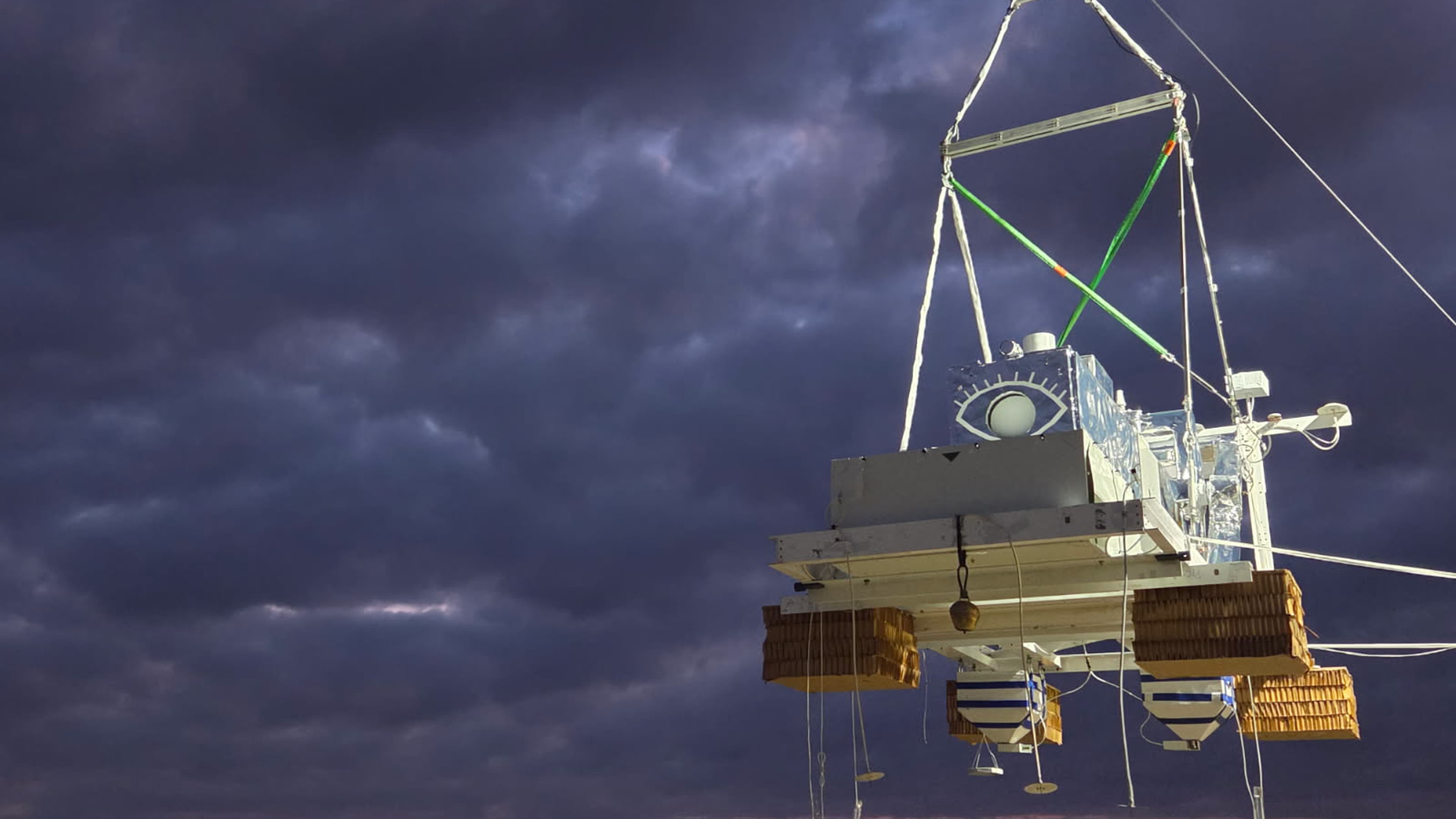
Telescope under a balloon: NASA tests a way to observe the solar corona
NASA reported the results of a CORSAIR/WASP science-balloon flight on 6 October. The launch took place in New Mexico on 5 October. The test supports a possible long-duration Antarctic observation of the Sun’s corona.
Not every telescope needs to go into orbit. On 6 October NASA reported a successful test of its CORSAIR/WASP instruments aboard a scientific balloon launched from Fort Sumner, New Mexico, the previous day. The flight concluded the agency’s autumn balloon campaign after an aborted September attempt.
Why lift the instrument at all?
CORSAIR is designed to study the solar corona, the Sun’s outer atmosphere. The WASP pointing platform holds the instrument accurately on target during flight. A balloon raises it above much of Earth’s atmosphere without the cost and complexity of a rocket and orbital spacecraft.
NASA says this flight reached about 31 kilometres and lasted roughly eight and a half hours. Its main purpose was to test the platform and observations, not announce a new discovery about the Sun.
A possible Antarctic mission
Researchers are considering a future Antarctic flight lasting at least 27 days, long enough to follow one solar rotation. That remains a potential mission subject to test results and further NASA decisions. The shorter flight matters because it tests whether the instrument can keep a steady eye on a demanding target for far longer.
Photo: NASA.
Primary source: https://www.nasa.gov/blogs/scientific-balloons/2026/10/06/nasa-balloon-campaign-concludes-with-final-science-flight/.
If you have found a mistake or a typo in this article, tell us about it
Comments (0)
Log in to leave a comment →
No comments yet. Be the first.