

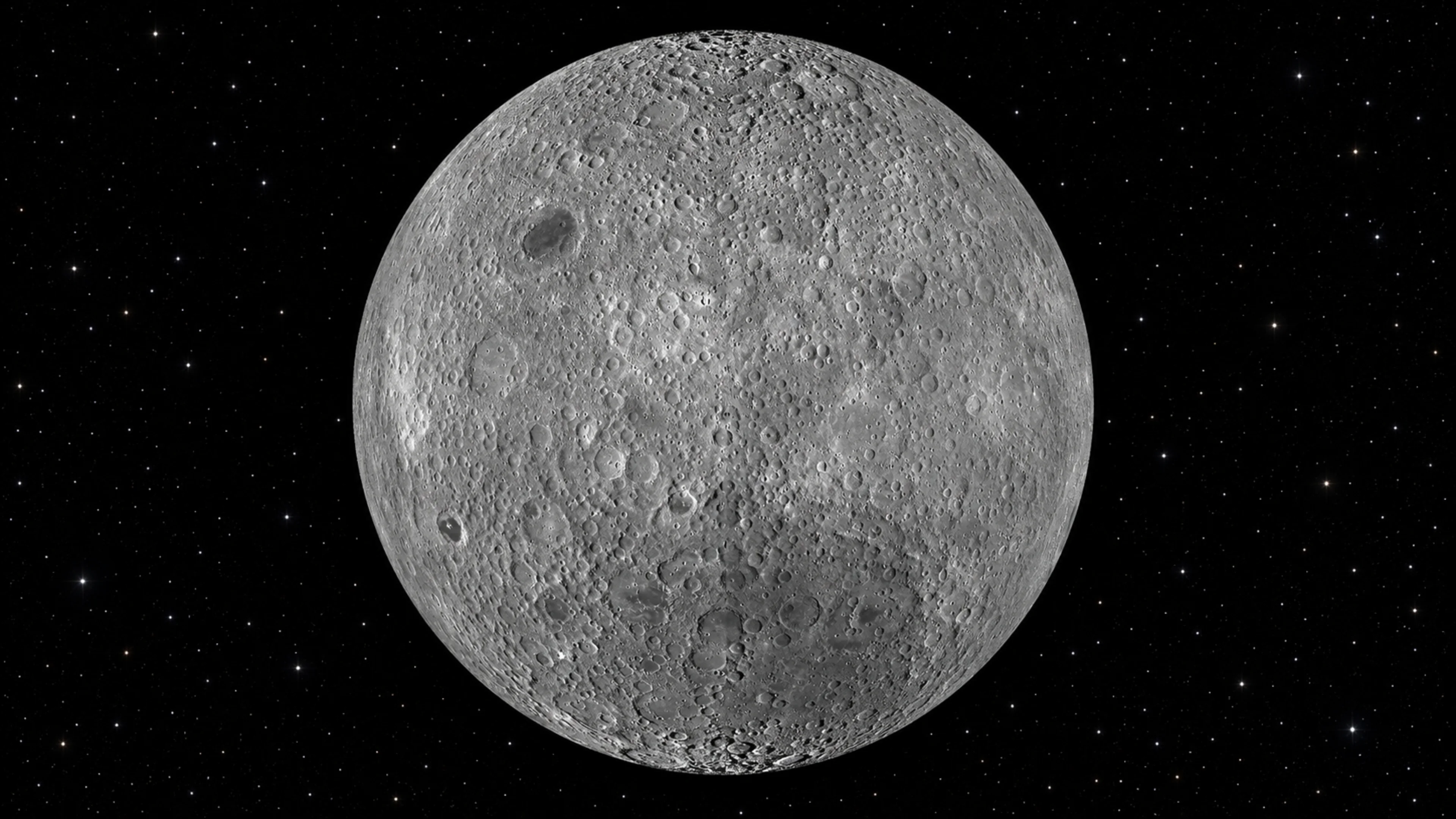
NASA’s 15,000-image lunar farside mosaic shows why the Moon’s two faces differ
NASA published a mosaic of the Moon’s farside assembled from Lunar Reconnaissance Orbiter images. A thicker crust may help explain the scarcity of dark lava plains there.
For its 10 October Astronomy Picture of the Day, NASA published a mosaic centred on the Moon’s farside. It draws on more than 15,000 wide-angle Lunar Reconnaissance Orbiter images taken between November 2009 and February 2011. The highest-resolution version shows features at about 100 metres per pixel. This is a newly featured mosaic, not imagery captured in the past day.
Why do the hemispheres look different?
The Moon keeps nearly the same face towards Earth because its rotation is synchronised with its orbit. The familiar near side has large dark maria, plains formed by ancient lava. The farside in the mosaic is brighter and more heavily cratered.
One likely explanation is a thicker farside crust. Molten rock would have found it harder to reach the surface and fill low areas, leaving fewer dark plains. NASA presents this as a likely explanation, not a final answer to every question about lunar geology.
The mosaic can help researchers compare craters and geological boundaries across a whole hemisphere and select sites for future study.
Primary source: science.nasa.gov.
Cover image: NASA/GSFC/Arizona State University, based on Lunar Reconnaissance Orbiter imagery.
If you have found a mistake or a typo in this article, tell us about it
Comments (0)
Log in to leave a comment →
No comments yet. Be the first.