


Mathematics: from foundations to higher mathematics Lesson 17 of 59
Proportion and scale: which relationship must stay fixed?
We solve proportions through an invariant ratio, distinguish direct and inverse relationships, and check units.
Where we are on the map
We move from equivalent ratios to finding an unknown quantity.
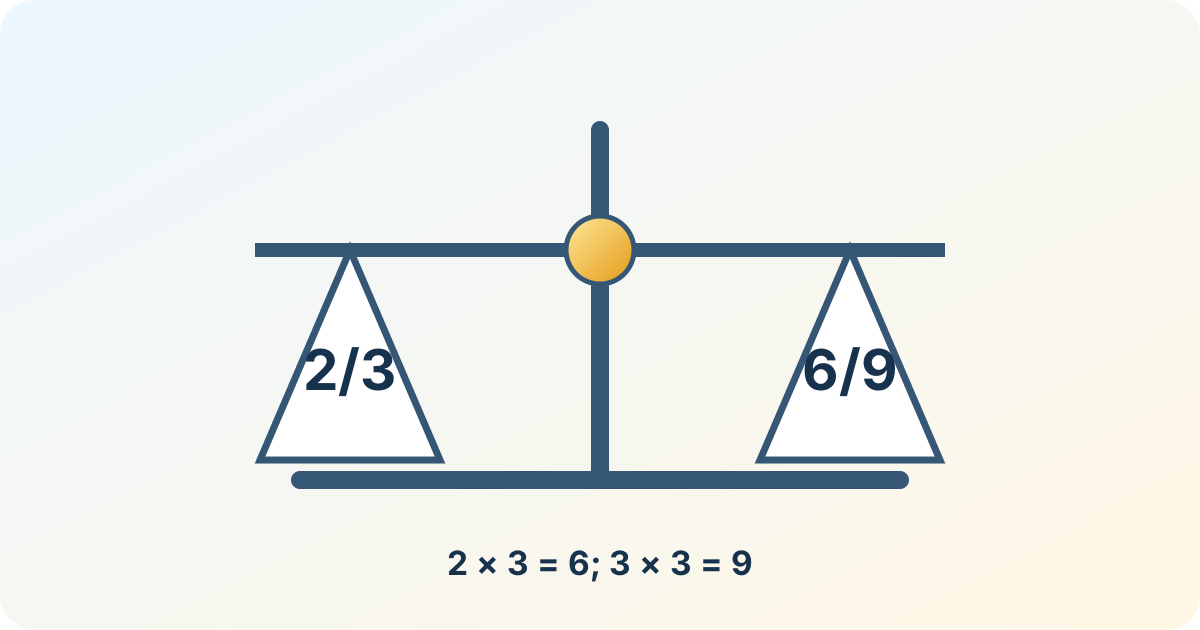
Begin with a familiar image
If 2 cm on a map represents 3 km, then 6 cm at the same scale represents 9 km.
Precise meaning
In direct proportion both quantities change by the same factor; in inverse proportion their product remains constant.
The lesson’s support signal
meaning → model → calculation → check → explain in your own words
what stays fixed? → direct or inverse? → units → calculate → check meaning
Worked example
2/3 = 6/9 because both values tripled; 2 × 9 = 3 × 6 provides a check.
Example with a fading prompt
Change the numbers in the example and repeat the solution without copying its steps. Estimate first, calculate exactly, and check against the original condition.
Recall without a prompt
- Define the main idea in one sentence.
- Rebuild the support signal from memory.
- Solve the example with different numbers and explain why every step is valid.
Find and correct the mistake
Saying twice as many equally productive workers need twice as much time is wrong: workers × time stays constant.
Transfer to a new setting
Apply the same relationship to something you can measure yourself. Name the quantities, units, and the boundary within which the model is valid. Check the answer by a second representation or an inverse operation.
Exercise
Required. Three litres of concentrate mix with 12 litres of water. Find each component in 35 litres of the same solution.
With your own data. Create one everyday example with the same structure and show it in words, a formula, and a check.
Optional. Seven days later, change the numbers and repeat without the support map.
Open perspective
The checkpoint combines fractions, ratio, percent, and proportion in unfamiliar settings.
If you have found a mistake or a typo in this article, tell us about it
Comments (0)
Log in to leave a comment →
No comments yet. Be the first.