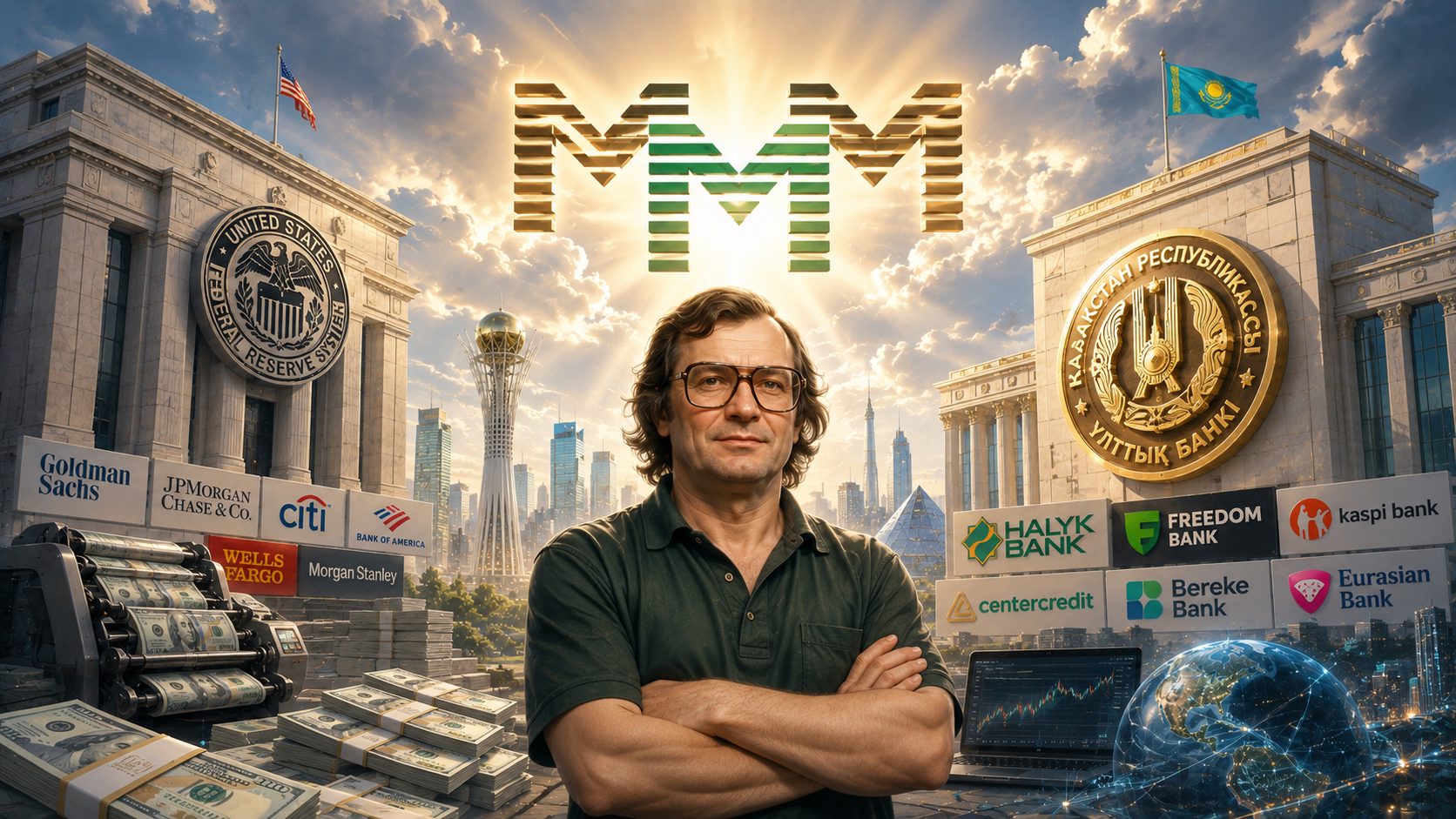
Mavrodi set the price of his own tickets twice a week, and his pyramid did not collapse — it was stopped from outside. He was seventy-six years late: the initials MMM already belonged to a Federal Reserve workbook describing how banks make money out of thin air. The US national debt stands at 40 trillion.
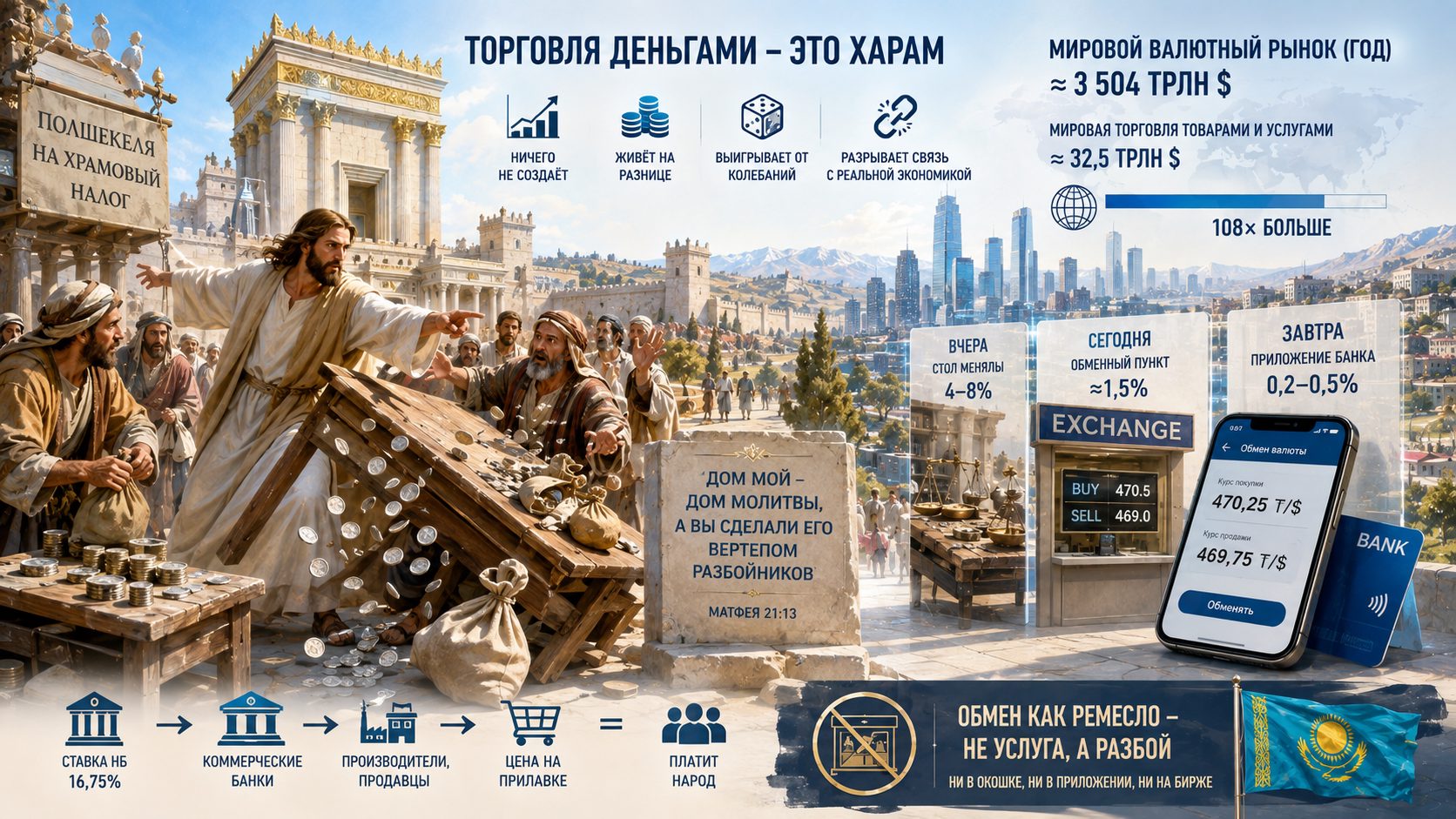
The shulhani was the money changer at his table in the Temple of Jerusalem, swapping foreign coin for the Tyrian shekel — the only currency the temple tax could be paid in. He took four to eight per cent and produced nothing: his income came from the fact that somebody else's payment was compulsory. Jesus overturned his tables.
People have argued about Palantir for twenty years, but about the wrong thing. It started in 2003 on money from the CIA's venture fund and hides nothing about what it does — its chief executive says so publicly. What matters is not the founders' rhetoric but the charter: one class of shares gives them 49.999999% of the vote.
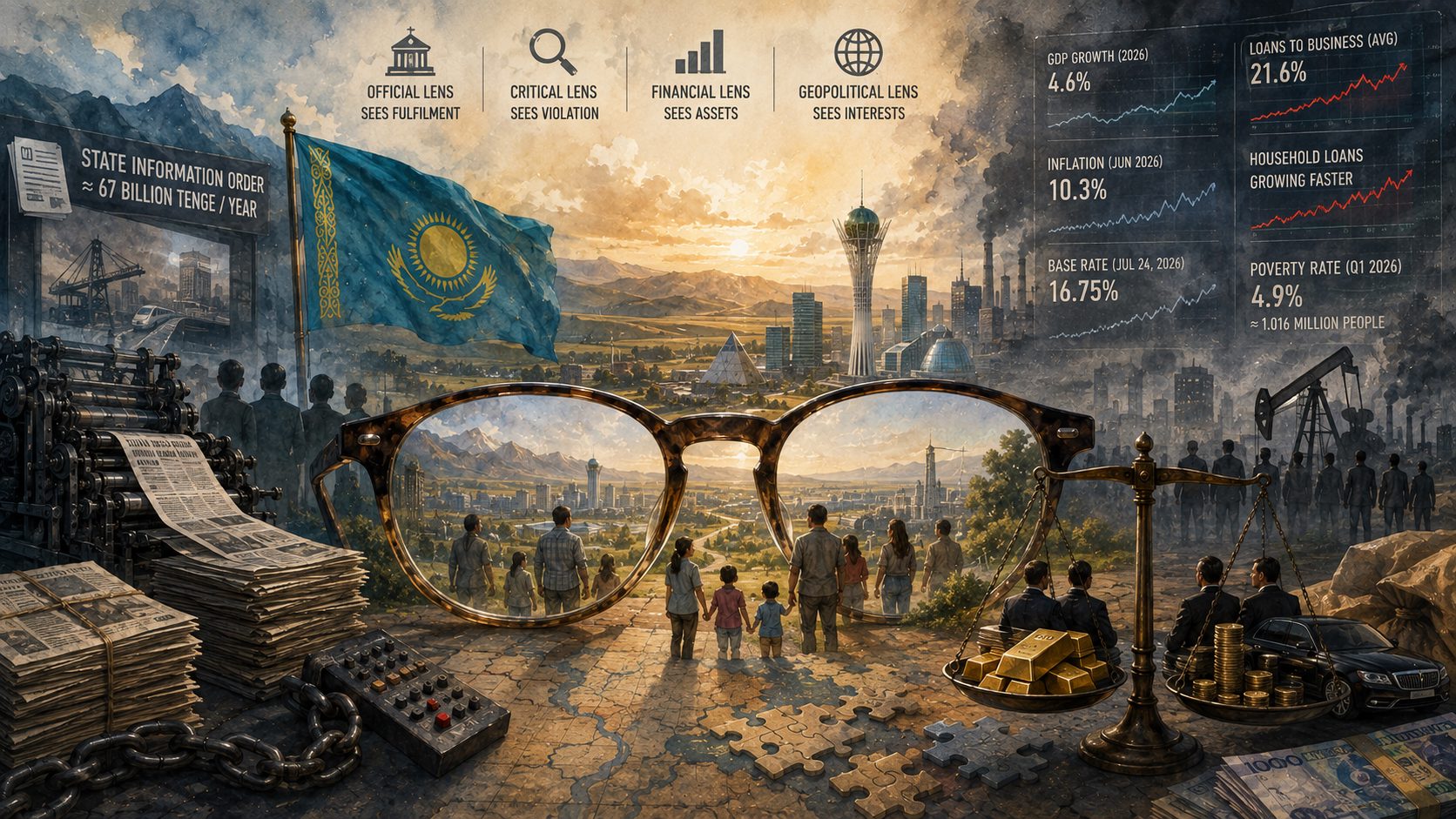
Four lenses write about Kazakhstan — the official, the critical, the business and the geopolitical — and each is built not to notice something. We gather the figures without a lens and examine what none of them sees: the country measures its summit, while the strength of an economy is decided at its floor, not its peak.
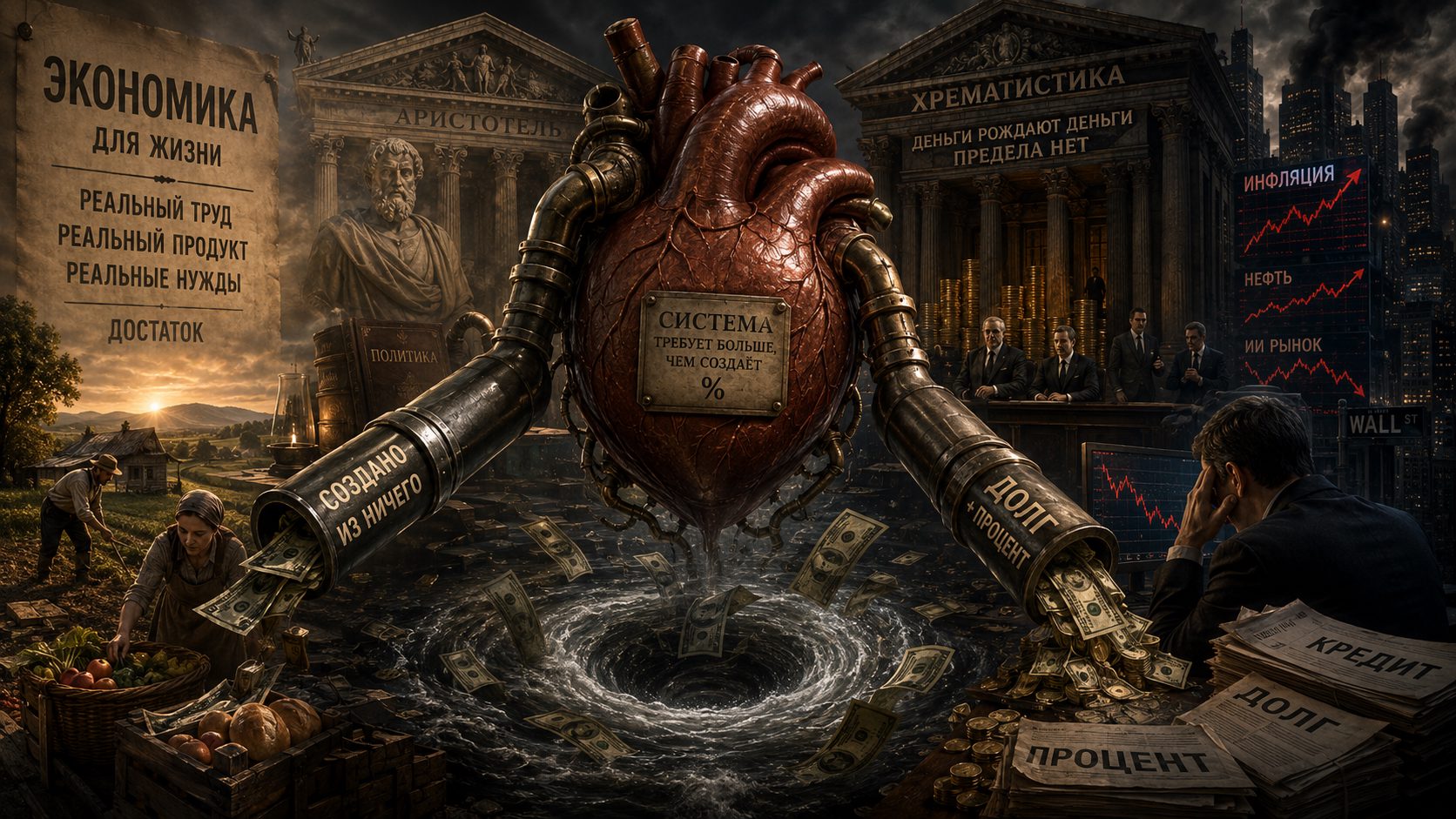
Aristotle split household management in two: oikonomia, providing for real needs, and chrematistics, accumulating money for its own sake. The second won and named itself economics. Why the Greek called interest offspring, why all three Abrahamic faiths forbade usury, and what a central bank's refinancing rate really is.
Money looks like a thing — coins, notes, figures in an account. In substance it is an agreement: a banknote has value not in itself but because everyone around has agreed to take it in exchange for work. First people trusted gold, then states, now increasingly code. Why inflation destroys not notes but trust.


 Economy