


SQL: a family budget without guesswork Lesson 3 of 4
Data reconciliation: find a gap before making a decision
Use control totals, duplicate candidates, and relationship checks to test completeness.
Why this matters
A query without an error does not prove complete data. One receipt imported twice creates a plausible but wrong total.
Image. Reconciliation is a scale at the warehouse exit: individual records look valid, but their total weight must agree.
See the whole thing first
SELECT happened_on, account_id, category_id, amount_tiyn, COUNT(*) AS copies
FROM transactions
GROUP BY happened_on, account_id, category_id, amount_tiyn, COALESCE(note, '')
HAVING COUNT(*) > 1;
Explanation
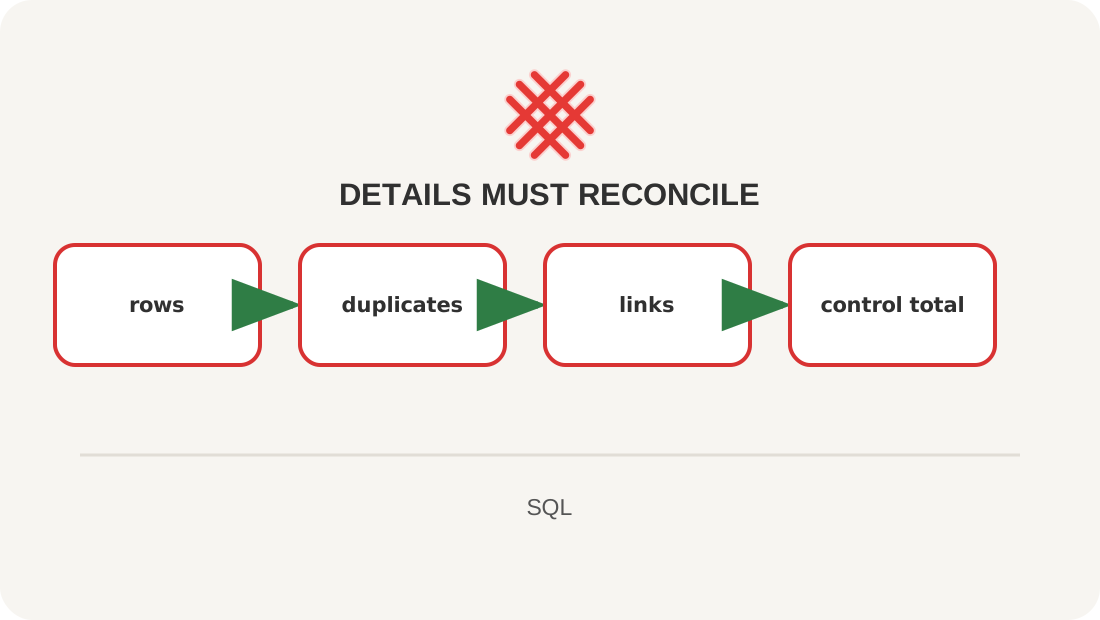
Duplicate identity is a business rule, not simply equal ids; equal dates and amounts may still be two purchases. foreign_key_check finds broken links and integrity_check checks file structure, but neither knows whether spending is sensible. A row CHECK cannot enforce a rule across a whole month. Opening balances plus income minus spending must reconcile with calculated balances.
Lesson map
Say it in your own words
- Why does a match only identify a duplicate candidate?
- How does integrity_check differ from a business check?
- What equation reconciles the budget?
Exercise
Record transaction count and expense total, insert a copied transaction with a new id, and show which checks detect it.
Where this fits in the project
Run reconciliation after imports and before publishing a report.
Answers
Show the answers
SELECT COUNT(*) AS rows_total FROM transactions;
SELECT SUM(amount_tiyn) AS expense_tiyn
FROM transactions JOIN categories ON categories.id=category_id
WHERE kind='expense';
Sources
If you have found a mistake or a typo in this article, tell us about it
Comments (0)
Log in to leave a comment →
No comments yet. Be the first.