


CASE, COALESCE, and dates: turn stored facts into a useful view
Compute display columns, handle NULL honestly, and define month boundaries.
Why this matters
The database stores stable facts—tiyn, ISO dates, and keys—while a reader needs tenge, labels, and a limit status.
Image. A stored fact is an ingredient; a SELECT expression plates it. Do not store an ingredient pre-cut for every possible dish.
See the whole thing first
SELECT happened_on,
       amount_tiyn / 100.0 AS amount_kzt,
       COALESCE(note, 'No note') AS note,
       CASE
           WHEN amount_tiyn >= 5000000 THEN 'large'
           WHEN amount_tiyn >= 1000000 THEN 'medium'
           ELSE 'small'
       END AS size
FROM transactions;
Explanation
AS names a result. Dividing by 100.0 produces a display value while the stored money stays integral. COALESCE returns the first non-NULL value without rewriting the fact. CASE checks conditions top-down. Pass period boundaries as parameters; SQLite date modifiers are useful but not portable syntax.
Lesson map
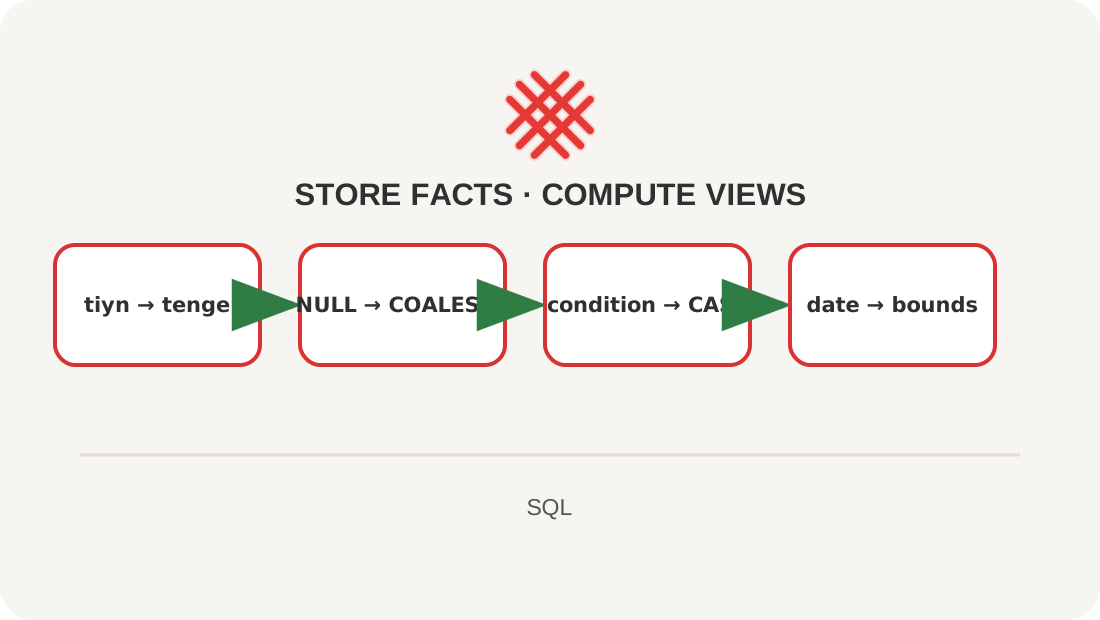
Say it in your own words
- Why keep tiyn after displaying tenge?
- What does COALESCE preserve?
- Why does CASE order matter?
Exercise
Add a label showing whether each expense is within its category limit.
Where this fits in the project
These expressions make the report readable without duplicating source facts.
Answers
Show the answers
SELECT id,
       CASE WHEN NULLIF(trim(note), '') IS NULL THEN 'no' ELSE 'yes' END AS has_note
FROM transactions;
Sources
If you have found a mistake or a typo in this article, tell us about it
Comments (0)
Log in to leave a comment →
No comments yet. Be the first.