


Tables, rows, columns, and NULL: model the budget first
We identify the project's accounts, categories, transactions, and limits, and separate a missing value from zero. Before learning syntax, understand the single fact represented by each row.
Why this matters
A poor model forces every query to guess. A person may decipher Food / card / 49800 in one cell; a database cannot know which part is the category, account, or amount.
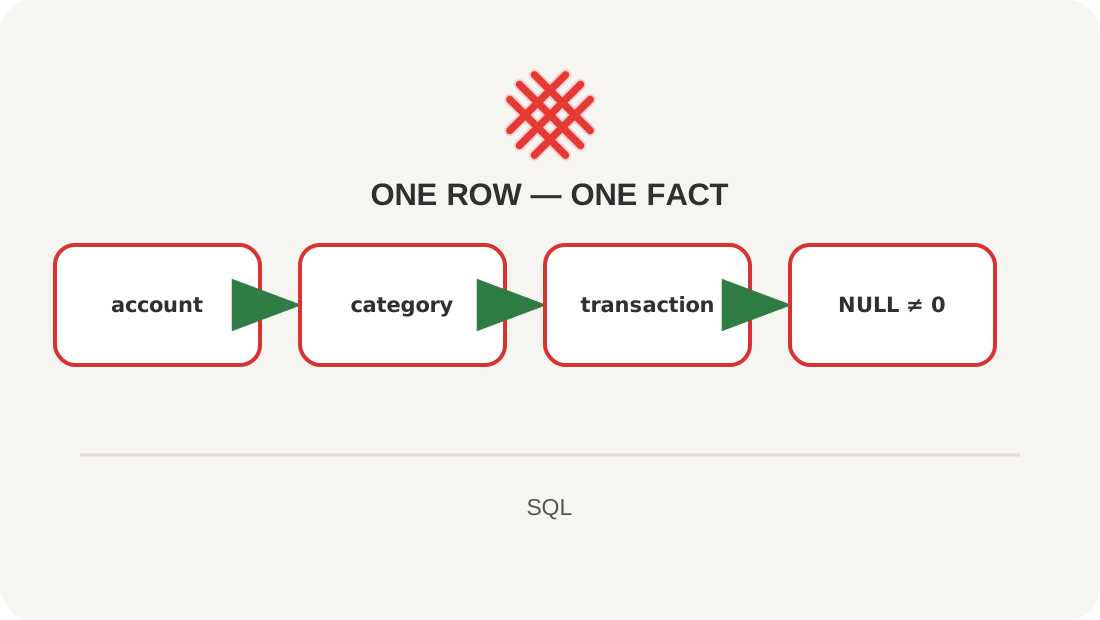
Image. One row is one complete sentence: “Transaction 7 happened on 10 September, on the Card account, in Transport, for 6,800 tenge.” A row that tells several unrelated stories is difficult to verify.
See the whole thing first
SELECT id, happened_on, amount_tiyn, note
FROM transactions
ORDER BY happened_on, id;
A table contains rows of one kind; a column gives a value its role. Primary key id names a row reliably. Foreign keys account_id and category_id connect it to other tables.
Explanation
accounts are places where money is kept. categories explain income or spending and may define a limit. transactions are events that happened. A monthly report is a computed result, not another copy of those facts.
NULL means unknown or not applicable. A salary limit is NULL because an expense limit does not apply; zero would mean spending is forbidden. Use IS NULL, never = NULL:
SELECT name
FROM categories
WHERE monthly_limit_tiyn IS NULL;
SQL uses three-valued logic: TRUE, FALSE, and UNKNOWN. That is why our date constraint also checks date(...) IS NOT NULL.
Lesson map
Say it in your own words
- What fact does one
transactionsrow store? - How does
NULLdiffer from zero and an empty string? - Why does a row need a stable key?
Exercise
Return only name and kind for categories without a monthly limit.
Where this fits in the project
The model becomes the database schema. Reports are calculated from source transactions, so two copies of one total never need synchronising.
Answers
Show the answers
SELECT name, kind
FROM categories
WHERE monthly_limit_tiyn IS NULL;
Sources
If you have found a mistake or a typo in this article, tell us about it
Comments (0)
Log in to leave a comment →
No comments yet. Be the first.