

NASA takes astrophysics archive site offline for security upgrades
HEASARC data remain available through the AWS open data repository and the HARK tool.
HEASARC data remain available through the AWS open data repository and the HARK tool.
 IT
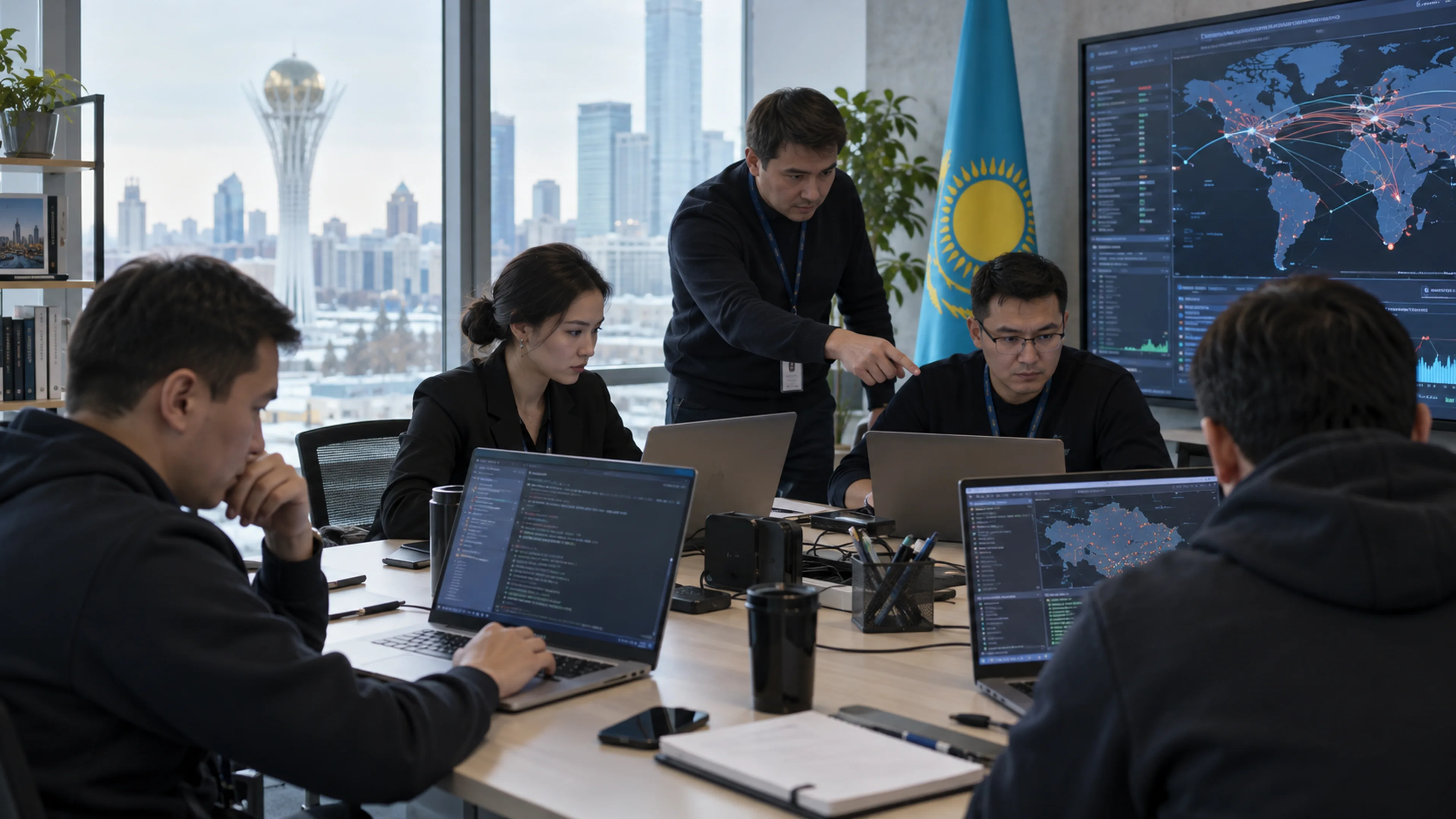
Kazakhstan has confirmed ratification of the international cybercrime convention in Strasbourg. Here is what cross-border evidence cooperation can do, and what it cannot promise yet.
 IT
Akorda reported on October 12 that Kazakhstan’s president signed a law ratifying the Convention on Cybercrime. It is a legal step toward cross-border cooperation against digital crime, but the brief announcement does not spell out every operational or privacy detail.
 IT
The digital ministry says eGov Mobile has 13.2 million users and more than 1,100 services. Its monthly audience, digital-document uses and QR signatures are separate measures; we explain what each says about real access to public services.
 IT
Berlin and London announced a joint response to hybrid threats against critical infrastructure. The announcement sets out cooperation, not yet a measured result. The UK government announced on 8 October a partnership with Germany against cyberattacks, sabotage and other hybrid threats.
 IT
Kazakhstan says 51 services are currently available through eGov GPT. The target of 150 by year-end is a plan, not an existing catalogue. Five digital service centres are open; the distinction matters when judging the rollout.
 IT
AI & Digital Bridge 2026 in Astana produced more than 60 agreements spanning AI, data centres, fintech, education and startups. Plans include a new data centre and a MultiBank regional office. We separate projects with stated commitments from memoranda that still need deadlines and delivery.
 IT
At the third AI Development Council meeting, Kazakhstan’s president called for full production-chain transformation rather than isolated digital pilots. The decisive issue is usable industrial data.
 IT
On September 29, 2026, Donald Trump gathered the heads of the world's largest artificial intelligence companies at the White House.
 IT
KazHackStan 2026 has brought 10,000 participants from seven countries to Astana to discuss critical infrastructure, deepfakes and AI-assisted attacks. Kazakhstan says it has identified more than 400 critical digital facilities and has proposed a national roadmap for post-quantum cryptography.
 IT
In 2 months, Kazakhstan’s pilot digital employment service sent 59,000 personalised offers and helped about 3,000 people find jobs. We examine who receives matches, what data the system uses and why real employment outcomes matter more than notification counts.
 IT
MikroTik has released fixes for three RouterOS vulnerabilities, while Kazakhstan’s KZ-CERT issued a separate warning. Here are the exact patched versions, how to check the Flagged status, how to restrict SSH, and what to inspect after updating a home or business router.
 IT
Astana’s HackAlem AI gathered 2,415 verified participants and earned a Guinness World Records title for the largest AI hackathon. The previous mark was 2,089. We explain how attendance was verified, why headcount alone does not measure solution quality, and what teams need if their prototypes are to become pilots and working products.
 IT
Microsoft has detailed a Storm-3168 attack on an Azure environment in which compromised service principals performed reconnaissance and launched more than 150 dangerous operations. The main destructive sequence lasted about seven minutes. Here is what was deleted, how a secret may have leaked and which controls actually limited the damage. The article ends with five checks for organizations that use cloud services and workload identities.
 IT
On 27 July 2026 Moonshot AI released the weights of Kimi K3: 2.8 trillion parameters, 104 billion active per token, a one-million-token context and second place in the Vals AI index — the most capable open model in history. What the small print in the word open actually says, and what running it free really costs.
 IT
What is worth fearing is not a revolt of the machines but duller, more real things. First, concentration: a tool that strengthens whoever holds it also strengthens those who already hold too much power. Second, substitution — when generated text is passed off as a checked fact and confidence as being right.
IT
The commonest argument against caring about privacy is that you have nothing to hide. It sounds reasonable, which is what makes it dangerous. Privacy is not about hiding: you close the bathroom door not because you are committing a crime in there. The danger is not one fact but a profile built from thousands.
 IT
If you are not paying for the product, the product is you — or more precisely your attention. Knowledge was once scarce; today information is endless while a person still has as much attention as a thousand years ago, a few waking hours a day. That scarcity is the whole substance of the new economy.
 IT
In a painting more than four hundred years old, dozens of children are absorbed in games, and not one of them looks dated. The toys change, the play does not. The young of every intelligent animal play, because play is a safe way to learn dangerous things: the one school where a mistake costs nothing.
IT
In your pocket sits a device that can reach any of billions of people in a second — and yet loneliness has become close to an epidemic. The network gave us endless contact and all but abolished closeness. A like is not an embrace, and a hundred friends in a feed will not replace one person who comes at three in the morning.
IT
Beginners think good code is clever code: dense, ingenious, impressive. The experienced know the opposite — the best code is boring and easy to follow. A program is written once and read dozens of times: by colleagues, by your future self, by whoever fixes it at three in the morning. Complexity is a debt.