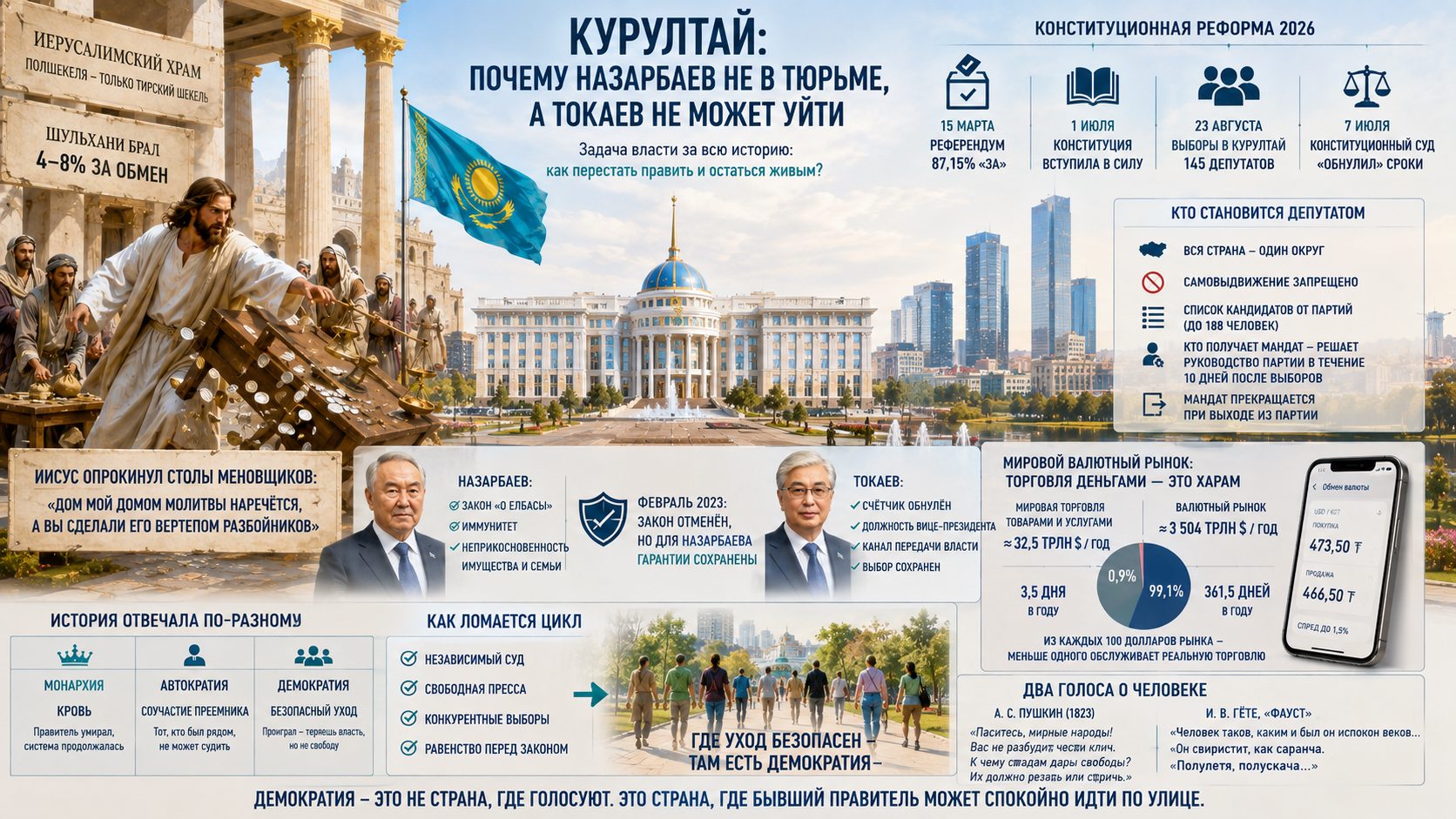
On 23 August Kazakhstan elects its Kurultai for the first time — a single-chamber parliament under a new constitution in which some 84% of the text was rewritten. The argument is about the reset of presidential terms, but that is a consequence. No system has solved how a ruler stops ruling and survives.
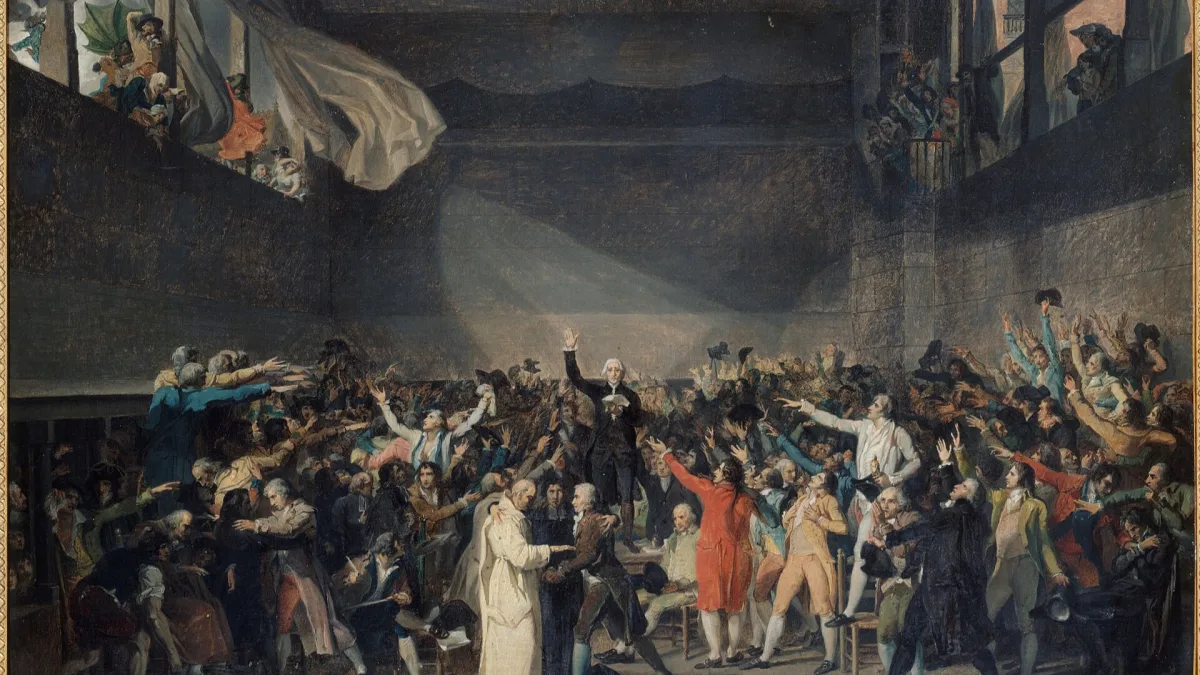
In a famous painting people raise their hands and swear not to disperse until they have come to an agreement. Nothing heroic at first glance — just an argument, just voices. But the moment when people chose to argue rather than kill one another is one of humanity's greatest achievements, paid for in blood.
Those who were never in a war speak of it handsomely; those who were speak quietly or not at all. In textbooks a war is arrows on a map and dates, but its real unit of measure is one son who did not come home. Where the line runs between defending peace and loving war. A strong army exists so that it never has to be used.
Wars rarely end the way they begin. Historians identify a few standard endings: decisive victory, which happens less often than people think; exhaustion, when both sides sit down at the table out of tiredness rather than generosity; and a freeze, as in Korea after 1953 — a border exists, a peace treaty does not.
No parliament ever passed a law creating a corruption tax, yet everyone pays it: in the price of bread, in the queue at the clinic, in the permit that gets speeded up. A builder writes the bribe into the estimate and the flat buyer pays it. One difference from an ordinary tax: it builds neither roads nor schools.
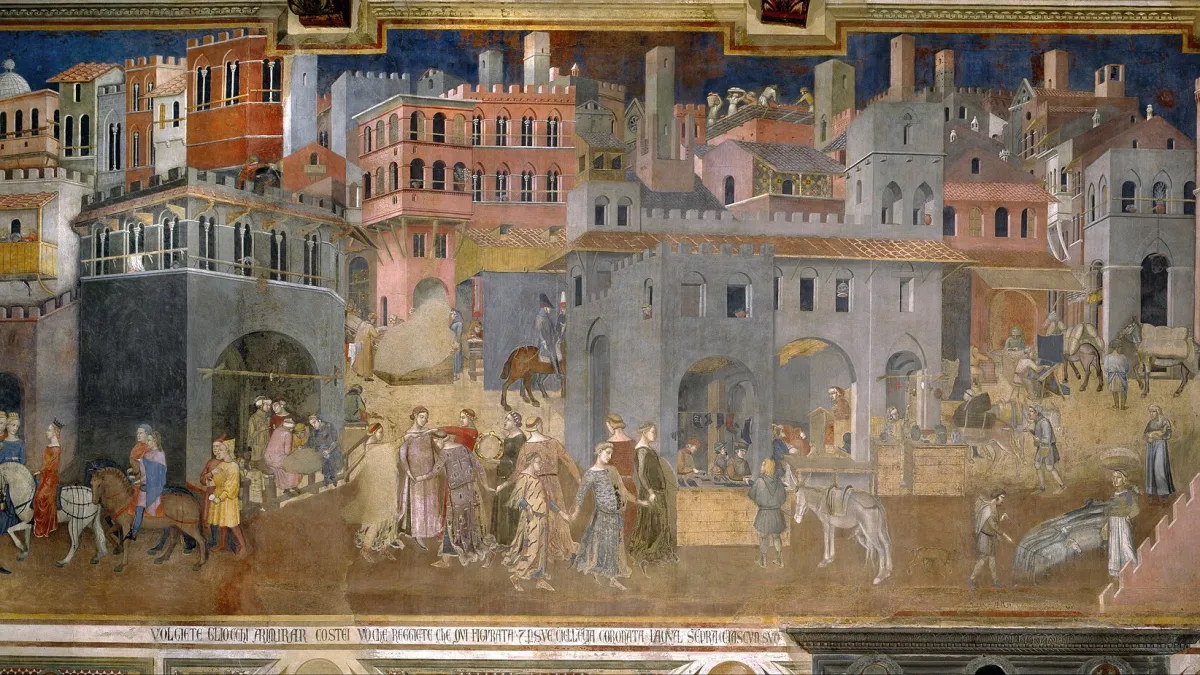
Seven hundred years ago Lorenzetti was commissioned to paint on the wall of a city council what separates good government from bad. He painted neither thrones nor battles but ordinary life: where rule is good, people work, trade and dance; where it is bad, there is fear and emptiness. Power is examined in an ordinary kitchen.
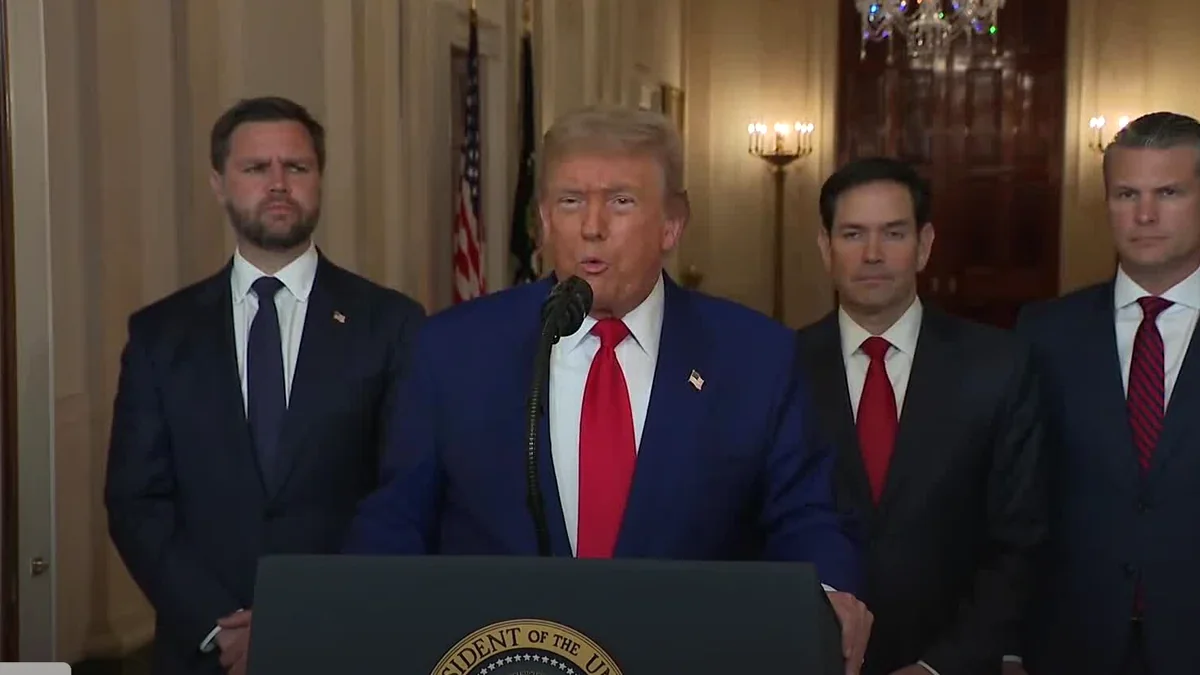
On 16 July Trump announced the declassification of intelligence on election security and said China had illegally obtained 220 million files on American voters. Three separate claims that must not be blurred together: a vulnerability, an attempt to interfere, and a vote actually rewritten are not the same thing.
A society where everyone thinks alike is not peace but either a graveyard or a barracks. Where not a single person disagrees, it usually means not that everyone is content but that the dissenters are afraid to open their mouths. The wall that gags your opponent today will stand in front of you tomorrow.
The rule of law sounds like dry legal language, but a simple idea stands behind it: rules must sit above people, including the most powerful. Where a person rules, the law shifts with the mood of power and nobody knows what tomorrow holds. Where law rules, the ruler obeys the same rules and people can plan.
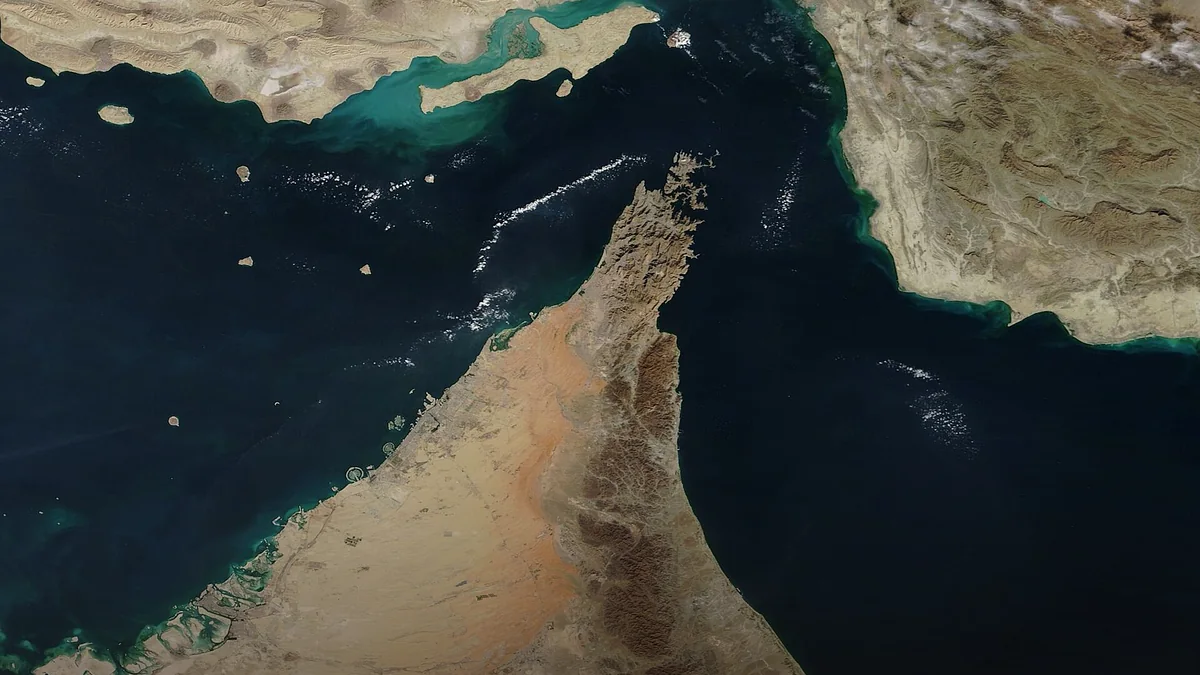
In one week, strikes hit a desalination plant in Kuwait, a grain ship off Odesa and tankers at Novorossiysk, through which about 80% of Kazakhstan's oil exports pass. Transit through the Strait of Hormuz fell by 62%. Four warring sides, one method: strike the infrastructure rather than the army.
It is easy to be disappointed by elections: it can seem that nothing changes anyway. Their point is not only who wins on a particular day. Their main function is quiet and constant — they make power dependent on people. A peaceful button marked replace is one of humanity's underrated inventions.


 Politics