Why do we need space when there are so many problems on Earth is an honest question and deserves an honest answer. Almost everything space does comes back to Earth: satellites are weather forecasts, communications, navigation, watching over harvests and fires. And civilisations that stopped exploring began to fade.
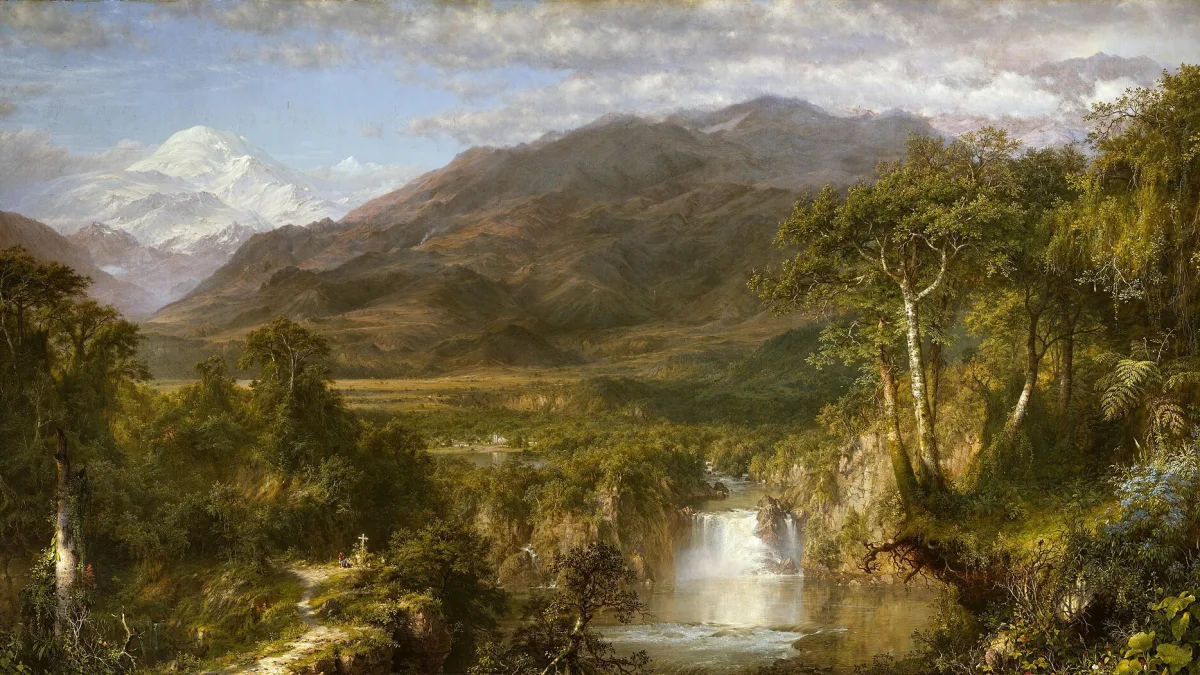
There are places — the peaks of the Andes, the depths of the Amazon — where a person feels small for the first time in a long while. That is not humiliation but medicine. A city is built so that a person feels like the centre of the world; nature was here before us and will be here after. And people protect not what is useful but what they love.
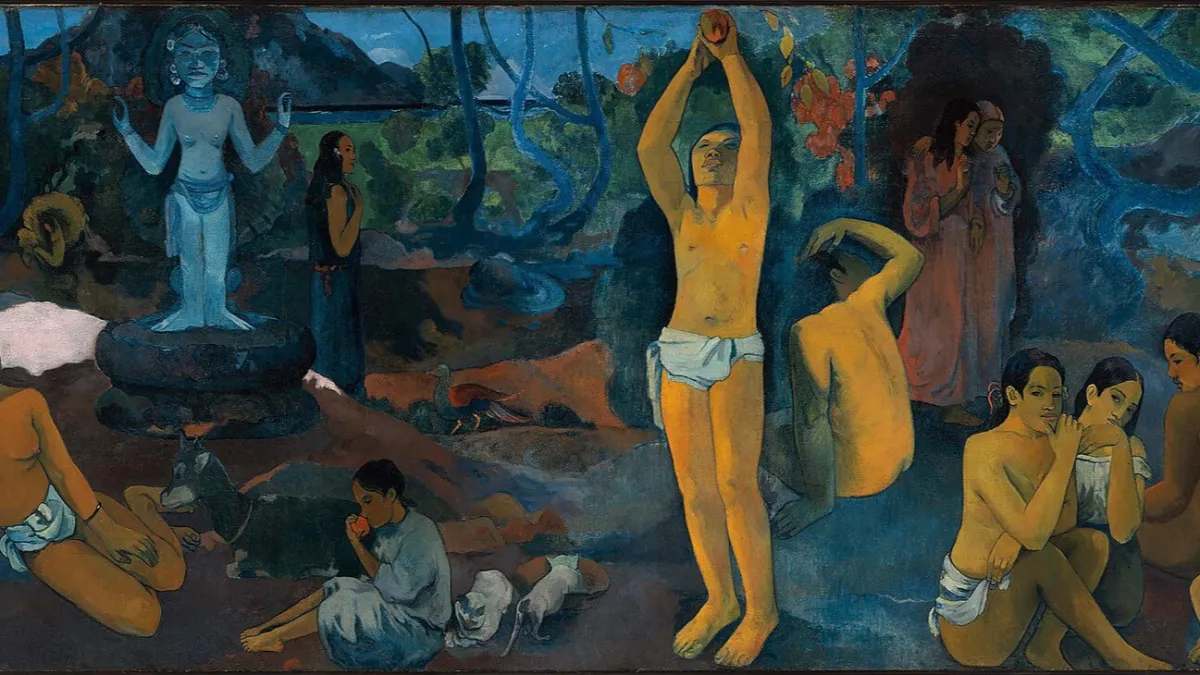
Having sailed to a distant island in Oceania, Gauguin painted a vast canvas and signed it with three questions: where do we come from, what are we, where are we going. He fled civilisation and found that these questions cannot be outrun: they live not around you but inside you. People who have an answer to why can bear almost any how.
For thousands of years people looked at the sky and envied the most ordinary bird: king of the earth, and its prisoner too. Before the first aeroplane left the ground, hundreds jumped from towers on homemade wings and died. Having achieved flight, humanity did not settle down but at once wanted to go higher.
If everyone had the number of days they had left glowing on their wrist, the world would change in a single night. We husband money, which can be earned again, and never count the hours, which cannot be returned. Seneca noticed what we still have not learnt: life is not short, we squander most of it.
The confrontation between the United States and Iran has run for decades and flares up periodically, yet no large direct war has happened. Deterrence works while both sides reckon the price of a collision higher than the prize. Sanctions, proxies and pinpoint strikes are ways to press without crossing the line where everyone loses.
Take a handful of stardust, give it fourteen billion years, and one day it will open its eyes and ask where it came from. The iron in your blood, the calcium in your bones and the oxygen in your breath were born inside stars that died long before the Sun. One day that matter arranged itself so as to know itself.
Chess is older than almost every state now in existence. Why a game on sixty-four squares outlived the empires that saw it: it has no luck and no external factors — only you, your opponent and the consequences of your decisions. A loss cannot be blamed on bad fortune. The stronger player thinks a move further, not hits harder.
By mid-July 2026 estimates of the dead in the war around Iran range from 7,144 to 9,676 and more, with the wounded put at about 46,965. The spread itself is telling: in a live war nobody knows the exact figure, and a range is more honest than a single line. Why a person must be seen behind each number.
From outside, boxing looks like brute force: two people hitting each other, and the tougher one wins. The closer you look, the clearer it becomes that it is above all self-command. Whoever loses their head to anger opens up and loses. The loser is not the one knocked down but the one who does not get up.
There are truths that cannot be spoken in earnest but can be told with a laugh. A jester could say to a king's face what would have cost a minister his head. Power knows how to crush anger — it can be declared a revolt; laughter cannot be caught. Nobody trembles before a man who has been mocked.
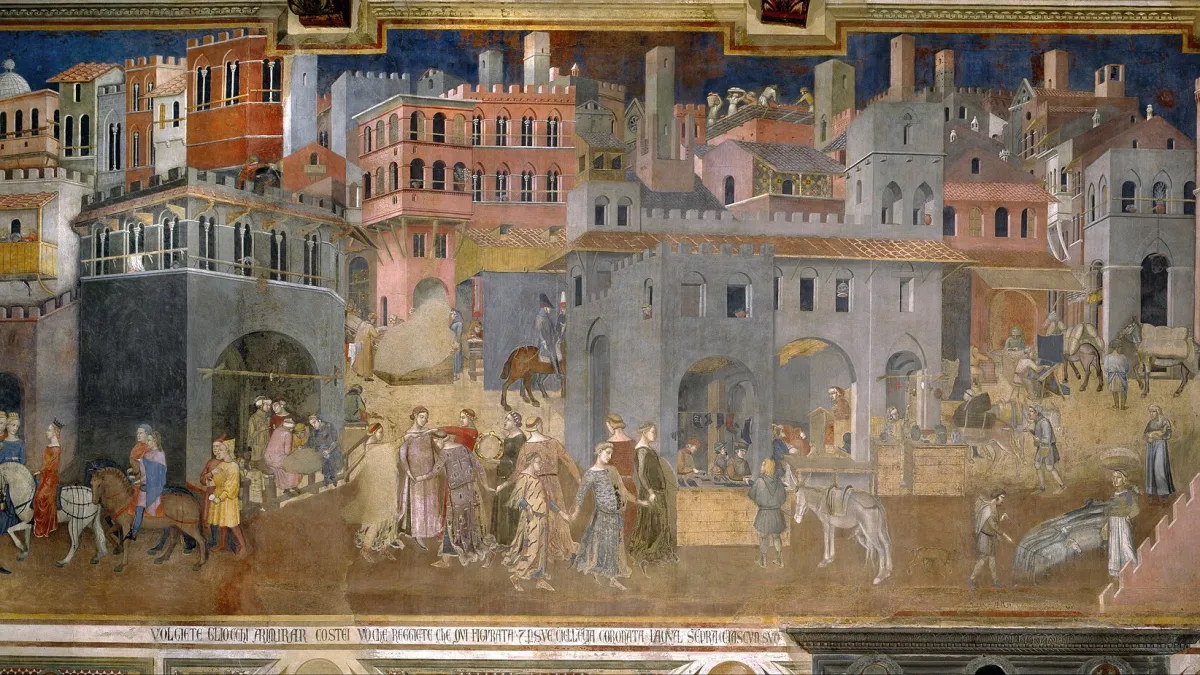
Seven hundred years ago Lorenzetti was commissioned to paint on the wall of a city council what separates good government from bad. He painted neither thrones nor battles but ordinary life: where rule is good, people work, trade and dance; where it is bad, there is fear and emptiness. Power is examined in an ordinary kitchen.
Picture the inside of a bank: there is no pile of coins matching your account. The money is working, lent out, invested. What actually lies in a bank is invisible and matters more than gold. While the belief holds, the system runs — although there is not enough real money for everyone at once. That is why a crisis looks like an epidemic of fear.
Behind every crime stands not only the victim, who must not be forgotten, but a question society dislikes asking: how did a person capable of this come about. Prison deals with him when everything has already happened — when school, family and some adult's first unmade choice have all been missed.
Once every four years the planet looks in the same direction at the same time. Why football: the game needs no words and no equipment — a ball and two goals exist everywhere, from the yards of Almaty to the beaches of Rio. How to read a tournament by its structure rather than by the score. Class shows after a goal conceded.
On 16 July in Shanghai it was announced: more than 70 documents worth over $15 billion. Not one has a published breakdown, and neither a journalist nor a member of parliament can check what the figure is made of. The package mixes contracts with memorandums of intent. Different obligations entirely.
Everything you save will one day pass to others or vanish: the house decays, the money loses value, the name is forgotten. There is one thing that can be neither taken nor wasted — what you gave away. Kindness rarely comes back from the person you helped; it returns later, from somebody you never expected.
What is worth fearing is not a revolt of the machines but duller, more real things. First, concentration: a tool that strengthens whoever holds it also strengthens those who already hold too much power. Second, substitution — when generated text is passed off as a checked fact and confidence as being right.
There is a convenient fairy tale: one man at the top is to blame for everything. It is convenient because it relieves everyone else of responsibility. Power that cannot be changed grows not out of one office but out of thousands of small decisions to say nothing. Silence looks neutral; in fact it is a vote.
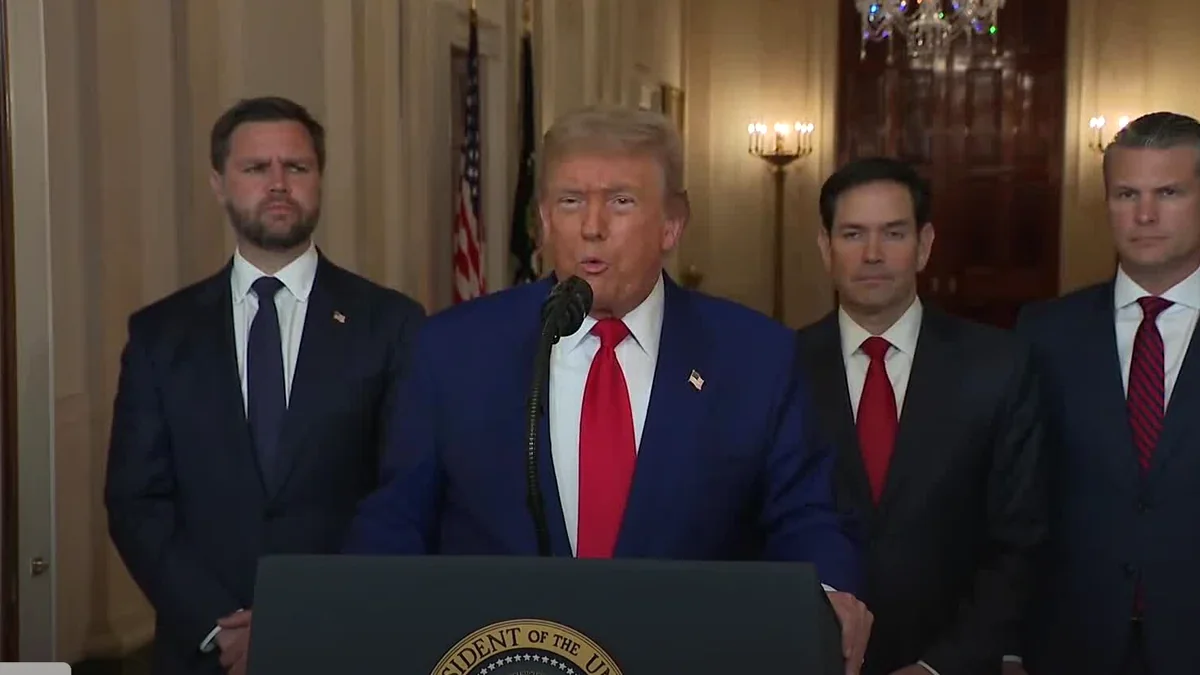
On 16 July Trump announced the declassification of intelligence on election security and said China had illegally obtained 220 million files on American voters. Three separate claims that must not be blurred together: a vulnerability, an attempt to interfere, and a vote actually rewritten are not the same thing.
Few inventions have given people so much freedom: get in and go wherever you like, whenever you like. But the bill arrives later and is paid by everyone, including those with no car. First we fitted the city to the automobile, then discovered we live somewhere that is uncomfortable without one.


 Technology