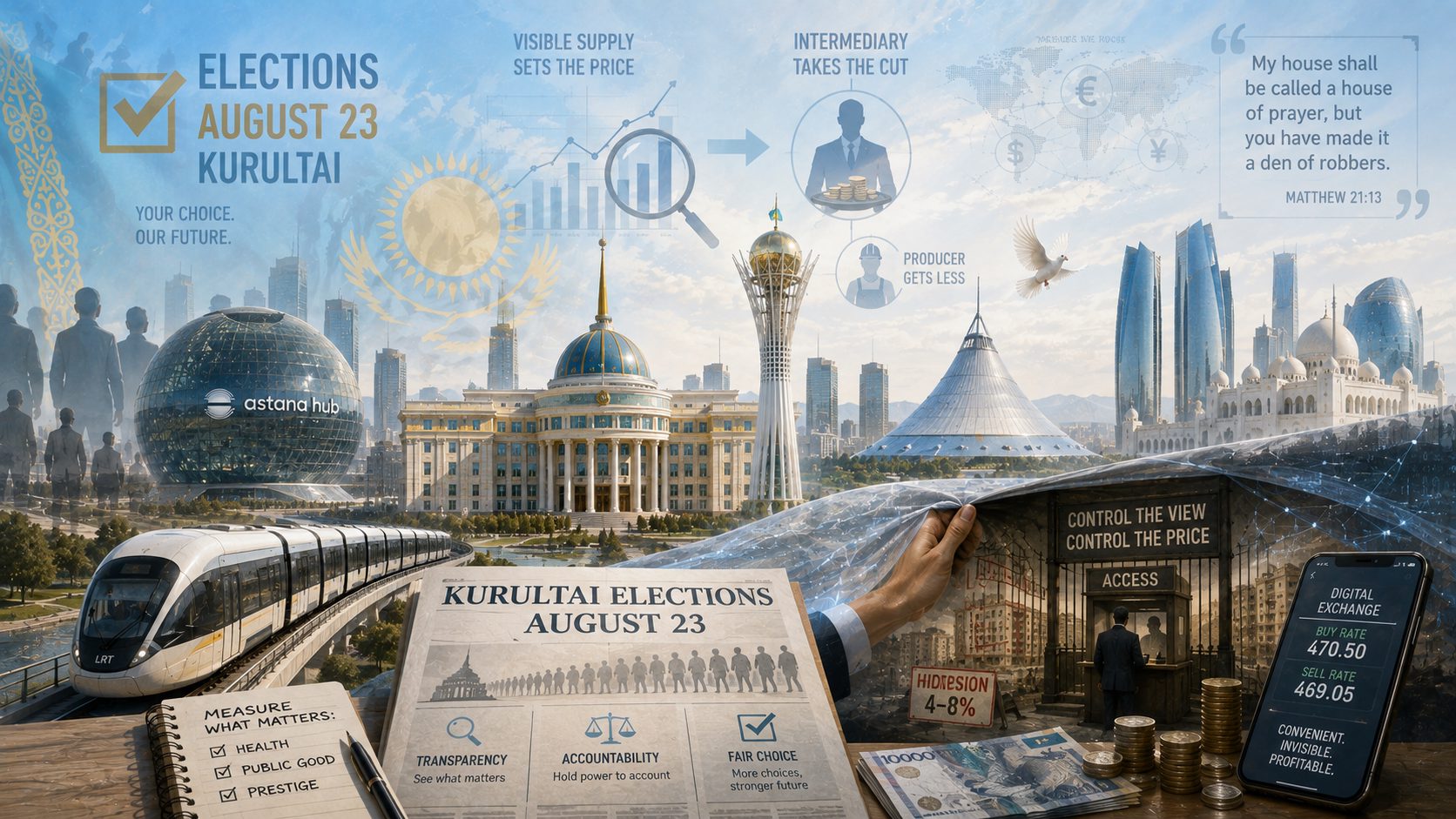
Why rents rise when no apartment has disappeared, and why power grows dearer when there is nobody to replace it. The mechanism is one and the same, uncovered on airline screens in 1981: price is set not by how much exists but by how much is visible. The earnings go not to whoever produces, but to whoever stands in the doorway.
By the time you have made coffee, come down in the lift and taken cash from a machine, you have used three robots — they simply do not look the way they do in films. A robot is not a body but an automated decision, and the less visible it is the better it works. The real weakness is not a revolt but one quiet failure.
Moonshot AI has presented Kimi K3, the largest open-weight model in history: 2.8 trillion parameters, built-in vision and a one-million-token context window. The key phrase is open weights — the model can be installed on your own hardware. The author notes that he himself runs on a competitor's model.
Why do we need space when there are so many problems on Earth is an honest question and deserves an honest answer. Almost everything space does comes back to Earth: satellites are weather forecasts, communications, navigation, watching over harvests and fires. And civilisations that stopped exploring began to fade.
For thousands of years people looked at the sky and envied the most ordinary bird: king of the earth, and its prisoner too. Before the first aeroplane left the ground, hundreds jumped from towers on homemade wings and died. Having achieved flight, humanity did not settle down but at once wanted to go higher.
Take a handful of stardust, give it fourteen billion years, and one day it will open its eyes and ask where it came from. The iron in your blood, the calcium in your bones and the oxygen in your breath were born inside stars that died long before the Sun. One day that matter arranged itself so as to know itself.
Few inventions have given people so much freedom: get in and go wherever you like, whenever you like. But the bill arrives later and is paid by everyone, including those with no car. First we fitted the city to the automobile, then discovered we live somewhere that is uncomfortable without one.
Censorship is older than the printing press, but its power always rested on one thing: control of a narrow neck — one press, one broadcaster, one censor at the entrance. The digital age smeared that neck across millions of devices. Blocking one point is easy; blocking all of them is close to impossible.
For centuries humanity read the book of life without being able to write in it, breeding blindly and hoping. To decipher a genome is to learn to read; to edit one is to learn to write. Where the line runs: correcting a gene in a sick person is one thing, rewriting the heredity of people who never consented is another.
On 16 July Bloomberg reported that Google's flagship model was delayed by months: Alphabet shares fell 4.4%, some $200 billion in a day. The same day China's Moonshot released Kimi K3 and promised its weights to everyone. Why open weights matter more here than data centres. One company could not ship on time.


 Technology