

Go: from zero to your own blog Lesson 28 of 50
SQL: two tables, JOIN and foreign keys
The twenty-eighth lesson of the Go course. An article acquires comments, and they do not fit inside it. A second table and the key between them, join against left join, cascading deletes, and the SQLite trap that leaves foreign keys silent and rows orphaned.
Why this matters
Last lesson there was one table and everything was simple: a row was an article.
Now comments arrive. One article may have none of them and may have fifty, and you cannot know in advance. There is nowhere to put them in the same row: columns named comment1, comment2, comment3 are not a schema but a dead end.
The right answer is a second table that points at the first. Today we work out how to tie it on, how to collect both back into one answer, and what happens to the comments when the article is deleted.
The whole thing at once
Open the same blog.db as last lesson, with the same three lines of setup:
.mode box
.headers on
pragma foreign_keys = on;
The second table:
create table comments (
    id         integer primary key,
    article_id integer not null references articles(id) on delete cascade,
    author     text    not null,
    body       text    not null
) strict;
There is one key line here, and it is the first thing we take apart.
Taking it apart
The second table points at the first
Comments do not live inside an article. They live in a table of their own and point at the article by number:
article_id integer not null references articles(id) on delete cascade
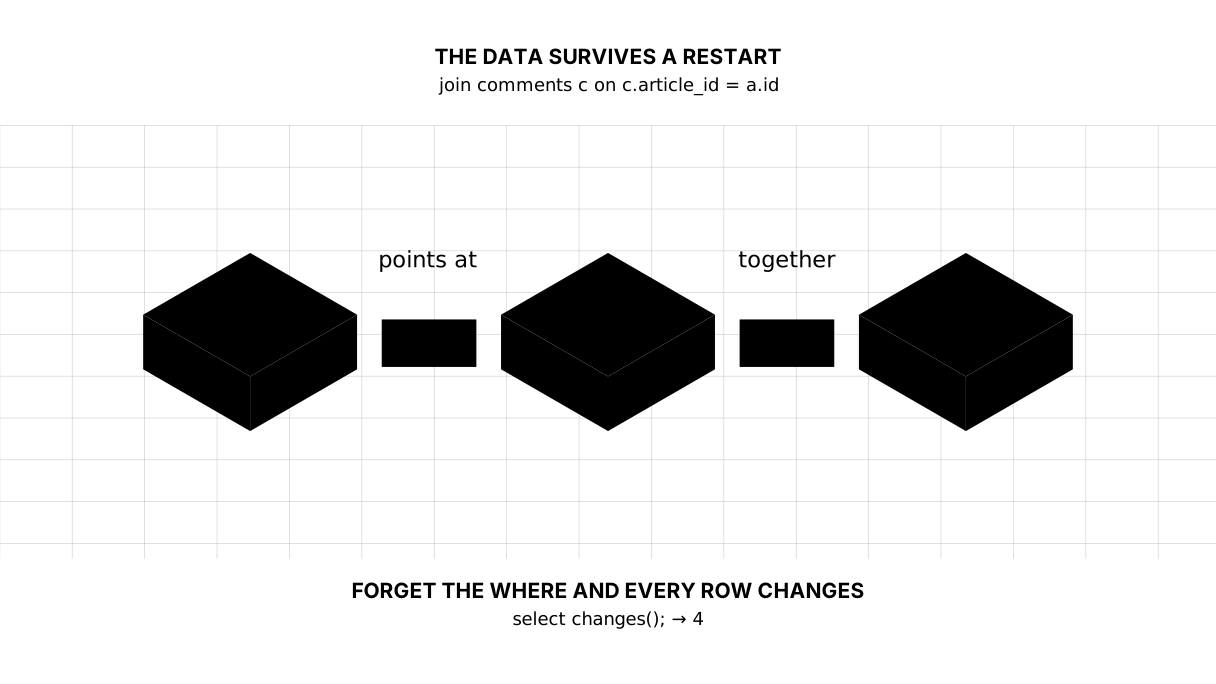
That is the foreign key: comments.article_id holds an articles.id. references tells the database that no stranger’s number belongs there, and on delete cascade that an article takes its comments with it.
There are no comments yet — let us add three, to the first article and the second:
insert into comments (article_id, author, body) values
  (1, 'Asel', 'Good piece'),
  (1, 'Dana', 'Thanks'),
  (2, 'Asel', 'Will there be one on the crown?');
join: only those with a pair
Collecting the comments together with the articles is the job of join:
select a.title, c.author, c.body
from articles a
join comments c on c.article_id = a.id
order by a.id, c.id;
┌────────────────────┬────────┬─────────────────────────────────┐
│       title        │ author │              body               │
├────────────────────┼────────┼─────────────────────────────────┤
│ About the steppe   │ Asel   │ Good piece                      │
│ About the steppe   │ Dana   │ Thanks                          │
│ What a shanyraq is │ Asel   │ Will there be one on the crown? │
└────────────────────┴────────┴─────────────────────────────────┘
join keeps only the pairs that matched. Articles with no comments will not appear at all — and a front page needs them, even with a zero.
left join: and those without one
It takes every row of the left table and puts nothing on the right where there is no pair.
select a.title, count(c.id) as comments
from articles a
left join comments c on c.article_id = a.id
group by a.id, a.title
order by comments desc, a.id;
┌────────────────────┬──────────┐
│       title        │ comments │
├────────────────────┼──────────┤
│ About the steppe   │ 2        │
│ What a shanyraq is │ 1        │
│ Hello, world       │ 0        │
│ Draft              │ 0        │
└────────────────────┴──────────┘
count(c.id) counts the comments and group by gathers rows into groups per article. Note the zeros on the last two: a plain join would simply not have shown them.
The SQLite trap: foreign keys are off
Delete an article and check whether its comments went with it:
delete from articles where slug = 'dala';
select count(*) as comments_left from comments;
┌───────────────┐
│ comments_left │
├───────────────┤
│ 1             │
└───────────────┘
There were three comments, two belonged to the deleted article, and one remains. on delete cascade did its job.
It did so because at the very beginning we wrote:
pragma foreign_keys = on;
Without that line, nothing written above about keys works at all. Check it on a fresh connection:
pragma foreign_keys;
┌──────────────┐
│ foreign_keys │
├──────────────┤
│ 0            │
└──────────────┘
Zero. For historical reasons SQLite keeps foreign-key checking off by default, and it has to be switched on again in every connection. Silently, with no error: references is recorded in the schema and simply not enforced, and on delete cascade leaves the comments orphaned.
It is the first thing you will do next lesson, when Go connects to the database.
The lesson map
Say it in your own words
Without looking, answer out loud or on paper. The answers are at the end of the lesson.
- Why do the comments live in a table of their own rather than as columns in
articles? - How does
joindiffer fromleft join, and when does the difference show? - What happens to
on delete cascadeifpragma foreign_keys = onis forgotten?
Exercise
Required. Add a third table, tags, and connect it to the articles. One article can carry several tags and one tag can sit on several articles, so the connection needs a table of its own with two columns. Write a query that lists articles with their tags, and a second one that counts how many articles each tag has.
Optional.
- Insert a comment for an article number that does not exist and read what the database says. Then switch
pragma foreign_keysoff and try again. - Replace the
left joinwith ajoinin the counting query and explain where the two rows went. - Delete an article that has no comments and confirm that the comment count does not change.
Where this goes in your blog
The schema from these two lessons is the blog’s schema. Next lesson Go connects to it: database/sql, a driver, and the first row read from a file rather than from a slice.
Still open. We typed the queries by hand in a console: from Go they have to be sent so that a stranger’s text cannot become part of the command, which is the lesson on injections. And pragma foreign_keys has to be switched on in every connection, of which a program has several — the next lesson says so separately.
Answers
Show the answers
- Because the number of comments is not known in advance while a table has a fixed number of columns. Columns
comment1,comment2run out at the third comment, and you cannot search or count by them. A separate table removes the limit: it holds as many rows as are needed. joinkeeps only the pairs that matched on the key, whileleft jointakes every row of the left table and puts nothing where there is no pair. The difference shows exactly when there are unpaired rows: an article with no comments does not appear in ajoinat all, and appears with a zero in aleft join.- Nothing happens — and that is the worst outcome. There is no error,
referencesstays recorded in the schema, and it simply stops being enforced: deleting an article leaves its comments pointing at a number that no longer exists. That is whypragma foreign_keys = onis switched on in every connection.
Sources
If you have found a mistake or a typo in this article, tell us about it
Comments (0)
Log in to leave a comment →
No comments yet. Be the first.