


Informatics: build your own digital assistant Lesson 37 of 38
Tests and modules protect changes
Turn paper examples into executable tests and split the program into clear parts.
Where we are on the map
This is lesson 37 of 72 in the Python block (27–38). The support map shows verifiable transitions. We continue the 0.3 paper contract: five reminder outcomes and the original fictional tasks.
Situation and question
Yesterday reminders worked. After adding done, the assistant started reminding users about finished tasks. How can we catch this before sharing it? Have the computer repeat earlier checks after every change.
New words without gaps
A module is an importable Python file: assistant_core.py holds rules and assistant.py commands. An import makes a module’s name available elsewhere. A test runs an input and checks the expected result; assert reports disagreement. A unit test checks a small function alone; an end-to-end test runs a command through a file and inspects the result. A regression is a returning bug after a change. A fixture is prepared test data. A wrong expected value makes a test useless, so compare it with the paper contract first.
The lesson’s support signal
Input → check the rule → change state → observable result. Point to where the program reads data, compares it with the contract, and merely reports the result. If a step is absent from the map, find it in the code and add it to your own trace.
Work through it step by step
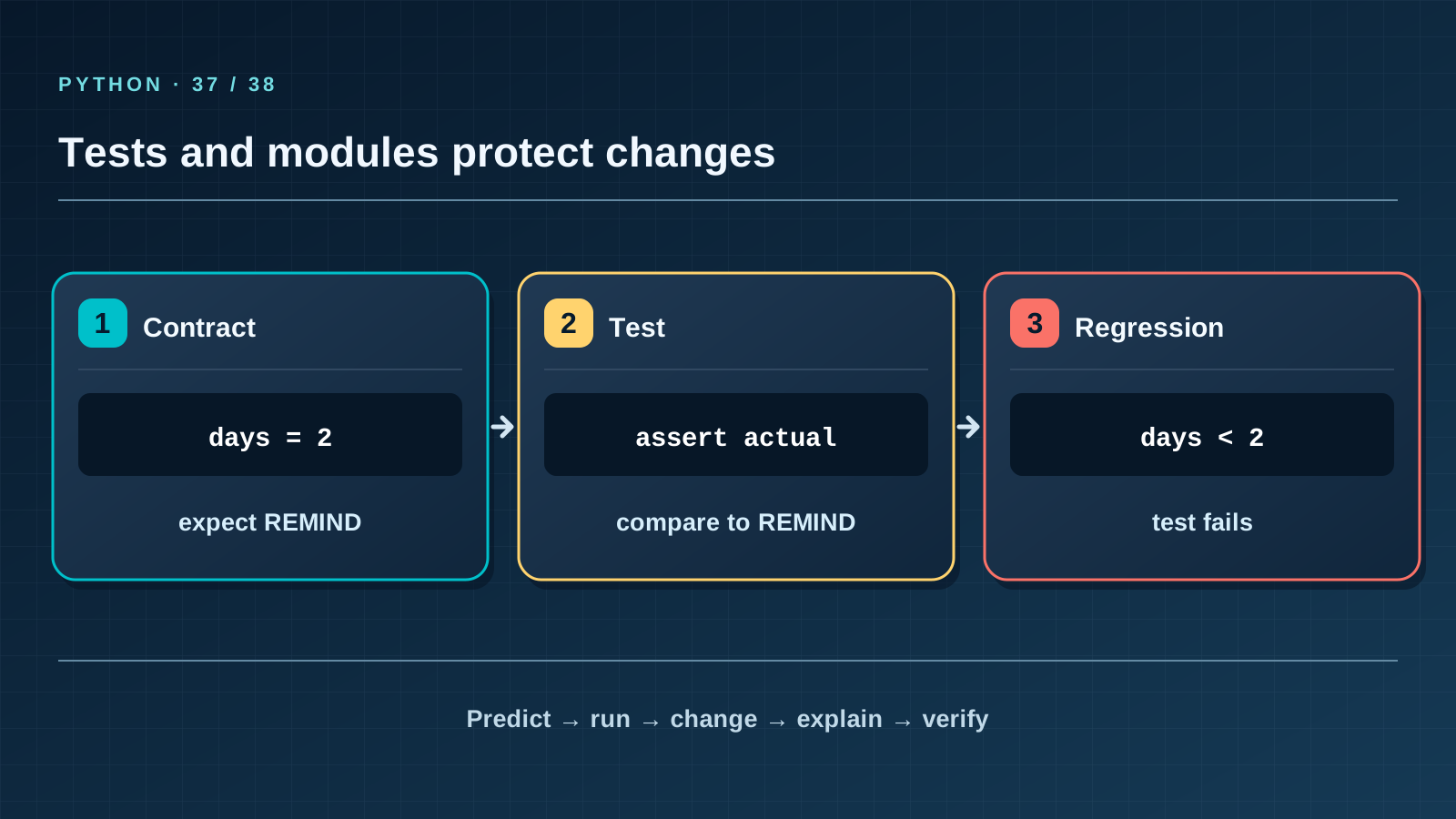
Take the 0.3 table: completed → DONE, no date → NO_DATE, past date → OVERDUE, today or within two days → REMIND, later → NOT_YET. Check each case separately; the example shows a minimal assert. Change <= 2 to < 2: the two-day boundary test must fail. Restore the rule and rerun every case. The duplicate-ID test is separate from date tests because it protects a different contract.
Predict and check
Cover the output block. Trace names line by line and write the exact predicted text, including case and line order. Only then run the code with python3 from step-03 and compare character by character. Change one input and predict again before running. If results differ, find the first divergent line instead of adjusting the prediction afterwards.
from datetime import date
from assistant_core import reminder_status
task = {"done": False, "due_date": "2026-10-11"}
actual = reminder_status(task, date(2026, 10, 9))
assert actual == "REMIND"
print("Boundary test passed")
Expected output
Boundary test passed
Catch the error
assert result == result always passes, even for a wrong result. A test using the real current date can pass today and fail tomorrow. Write the exact expected output first and pass today explicitly.
Project change
Run tests/test_assistant.py with python3 -m unittest discover -s tests -v. Rules, files, and CLI are checked separately. The three fictional 0.2 records remain source data; new tests use temporary copies rather than replacing them.
Task and evidence
Write tests for five reminder outcomes, counts of 0 and 3 finished tasks, duplicate ID, invalid February, and preserving Ә. Add one end-to-end add → done → reload test. Deliberately break a rule, observe the failing test, restore it, and record the command that runs the whole suite.
Transfer to a new setting
A school quiz changes its scoring. Which old test would catch a correct answer once again receiving zero? Give an input, expected output, and boundary that needs its own test.
Return after 1, 7, and 30 days
After 1 day, recall the rule and one boundary case without this page. After 7 days, explain a new error example to a classmate. After 30 days, rerun the project test, check earlier records and output still match, and transfer the rule to a different task again.
Next lesson
If you have found a mistake or a typo in this article, tell us about it
Comments (0)
Log in to leave a comment →
No comments yet. Be the first.