


Informatics: build your own digital assistant Lesson 49 of 72
Cleaning data without losing its provenance
Correct a bad row while preserving the original and the reason for every decision.
Where we are on the map
Lesson 49 of 72, Data, tables and databases block (47–54). We continue assistant 1.1 with three fictional tasks. By the end, records live in local SQLite while tested reminder rules remain unchanged.
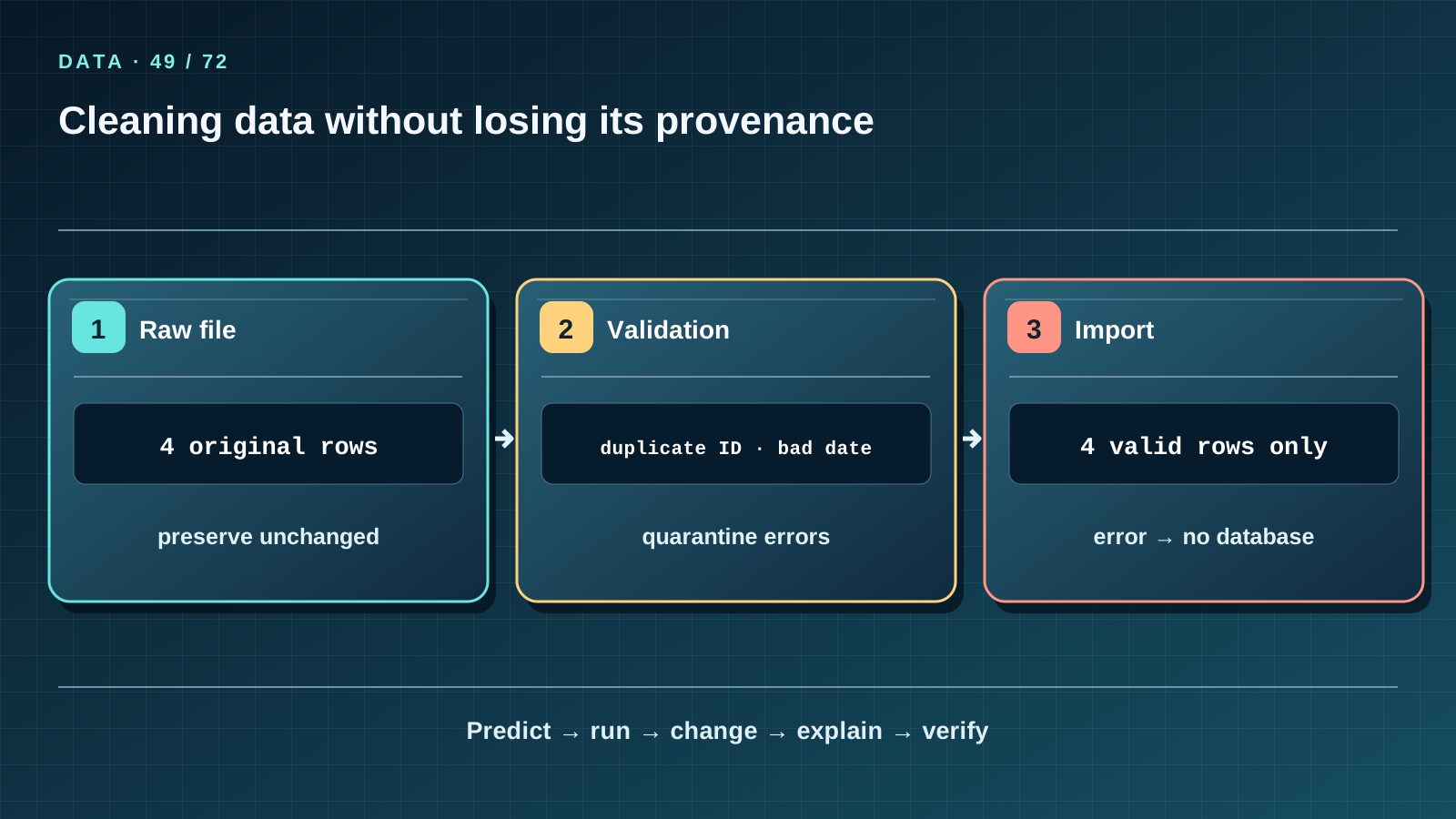
Situation and question
Another copy of the journal contains s-04 twice and a date 2026-02-29. Can we just delete the ugly rows? That would hide evidence that an export was duplicated or damaged.
New words without gaps
Cleaning checks and repairs data under stated rules. Provenance is the path from source to result. A raw file preserves what arrived; a cleaned set contains accepted rows. A quarantine lists rejected rows with reasons. Here a duplicate means the same session_id, even if other fields differ. Validation checks real calendar dates, integer minutes from 0 to 180, known task_id, and paper/app sources.
The lesson’s support signal
Read the map left to right. Name each arrow’s input, transformation and check. Cover the third step and predict it. Then locate the matching row in CSV, SQL or the report: an arrow must not replace real values or relationships.
Work through it step by step
Make a copy of the CSV and leave the original untouched. Inspect rows in order: accept s-01, then quarantine the second s-01 as a repeated ID. Reject 29 February 2026: that year is not a leap year. Reject t-99 as a link to a task that does not exist. In code, read_sessions validates all rows before returning them to the database builder. One bad observation stops import; at this stage we require a deliberate source correction.
Predict and check
Write the exact expected output, including row order, before running anything. Execute the snippet in step-05 and compare characters. Change one input, then predict, run and explain again. The example proves only the stated rule; fictional teaching data do not become measurements of real people.
from data_store import read_sessions
rows = read_sessions("study_sessions.csv", {"t-01", "t-02", "t-03"})
print(len(rows), sum(row[3] for row in rows))
Expected output
4 70
Catch the error
Deleting a row without a decision log makes the result impossible to reproduce. Automatically replacing an unknown date with today invents a fact. Turning a blank duration into zero silently claims the session took zero minutes.
Project change
Keep the four original fictional rows. Make a paper quarantine for three damaged examples and repair only a working copy. The 1.2 importer refuses to create a database until the whole CSV passes validation.
Task and evidence
Write a separate rejection reason for a repeated ID, an impossible date, and an unknown task_id. What evidence would justify repairing each row, and which file stays unchanged?
Transfer to a new setting
Two sites publish different figures for one event. Why should you keep the URLs, retrieval dates and selection rules before drawing one combined chart?
Return after 1, 7, and 30 days
After 1 day redraw the map from memory and name a case where the simple analogy fails. After 7 days explain a fresh table without the text and answer at least 7 of the final lesson’s 10 questions. After 30 days repeat import into a temporary folder and check three tasks, four sessions, total 70 and unchanged reminders. Record any unclear term and return to its first definition.
Primary reference to check
Next lesson
If you have found a mistake or a typo in this article, tell us about it
Comments (0)
Log in to leave a comment →
No comments yet. Be the first.