

Informatics: build your own digital assistant Lesson 70 of 72
Adding AI while keeping the human in control
The model suggests `math`, but the learner titles a task “Read the history of mathematics.
Where we are on the map
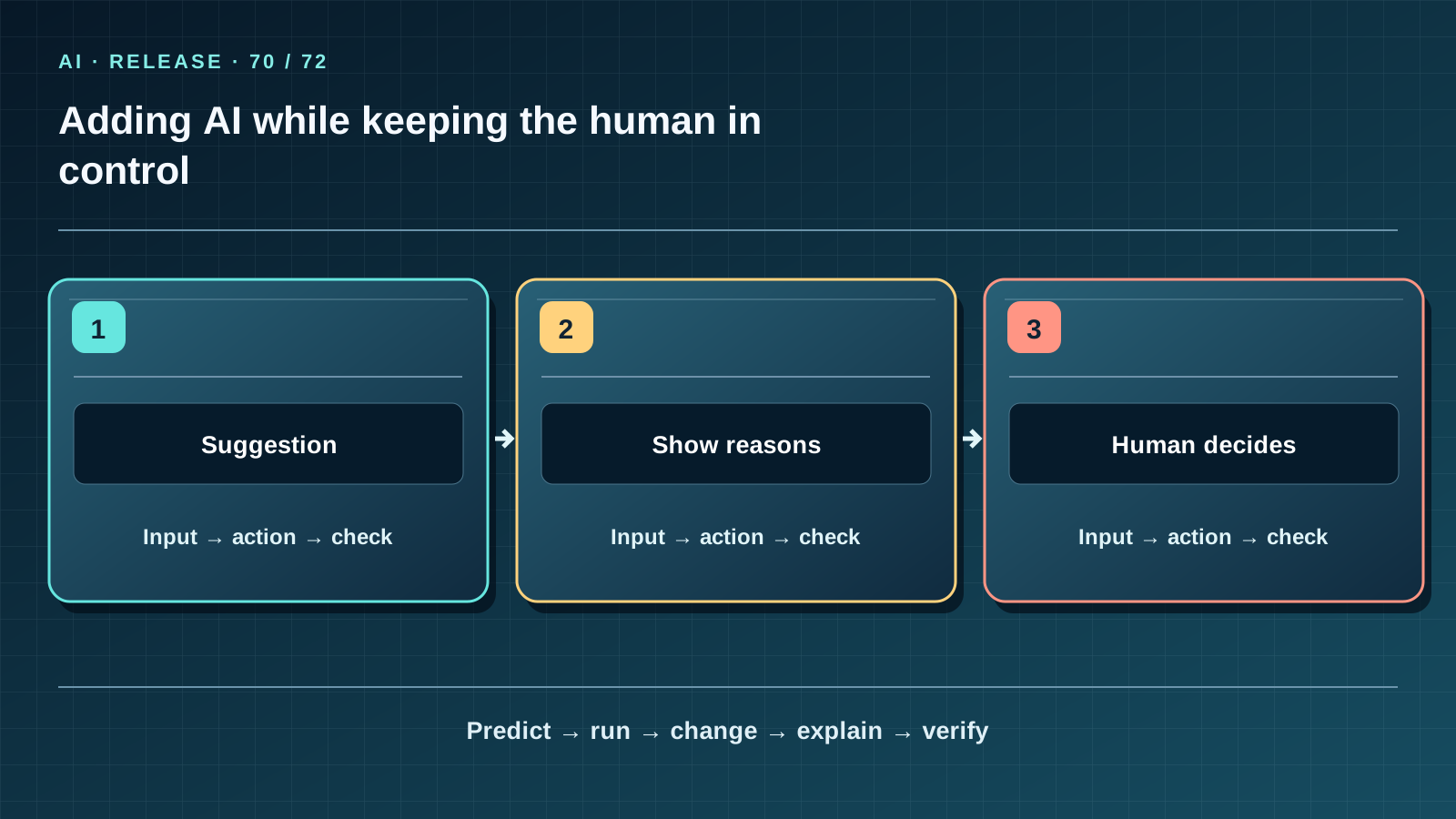
Lesson 70 of 72. AI and project release block (63–72). The assistant keeps its earlier reminder rules and local database; the new feature only suggests a task category and can abstain.
Situation and question
The model suggests math, but the learner titles a task “Read the history of mathematics.” A person sees both topics and may choose reading. The assistant must not silently edit the card.
New words without gaps
A human in the decision loop sees a suggestion, may correct it and has clear responsibility. The abstention threshold here is simple: tied or zero scores return review. An explanation shows why a suggestion arose, such as matching words and counts. An automatic action would change data without confirmation; this teaching version has none.
The lesson’s support signal
Read the three cells left to right, then cover the third. State the input and action in each cell; predict how the path ends and which observable fact checks it. Compare the drawing with a project file or worked example. If a number on the map cannot be derived from the data, correct the map rather than changing data for a pretty picture.
Work through it step by step
Run classifier.py "Кітап оқу": get reading; an unknown title gives review. Inspect the original task card: calling the classifier changes neither title, due_date, done nor the reminder. A learner may accept, correct or skip advice on a paper decision form. Record the suggested label and your choice without a learner’s name.
Predict and check
Write the expected output before running code. Execute it in step-06 or step-07, compare every character and explain each line. Then change one safe fictional input and repeat “predict — run — change — explain — verify.” Do not turn an observation on a tiny dataset into a promise about real people.
from pathlib import Path
from tempfile import TemporaryDirectory
from data_store import create_database
from classifier import read_examples, train, suggest
with TemporaryDirectory() as folder:
    db = Path(folder) / "example.db"
    create_database(db, "tasks.json", "study_sessions.csv")
    before = db.read_bytes()
    print(suggest("Кітап оқу", train(read_examples("labelled_tasks.csv"))))
    print(before == db.read_bytes())
Expected output
reading
True
Catch the error
A hidden automatic choice after review would defeat human control. Free text from a generative model cannot be called a verified recommendation without sources. Agreeing to one category does not permit collecting other private data.
Project change
Release 2.1 preserves the DB, report, reminders and backup. labelled_tasks.csv contains fictional examples only. classifier.py suggests math, reading or review but writes no decision to the database. Check each model output against held-out examples and let a person reconsider it.
Task and evidence
For three titles show the suggestion, its explanation and a person’s choice. Intentionally reject the model once. Verify that tasks and statuses in the DB remain unchanged.
Transfer to a new setting
A system proposes a school bus route. Which decisions may be suggested to a driver and which should not be executed without confirmation?
Return after 1, 7, and 30 days
After 1 day redraw the map from memory and name one boundary of the idea. After 7 days explain it to a friend without reading the lesson and answer 7 of 10 block questions; analyse mistakes with concrete inputs. After 30 days open a fresh project copy, reproduce the check and transfer the idea to a new case. Keep a record of input, expected output and actual output.
Primary reference to check
Next lesson
If you have found a mistake or a typo in this article, tell us about it
Comments (0)
Log in to leave a comment →
No comments yet. Be the first.