

Physics around us: from a first experiment to your own lab Lesson 40 of 46
Why does a metal spoon feel colder than a wooden one?
Compare materials at the same room temperature and trace energy transfer through contact.
A real-life question and prediction
Touch metal and wooden spoons that have rested side by side in a room. Metal often feels colder even when a room thermometer shows the same surrounding temperature. Must the metal actually be colder? Draw a hand and both spoons; add an arrow for the initial direction of energy transfer. Predict whether a very cold hand might give a different sensation.
Pause before the explanation: what exactly do you expect to see, and why? Write a prediction before calculating. After the lesson, separate what you observed, what you calculated from supplied numbers, and what you only inferred about invisible particles. That record lets you correct a model without replacing evidence with a neat answer.
Words to understand
Conduction is energy transfer through a material as neighbouring parts interact, without the whole material travelling from end to end. A good thermal conductor passes energy relatively quickly; an insulator passes it more slowly under comparable conditions. Skin sensation depends on transfer rate, contact area and starting hand temperature. Metal and wood can have the same temperature yet remove energy from skin at different rates.
A worked example
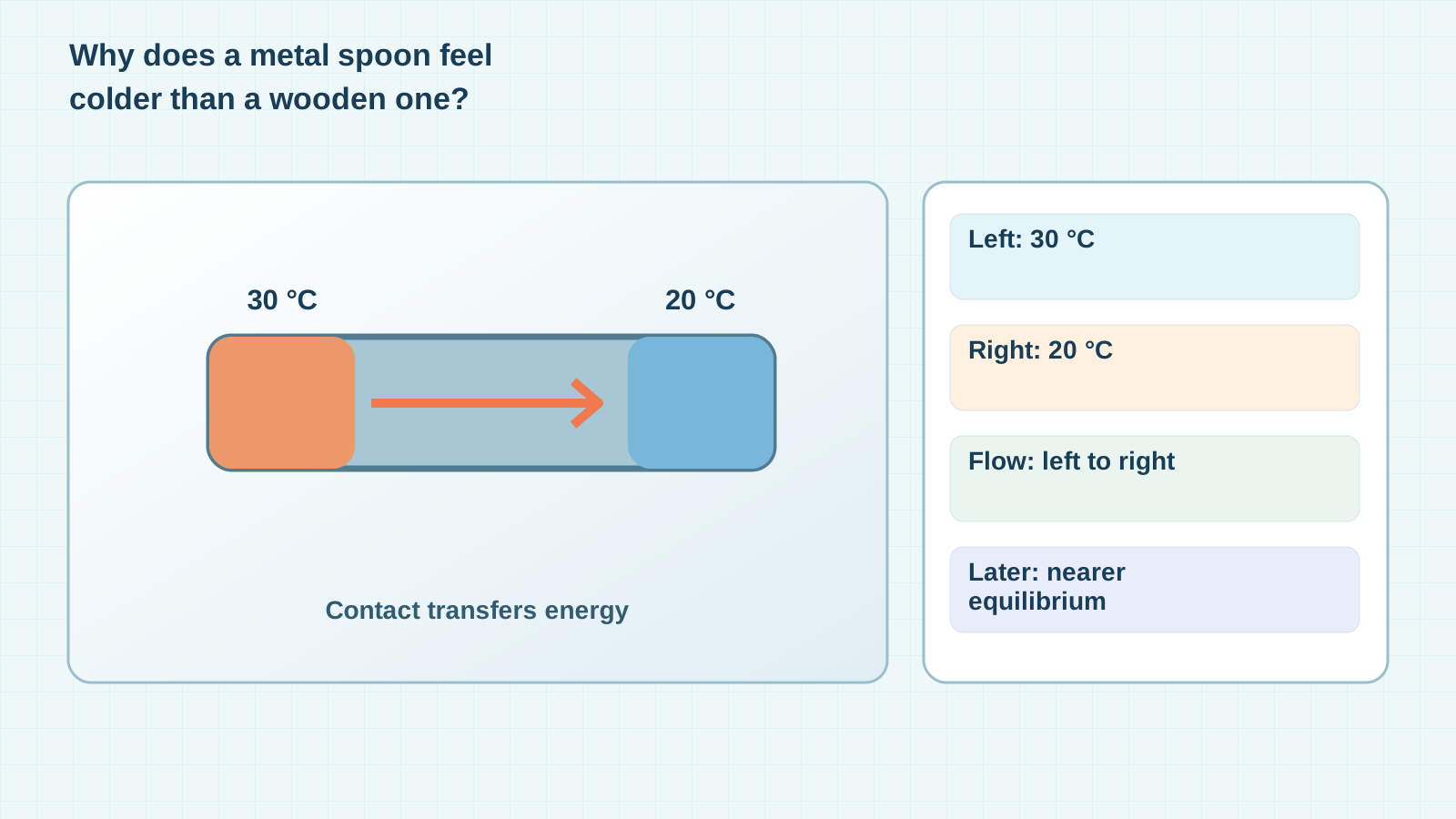
In a teaching diagram the left part is at 30 °C and the right at 20 °C. On contact, energy passes left to right. Those two temperatures alone do not yield a number of joules: material, mass and further conditions are needed. With no external energy supply the temperatures move towards each other. The drawing shows direction, not an exact promised final value.
Test it safely
Compare room-temperature spoons by touch, then measure their temperatures with a suitable thermometer if available. Record material, time spent side by side and your sensation. Do not put the spoons in boiling water or press metal against frostbitten skin. Without instruments, keep your conclusion conditional: “feels colder” is not “measured colder”.
An easy mistake to make
Mistake: drawing metal atoms flying from spoon into hand. Conduction transfers energy; the spoon material as a whole stays in place. Do not label everything cool to the touch as initially colder.
Support map
Your turn
Cover the worked solution. Draw a boundary around the system: what is inside and what is outside? Label energy-flow arrows and the units of each quantity. Change just one supplied number and explain in words which way the result changes. If there was no experiment, write “calculated from teaching data”, not “measured”.
Lab notebook entry
Write four lines: question; initial prediction; observation or supplied values; revised conclusion with its conditions. Identify one concrete source of error, such as a coarse thermometer, energy escaping into the room, or a changed amount of water. Return to the conclusion after the next lesson and see whether it survives a new situation.
If you have found a mistake or a typo in this article, tell us about it
Comments (0)
Log in to leave a comment →
No comments yet. Be the first.