


Kazakh: start speaking from the first meeting Lesson 1 of 16
The course map and the first 30 seconds of conversation
In one lesson you will carry the first 30 seconds of a Kazakh introduction and see the full 80-lesson route from a greeting to independent B1 communication.
This text was translated with AI.
Where we are on the map
The map holds the whole route; we will add its details one at a time.
A real situation
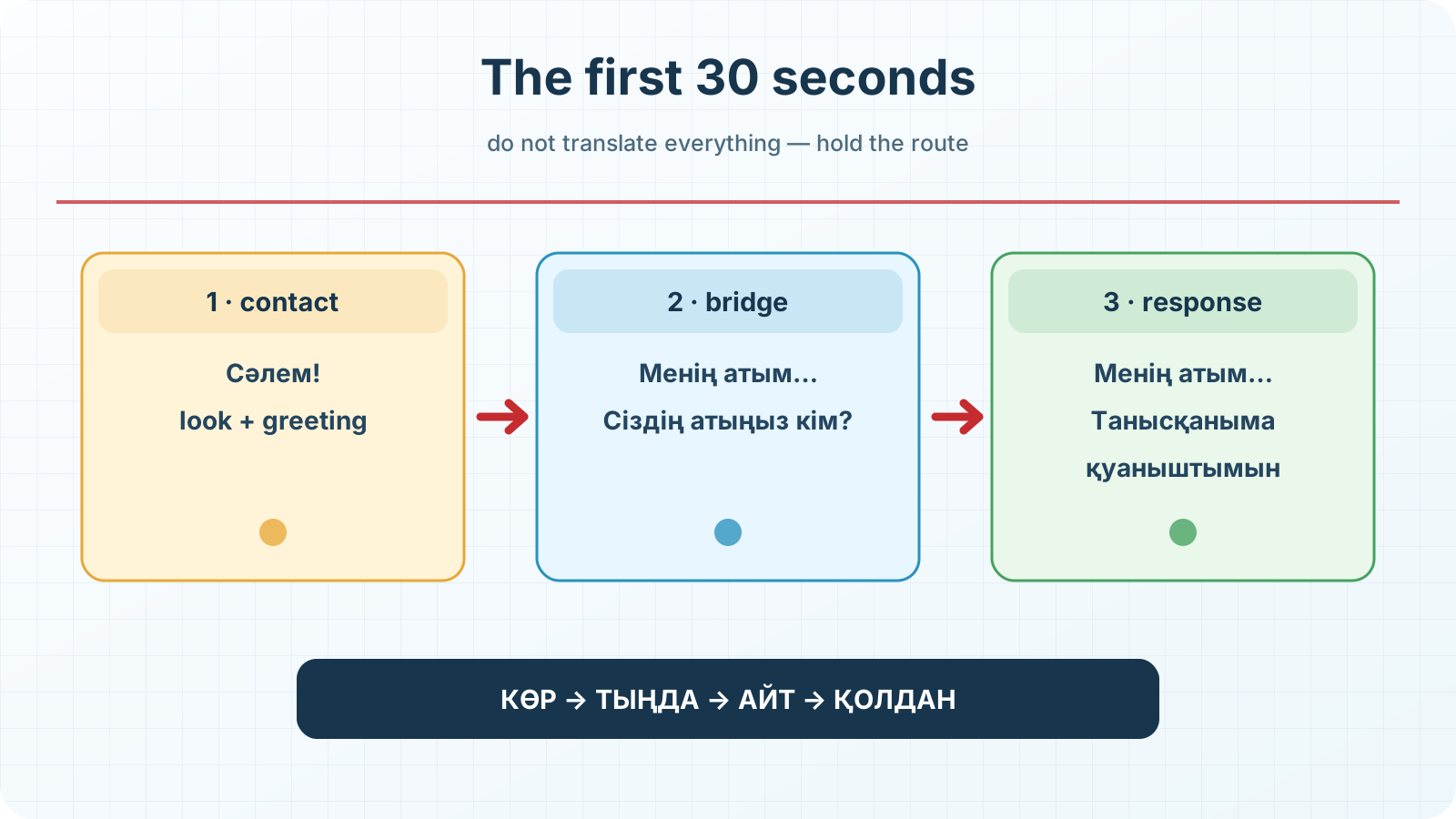
Imagine a new learner arriving at a club. You can wait for perfect grammar and stay silent, or hold a short route: make contact, name yourself, ask one question, hear the name, and close warmly. We need a reusable structure rather than a scene memorised with one pair of names.
Listen and respond
Listen: Сәлем! — Hello!
Listen: Менің атым Айша. — My name is Aisha.
Listen: Сіздің атыңыз кім? — What is your name?
Listen: Менің атым Данияр. — My name is Daniyar.
Listen: Танысқаныма қуаныштымын. — I am glad to meet you.
How to practise
Press the button and look away from the text first: catch the overall meaning and just one new sound or structural choice. On the second pass, follow the phrase and the support map with your finger. Hide the model, rebuild it from two or three signs, and say a version of your own. Finish with a partner or a voice recorder: respond without preparation and note one place where you paused. Return to that link only instead of rereading the whole lesson.
The precise model
The exchange holds four actions: contact → information about self → question → response and close. For now, store Менің атым… as one useful frame. Сіздің is respectful “your,” and кім? asks about a person. Leave a small pause before the name and keep the last word of the question clear.
The support signal
СӘЛЕМ → МЕНІҢ АТЫМ… → СІЗДІҢ АТЫҢЫЗ КІМ? → ЖАУАП → ҚУАНЫШТЫМЫН
The limit of the rule
One route does not mean one script. Сәлеметсіз бе! is more formal than Сәлем!. We begin with a neutral respectful exchange. The button uses the device’s Kazakh voice as a listening anchor; real speakers will still vary in pace and intonation.
Predict before the explanation
What can change without breaking the exchange: the name, the greeting, or кім? A name changes freely and the greeting follows the setting. Кім preserves a question about a person, so replacing it at random changes the meaning.
Rebuild it without the prompt
Close the page and draw four signs: a hand, a self card, a question, and a response. Use them to rebuild the exchange with a different fictional name. If one line disappears, inspect the map before returning to the full text.
Find and repair the mistake
Alan says, Сәлем! Сіздің атыңыз Алан. He has mixed information about himself with an address to the other person. Separate it into a statement about self and one independent question.
Transfer to a new setting
Run the same exchange with a peer, an adult, and in a voice message. Decide where Сәлем fits and where Сәлеметсіз бе is safer. Choose the names and order yourself.
Change to the My World project
Create project card 0.0: a fictional name, role, and safe familiar place. Add four fields: who, where, what useful thing the guide will show, and which personal data it will never store.
Exercise
Required. Write your own five-line exchange: greeting, name, question about the other name, response, and warm close. Then say it without reading.
Transfer check. Change both people and the formality of the greeting. In one sentence, explain why the route remains the same.
Retrieval after 1, 7, and 30 days
- Tomorrow rebuild the four steps and speak them with new names.
- After seven days, open an introduction without warning and add a return question.
- After thirty days, record 30 seconds and mark only one place you want to improve.
Next lesson: Nine distinctive letters: see, hear, and say them
If you have found a mistake or a typo in this article, tell us about it
Comments (0)
Log in to leave a comment →
No comments yet. Be the first.