


Kazakh: start speaking from the first meeting Lesson 12 of 16
One or several: choosing six plural endings as one system
You will select -лар/-лер, -дар/-дер, or -тар/-тер from two signals: the word's vowel family and its final sound.
This text was translated with AI.
Where we are on the map
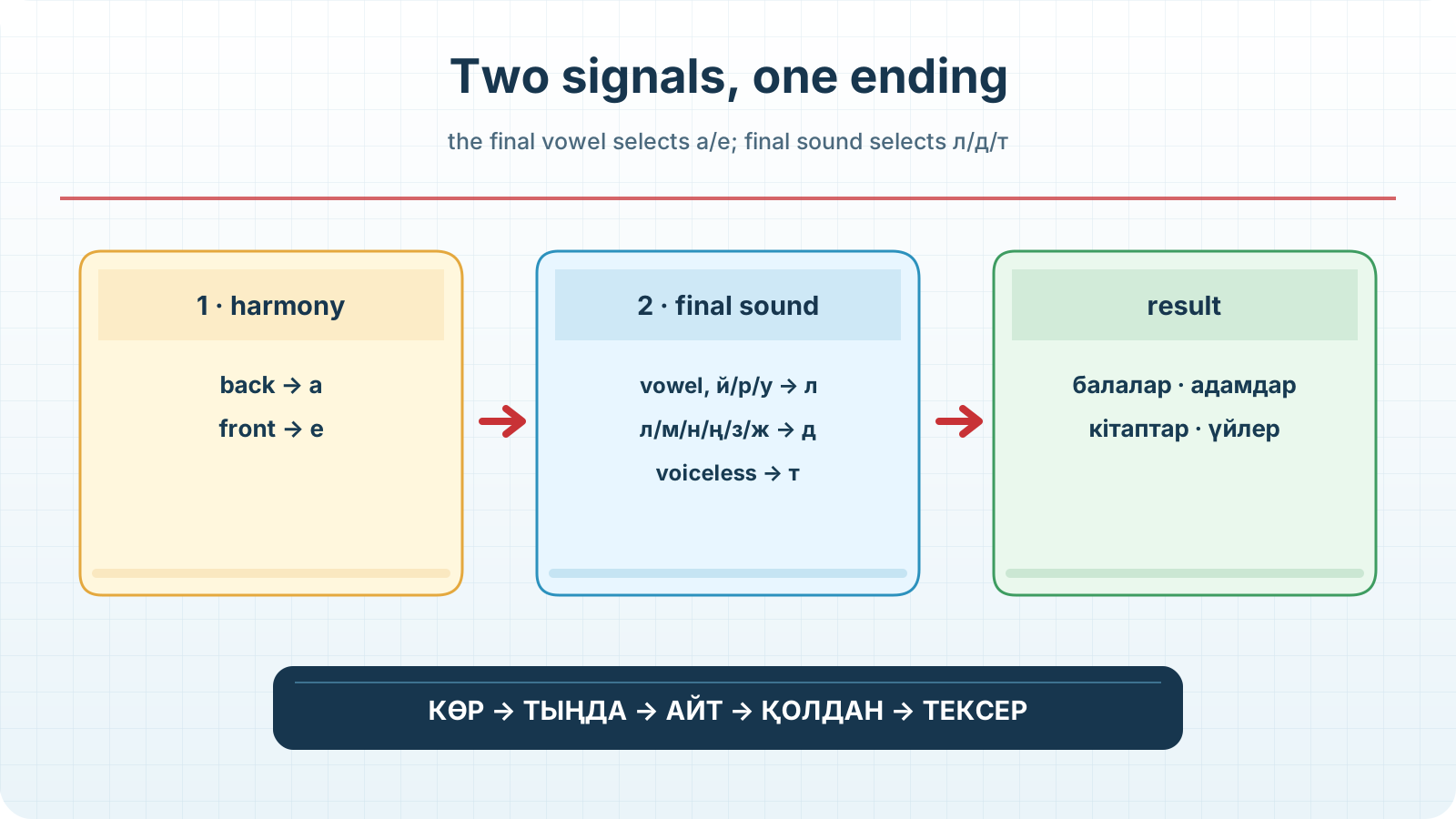
The support map shows one complete meaning link. Trace it with a finger, then rebuild the route without the picture.
A real situation
A home inventory must distinguish one object from several. Instead of memorising six arbitrary tails, use two traffic lights: the last vowel selects а or е, and the last sound selects л, д, or т.
Listen and respond
Listen: бала — балалар — child — children
Listen: бөлме — бөлмелер — room — rooms
Listen: адам — адамдар — person — people
Listen: гүл — гүлдер — flower — flowers
Listen: кітап — кітаптар — book — books
Listen: есік — есіктер — door — doors
How to practise
Listen with the text hidden and catch only the target meaning. Next, trace the map with a finger and repeat after the model. On the third pass, hide the model, tap its short rhythm with your palm, and make a sentence of your own. Device speech is a model; use a speaker, teacher, or comparison with your own recording as evidence of pronunciation.
The precise model
First hear the final vowel: a back-vowel word selects а, and a front-vowel word selects е. Then inspect the final sound of the stem. A vowel and usually й, р, у select л: бала-лар, үй-лер. The sounds л, м, н, ң, з, ж select д: адам-дар, гүл-дер. A voiceless consonant selects т: кітап-тар, есік-тер. This is one route with two decisions rather than six disconnected rules.
The support signal
FINAL VOWEL: А/Е → FINAL SOUND: Л/Д/Т → -ЛАР/-ЛЕР · -ДАР/-ДЕР · -ТАР/-ТЕР
The limit of the rule
After a numeral, the noun normally remains singular: үш бөлме, not үш бөлмелер. Some nouns have collective or special uses, so verify context. Select by sound rather than by a look-alike letter from another language.
Predict before the explanation
Send үй, адам, кітап, бөлме, гүл, and есік through the а/е lane and then the л/д/т gate. State each result before listening.
Rebuild it without the prompt
Draw the two traffic lights and rebuild all six forms. Hide the labels and explain each route aloud: final vowel, final sound, ending.
Find and repair the mistake
Repair кітапдар, адамлар, and бөлмалар. Change only the decision that failed and name its signal. “It sounds better” is not a sufficient explanation.
Transfer to a new setting
Receive six unfamiliar object cards, form their plurals, and verify them in a dictionary. Keep an error card with its explanation instead of deleting it.
Change to the My World project
Mark groups in the home plan: балалар, бөлмелер, гүлдер, and кітаптар. Leave two small traffic lights beside them, then make a clean recall copy.
Exercise
Required. Form the plural of twelve words, evenly covering the three initial consonants of the endings. Write both selection signals for every word.
Transfer check. Explain the forms of three new words and use each in a sentence without a numeral.
Retrieval after 1, 7, and 30 days
- Tomorrow rebuild the two traffic lights and six examples.
- After seven days sort twelve new words without the chart.
- After thirty days find plural endings in a short home description and explain four choices.
Next lesson: Counting people and rooms: numbers, age, and a short rhythm
If you have found a mistake or a typo in this article, tell us about it
Comments (0)
Log in to leave a comment →
No comments yet. Be the first.