


Kazakh: start speaking from the first meeting Lesson 45 of 48
What happens next: arrangement, plan, and intention
You will speak naturally about the future through time, arrangement, and a clear degree of intention.
This text was translated with AI.
Where we are on the map
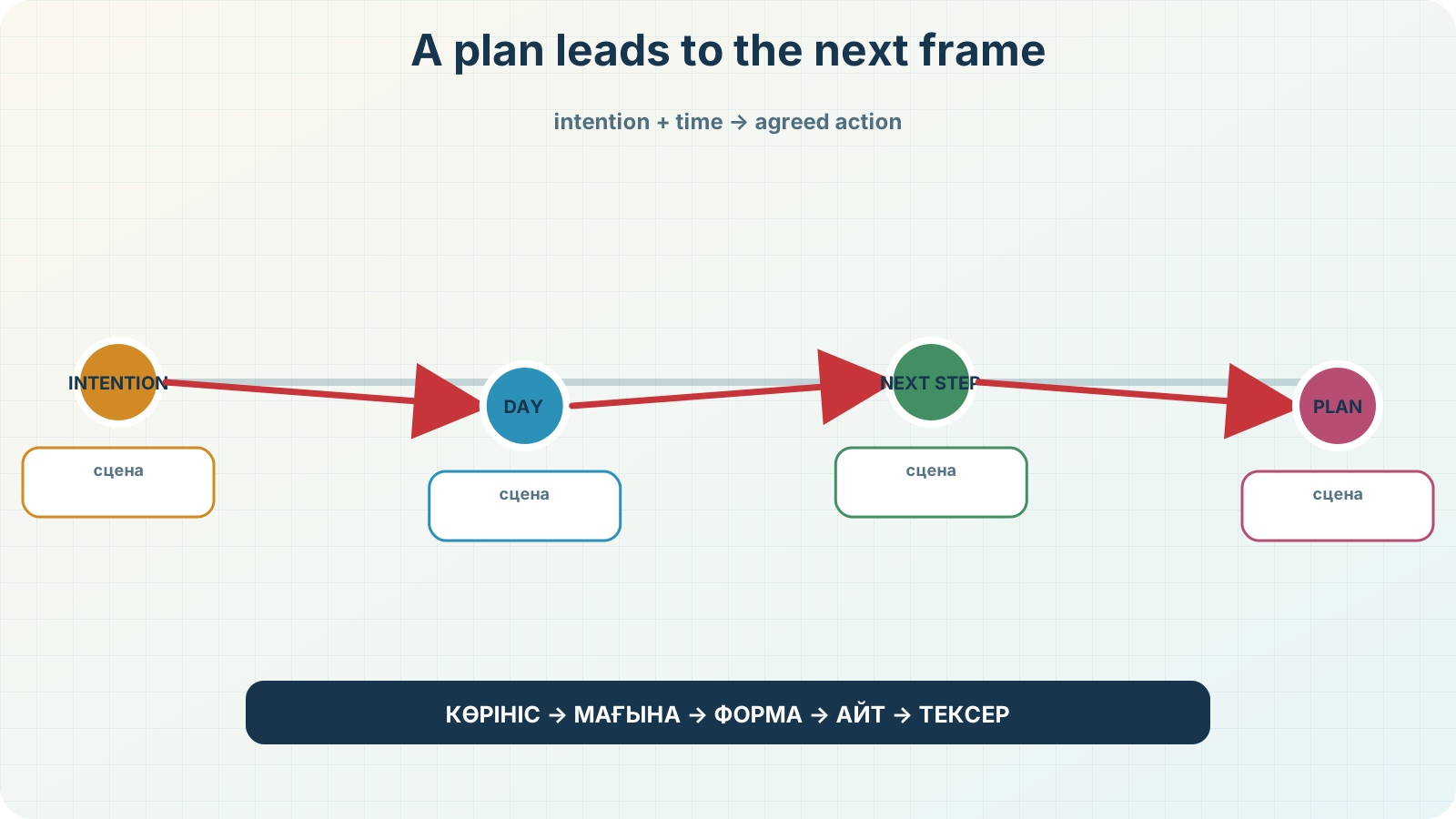
The support map presents time as an observable scene rather than a row of labels. First find a time beacon: yesterday, usually, now, or tomorrow. Then inspect the state of the action: has it finished, does it repeat, is it unfolding at speech time, or is it only planned? Trace the route from beacon to scene and form, hide the labels, and rebuild it in your own words.
A real situation
A team prepares for tomorrow’s meeting. Some actions are already on the schedule, one is a personal intention, and other decisions are still being discussed. The speakers must avoid promises they cannot make and show how definite each plan is.
Listen and respond
Listen: Ертең біз кітапханаға барамыз. — Tomorrow we will go to the library.
Listen: Сағат онда кездесеміз. — We will meet at ten.
Listen: Мен жаңа бөлімді дайындаймын. — I will prepare the new section.
Listen: Біз жобаны жұмада көрсетеміз. — We will present the project on Friday.
Listen: Мен сұрақтарды жазып алмақпын. — I intend to write the questions down.
Listen: Жоспар өзгеруі мүмкін. — The plan may change.
How to practise
On the first listen, hide the text and identify only the time of the action. On the second, reveal the Kazakh line, point to the time beacon and verb form, and repeat the complete line after the recording. On the third, replace the day, participant, or action and choose the meaning again before the form. The recording supplies pronunciation; a suitable new sentence proves understanding.
The precise model
A clear near plan often needs only the -а/-е/-й form and a future beacon: ертең барамыз, жұмада көрсетеміз. A strong personal intention can be highlighted with -мақ/-мек/-бақ/-бек/-пақ/-пек and a personal ending: жазып ал-мақ-пын. It sounds more deliberate and sometimes more formal, so select it for a communicative reason rather than every future action.
The support signal
ЕРТЕҢ/ЖҰМАДА + А/Е/Й → КЕЛІСІЛГЕН ЖОСПАР | МАҚ/МЕК + ЖІКТІК → НИЕТ
The limit of the rule
A future form does not guarantee a result. Барамыз may express a firm arrangement or simply report a plan; context and clarification show reliability. Мүмкін leaves probability open. Do not turn a practice line into a promise on another person’s behalf.
Predict before the explanation
Before the explanation, lay out four cards: completed, usual, happening now, and planned. For every line you hear, choose a card first and name the observable clue. Only then predict the verb form. Keep your first answer, compare it with the model, and explain any change with one sentence about meaning.
Rebuild it without the prompt
Hide the lesson and draw a past, present, and future line in one minute. Rebuild one familiar line, then change its time and produce a new one. Say both naturally without separating suffixes in your voice. If the choice disappears, return to the question ‘what is happening in the scene?’ instead of reciting a list of endings.
Find and repair the mistake
A learner attaches -мақпын to every team action and creates an unnecessarily solemn account. Compare the neutral schedule Ертең кездесеміз with the personal intention Мен жазып алмақпын. Restore a clear communicative job to each form.
Transfer to a new setting
Take an unseen card containing a person, an action, and a time condition. Produce a line without a model, ask your partner a clarifying question, and change the time after the reply. The partner checks whether the time beacon, state of the action, and form agree instead of demanding a memorised sentence.
Change to the My World project
Add a future-step board to the project: two agreed events, one personal intention, and one condition that may change the plan. Use fictional dates.
Exercise
Required. Produce four lines about tomorrow’s project and mark how definite each is. Transfer check. A partner removes one condition; revise the plan accurately and explain your form choice.
Retrieval after 1, 7, and 30 days
- Tomorrow rebuild the time support and produce three new lines without reading.
- After seven days describe yesterday, now, and tomorrow from unseen pictures and meet at least 7 of 10 criteria.
- After thirty days record a one-minute account, find one time-related inaccuracy, and repair it independently.
Next lesson: Ask and negate precisely: when an action did not happen
If you have found a mistake or a typo in this article, tell us about it
Comments (0)
Log in to leave a comment →
No comments yet. Be the first.