


Kazakh: start speaking from the first meeting Lesson 65 of 72
Fact or opinion: what can be checked?
You will separate a checkable claim from a personal judgement and name a way to check it.
This text was translated with AI.
Where we are on the map
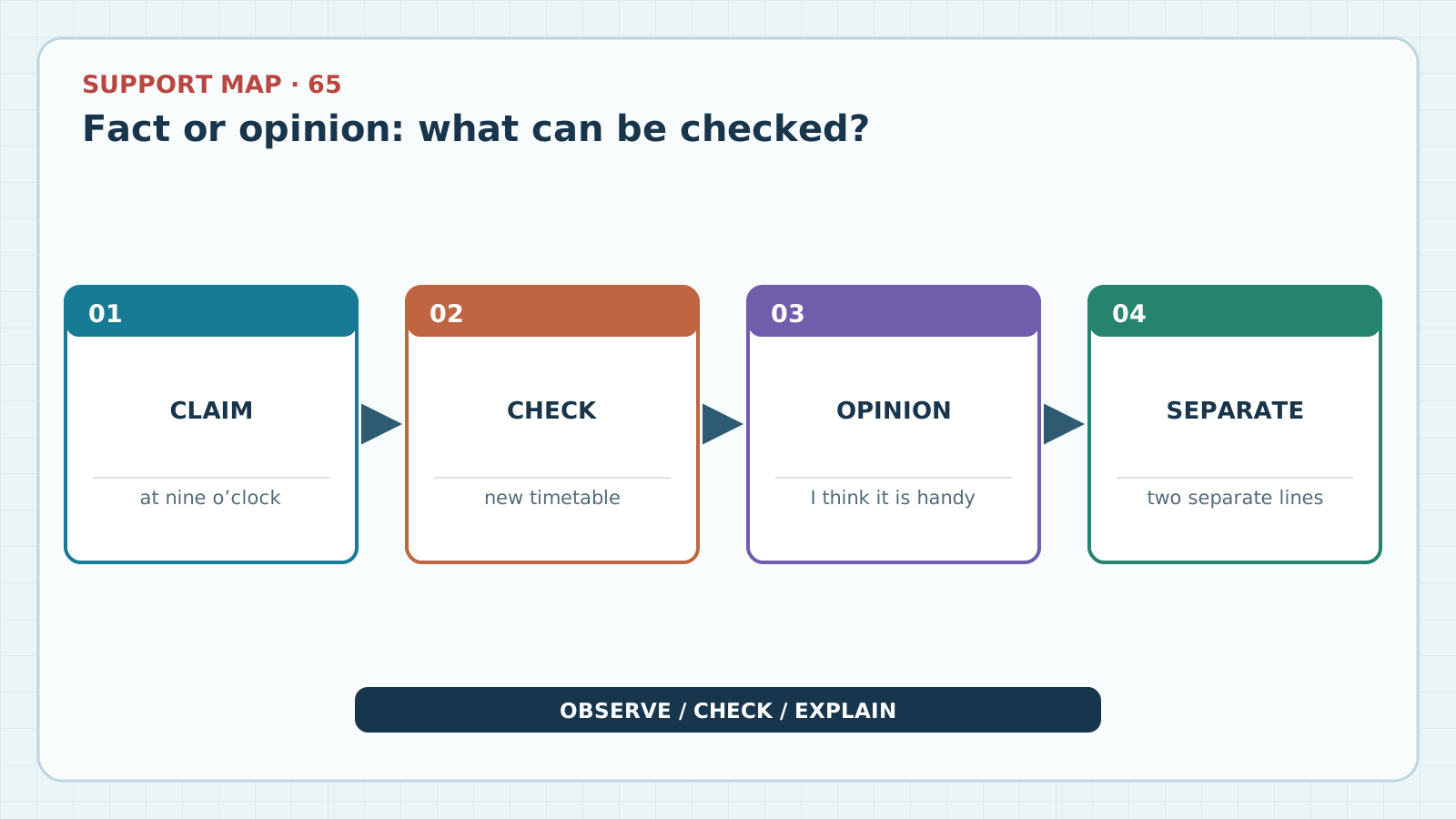
Trace the four nodes of the support map with a finger and name the job of each one. Then hide it. Colours make the checking sequence visible; they do not stand in for evidence. If a node lacks information, leave it blank and explain why. These figures are invented practice data, not statistics from a real library.
A real-life scene
Your group describes a fictional library for My World. The opening hours and a compliment sit on the same sheet. Both sound confident, yet they call for different checks.
Listen and respond
Listen: Кітапхана сағат тоғызда ашылады. — The library opens at nine.
Listen: Бұл өте ыңғайлы кітапхана. — This is a very convenient library.
Listen: Меніңше, бұл орын тыныш. — I think this place is quiet.
Listen: Кестені қайдан тексереміз? — Where can we check the schedule?
Listen: Хабарландыруда тоғыз деп жазылған. — The notice says nine.
Listen: Бұл пікір, оны бәрі бірдей қабылдамауы мүмкін. — That is an opinion; others may disagree.
How to practise
First listen with the transcript hidden and state the main point even if you miss some words. On a second pass write only anchor words and numbers; on a third, open the text and find one error in your initial prediction. Repeat the full Kazakh sentence at a natural pace rather than spelling it out. If a detail remains unclear, use the repair question from lesson 60 and ask a partner to repeat just that part.
The precise model
Сағат тоғызда is a checkable time: look for the current schedule. Ыңғайлы is a judgement that depends on the visitor. Меніңше names the speaker, but praise remains an opinion even without that marker. Record the claim, source and impression separately.
Support signal
ХАБАР → ТЕКСЕРУ → ПІКІР → АЖЫРАТУ
Limit of the rule
Being checkable does not make a claim true. A notice may be old; an opinion may draw on experience without becoming a universal fact.
Predict before the explanation
Before reading the model, write the conclusion you expect and what you can actually verify. Name one word or number that might change your answer. Compare your prediction with the evidence afterward; revising it is a sign of careful reading, not failure.
Recall without the support
Hide the text and diagram. Sketch four nodes in one minute, say two connected Kazakh sentences, and explain to a partner where the known information ends. Reopen the page, compare every detail and repair one imprecise word.
Find and repair the mistake
A learner puts “very convenient” under official opening hours. Move the judgement to opinion and locate the source for the time.
Transfer to a new scene
A new review says “it is always quiet here.” What would you need to observe to say “always,” and what should remain personal experience?
Change to the My World project
My World 2.1 remains a fictional learning guide without personal data. For every conclusion keep the original message, the date you checked it, and what you still do not know. Add three fields to the library card: checkable claim, source and personal impression. Keep them separate.
Exercise
Listen to six lines without the transcript. Mark two checkable claims, two judgements and two lines about checking. Make a new opening-hours claim and an honest personal judgement.
Review after 1, 7 and 30 days
- Tomorrow listen to one line without text and recover its meaning and source.
- After seven days apply the same map to a new fictional notice or a fresh set of numbers.
- After thirty days explain your decision to someone else without the map and ask them to find an unsupported part.
Next lesson: Source, date and place: when is a claim still valid?
If you have found a mistake or a typo in this article, tell us about it
Comments (0)
Log in to leave a comment →
No comments yet. Be the first.