


Kazakh: start speaking from the first meeting Lesson 68 of 72
Six more is not twice as many: compare with a baseline
You will describe an absolute difference and a relative change while naming the baseline.
This text was translated with AI.
Where we are on the map
Trace the four nodes of the support map with a finger and name the job of each one. Then hide it. Colours make the checking sequence visible; they do not stand in for evidence. If a node lacks information, leave it blank and explain why. These figures are invented practice data, not statistics from a real library.
A real-life scene
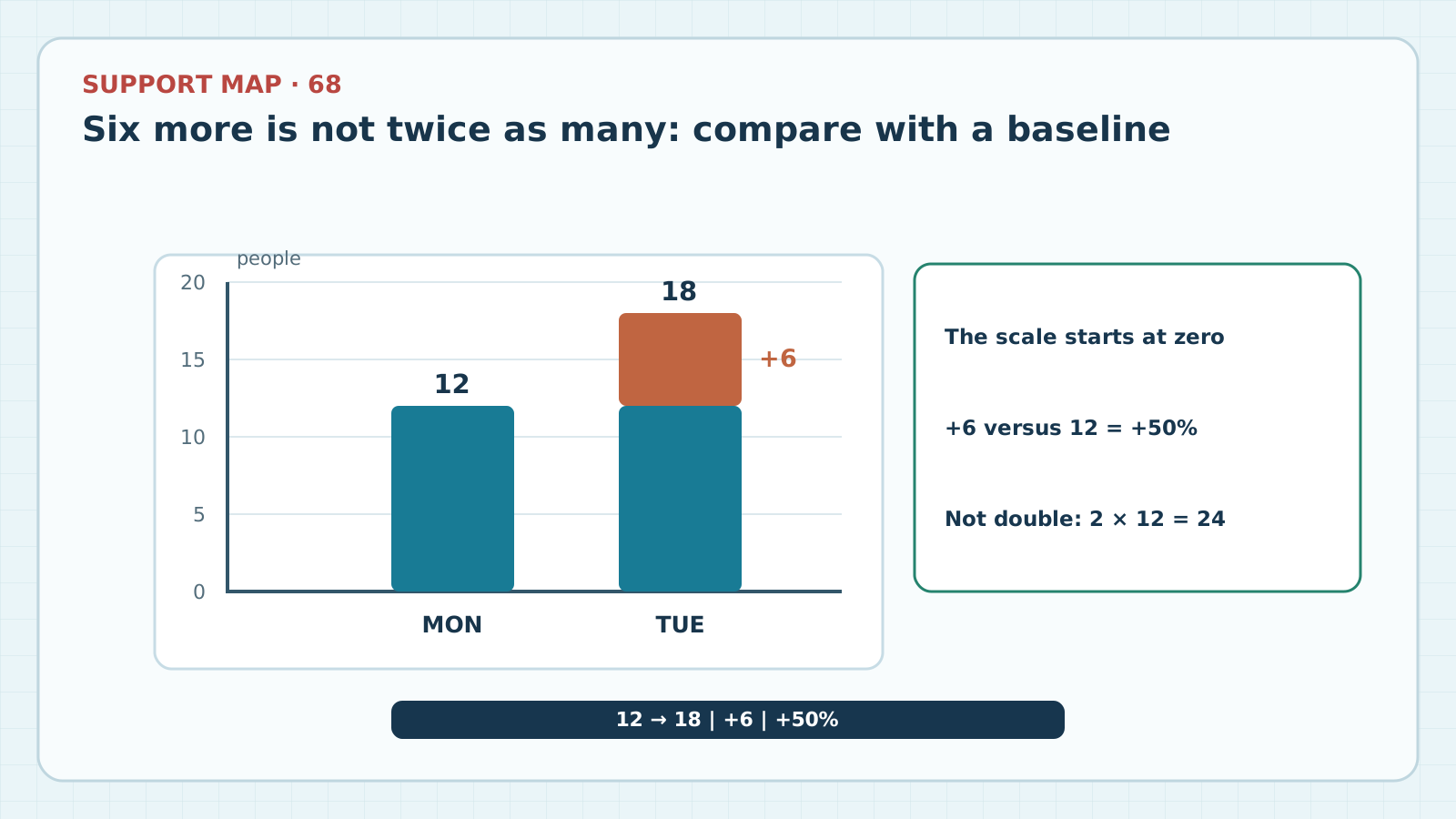
The fictional library table shows 12 people on Monday and 18 on Tuesday. One learner says “six more”; another says “twice as many.” Check both before writing a chart caption.
Listen and respond
Listen: Сейсенбіде алты адамға көп келді. — Six more people came on Tuesday.
Listen: Бастапқы сан — он екі. — The baseline is twelve.
Listen: Он сегіз он екіден бір жарым есе көп. — Eighteen is one and a half times twelve.
Listen: Екі есе болса, жиырма төрт болар еді. — Twice twelve would be twenty-four.
Listen: Өсім бастапқы санның жартысына тең. — The increase is half of the starting number.
Listen: Негіз өзгерсе, пайыз да өзгереді. — Change the baseline and the percentage changes.
How to practise
First listen with the transcript hidden and state the main point even if you miss some words. On a second pass write only anchor words and numbers; on a third, open the text and find one error in your initial prediction. Repeat the full Kazakh sentence at a natural pace rather than spelling it out. If a detail remains unclear, use the repair question from lesson 60 and ask a partner to repeat just that part.
The precise model
Compute 18 − 12 = 6. For growth relative to Monday, divide six by Monday’s 12: one half, or 50%. Tuesday is 150% of Monday, or 1.5 times as many. The reverse drop from 18 to 12 is six out of 18, about 33%, not 50%. In speech, name both days and the baseline.
Support signal
НЕГІЗ → АЙЫРМА → ҮЛЕС → ДҰРЫС СӨЗ
Limit of the rule
Percentages help only when the baseline and comparable observations are clear. These fictional data say nothing about a real library’s attendance.
Predict before the explanation
Before reading the model, write the conclusion you expect and what you can actually verify. Name one word or number that might change your answer. Compare your prediction with the evidence afterward; revising it is a sign of careful reading, not failure.
Recall without the support
Hide the text and diagram. Sketch four nodes in one minute, say two connected Kazakh sentences, and explain to a partner where the known information ends. Reopen the page, compare every detail and repair one imprecise word.
Find and repair the mistake
“18 is twice 12” is false. Calculate what twice 12 would be and replace the sentence.
Transfer to a new scene
Now compare Wednesday (15) with Tuesday (18). Name the absolute change and baseline; do not reuse yesterday’s 50% for a new pair.
Change to the My World project
My World 2.1 remains a fictional learning guide without personal data. For every conclusion keep the original message, the date you checked it, and what you still do not know. Add two captions: “+6 versus Monday” and “+50% versus Monday.” Show the arithmetic beside them.
Exercise
Calculate 18−12, 6÷12 and 6÷18 on paper. Say “six more,” “up by half,” and “down by about a third” in Kazakh. Explain why the percentages differ.
Review after 1, 7 and 30 days
- Tomorrow listen to one line without text and recover its meaning and source.
- After seven days apply the same map to a new fictional notice or a fresh set of numbers.
- After thirty days explain your decision to someone else without the map and ask them to find an unsupported part.
If you have found a mistake or a typo in this article, tell us about it
Comments (0)
Log in to leave a comment →
No comments yet. Be the first.