


Kazakh: start speaking from the first meeting Lesson 4 of 16
The Kazakh sentence skeleton: action closes the thought
You will assemble a clear Kazakh sentence from who, detail, and action cards and see why a neutral statement commonly ends with its predicate.
This text was translated with AI.
Where we are on the map
The map holds the whole route; we will add its details one at a time.
A real situation
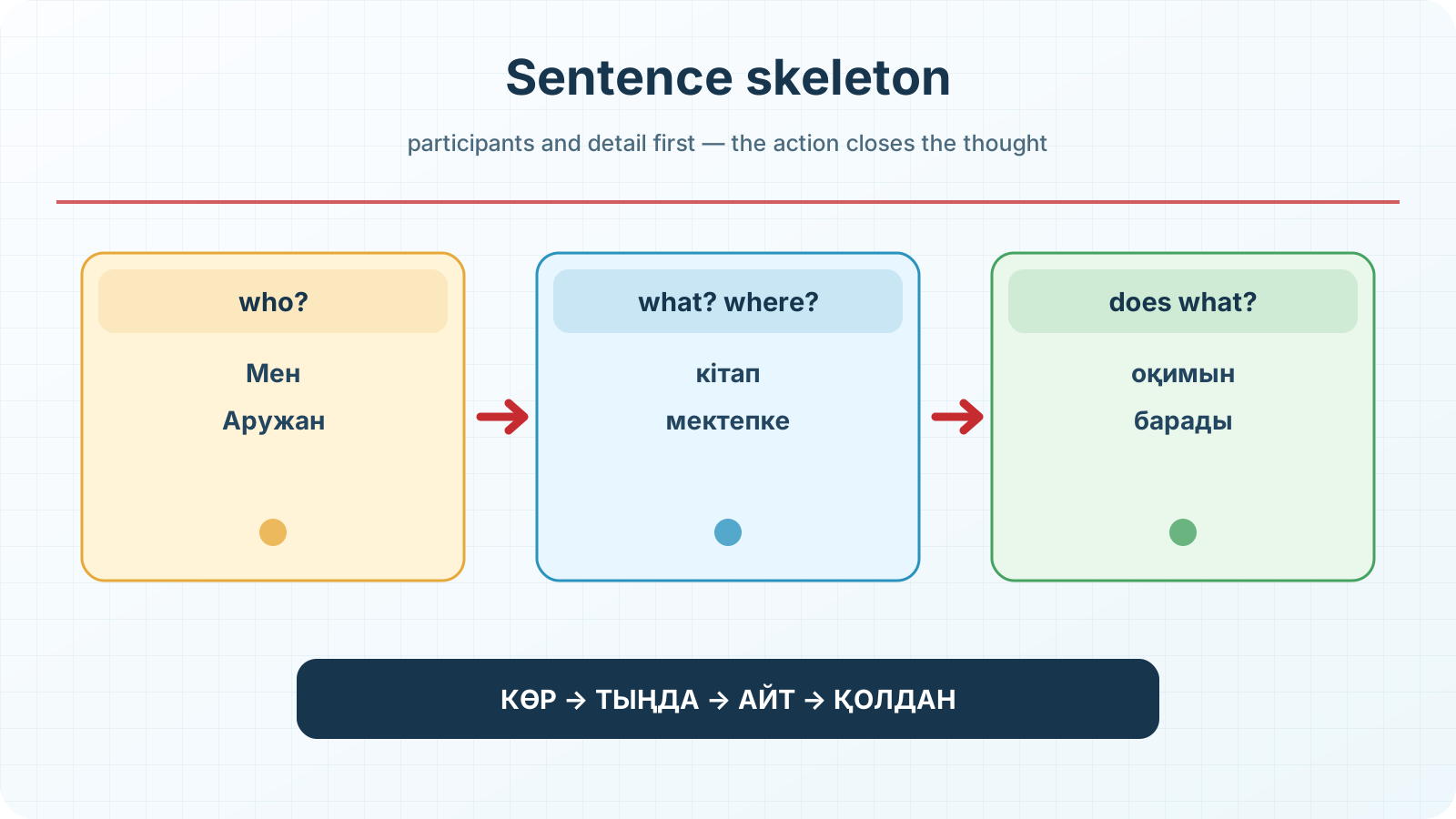
Picture a short scene: a person picks up a book and reads. Russian or English may encourage another familiar order, while a neutral Kazakh line normally names the participant and details before placing the action at the end: Мен кітап оқимын. The final word closes the route of the thought.
Listen and respond
Listen: Мен кітап оқимын. — I read a book
Listen: Аружан мектепке барады. — Aruzhan goes to school
Listen: Біз қазақша сөйлейміз. — we speak Kazakh
Listen: Ол жаңа кітап оқиды. — he or she reads a new book
Listen: Данияр бүгін үйде жұмыс істейді. — Daniyar works at home today
How to practise
Press the button and look away from the text first: catch the overall meaning and just one new sound or structural choice. On the second pass, follow the phrase and the support map with your finger. Hide the model, rebuild it from two or three signs, and say a version of your own. Finish with a partner or a voice recorder: respond without preparation and note one place where you paused. Return to that link only instead of rereading the whole lesson.
The precise model
The basic skeleton is who? → what, where, when, how? → does what? In Мен кітап оқимын, Мен is the participant, кітап the object, and оқимын the action. In Аружан мектепке барады, the destination precedes барады. A describing word also precedes its noun: жаңа кітап. Separate a line into cards, then reconnect it in one voice without a pause after every word.
The support signal
КІМ? → ДЕРЕК: НЕ? ҚАЙДА? ҚАШАН? → ӘРЕКЕТ
The limit of the rule
This is a neutral order rather than an iron cage. A known participant can disappear in live speech, and a moved word can receive special focus or style. Ending an ordinary beginner statement with its action is a safe route. We are not deriving every verb ending yet; use the example forms as meaningful complete frames.
Predict before the explanation
Before reading the explanation, assemble оқимын / Мен / кітап and барады / мектепке / Аружан. Point to the word that should close each neutral thought and explain its job without using the grammar term predicate.
Rebuild it without the prompt
Hide the text and draw three slots: person, detail, action. Rebuild two heard sentences and replace only the middle card. If a new word would require an ending you have not learned, use a safe complete form from the lesson instead of guessing.
Find and repair the mistake
A learner says Мен оқимын кітап, carrying over the order of another language. The meaning is guessable, but the neutral Kazakh construction is disturbed. Move the action card to the end, then explain why Ол жаңа оқиды кітап must also keep жаңа кітап together.
Transfer to a new setting
Describe three observable actions at home, school, or a library without naming real people. Lay out the cards first and speak without them second. A partner should identify the action word and the position where they heard it.
Change to the My World project
Add three safe lines to My World: the fictional guide character reads, goes somewhere, or works in the chosen place. Store a small who | detail | action analysis under each. Remove that analysis in the second version and test whether another person can reconstruct it.
Exercise
Required. Build four sentences from the learned frames. Underline the participant once, the detail twice, and circle the action. Shuffle one sentence and restore it without the model.
Transfer check. Give a partner new cards containing familiar words. They assemble the line; you identify only the first obstacle without dictating a finished answer.
Retrieval after 1, 7, and 30 days
- Tomorrow rebuild the three-part skeleton and two lines without the page.
- After seven days, assemble five sentences from shuffled cards.
- After thirty days, find three actions in the project text and check their position.
Next lesson: Men…: introduce yourself without a memorised form
If you have found a mistake or a typo in this article, tell us about it
Comments (0)
Log in to leave a comment →
No comments yet. Be the first.