


Kazakh: start speaking from the first meeting Lesson 3 of 16
Vowel harmony: two sound families
You will hear two Kazakh vowel families and choose `-лар` or `-лер` from the final vowel of the stem instead of memorising disconnected endings.
This text was translated with AI.
Where we are on the map
The map holds the whole route; we will add its details one at a time.
A real situation
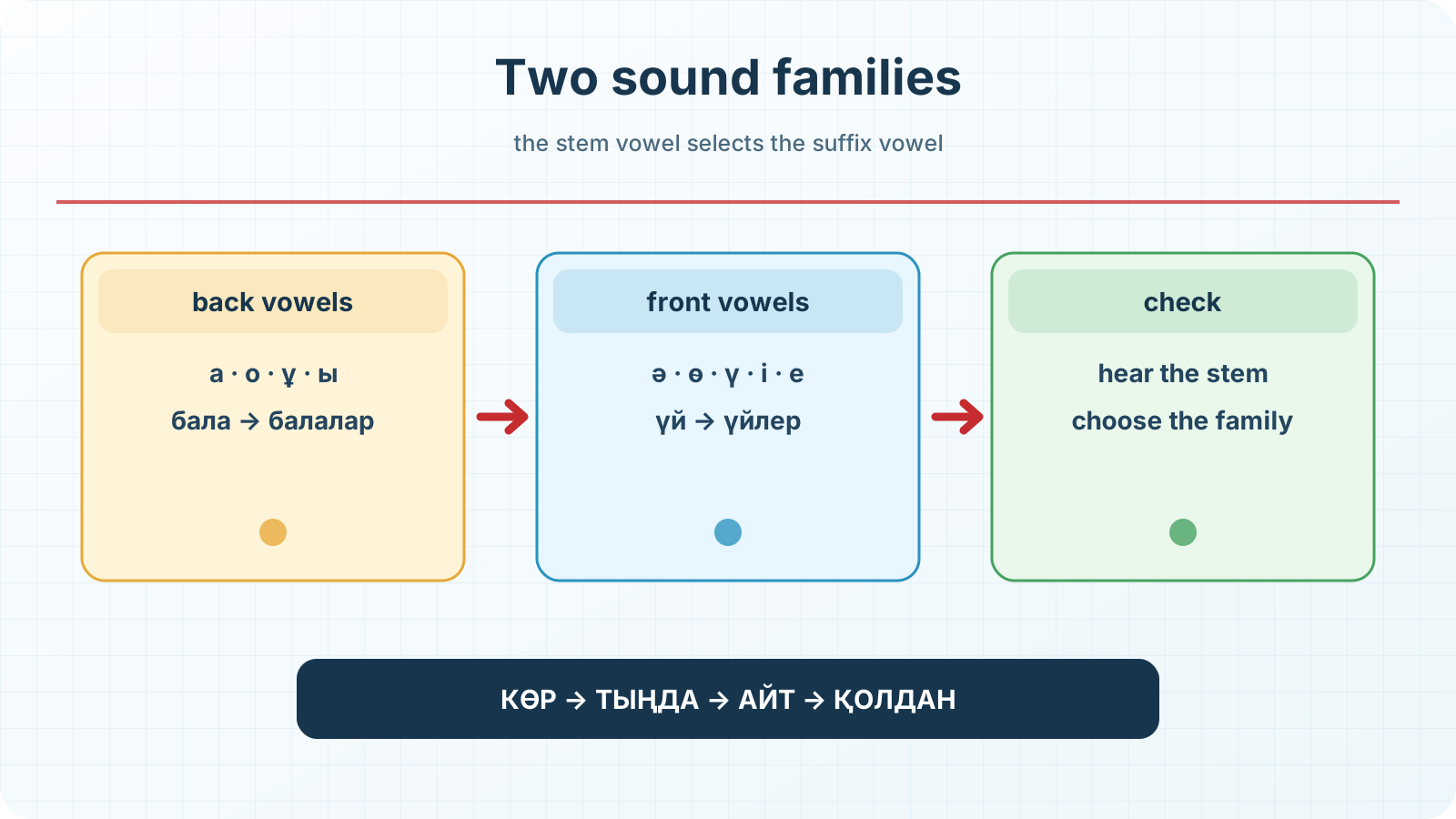
Picture a family table: a new suffix sits beside the stem and adjusts its vowel to the sound already there. That is why бала becomes балалар while әже becomes әжелер. The image opens the idea, but the exact decision comes from the final vowel of the stem.
Listen and respond
Listen: Бала — балалар. — child — children, back-vowel family
Listen: Қала — қалалар. — city — cities, back-vowel family
Listen: Әже — әжелер. — grandmother — grandmothers, front-vowel family
Listen: Үй — үйлер. — home — homes, front-vowel family
Listen: Көше — көшелер. — street — streets, front-vowel family
How to practise
Press the button and look away from the text first: catch the overall meaning and just one new sound or structural choice. On the second pass, follow the phrase and the support map with your finger. Hide the model, rebuild it from two or three signs, and say a version of your own. Finish with a partner or a voice recorder: respond without preparation and note one place where you paused. Return to that link only instead of rereading the whole lesson.
The precise model
For this first model, а, о, ұ, ы form the back-vowel family and ә, ө, ү, і, е form the front-vowel family. Find the last vowel in the stem. If it belongs to the first family, select a suffix with а: бала + лар. If it belongs to the second, select the е form: әже + лер. We do not try two endings at random; we hear the stem and preserve its sound family.
The support signal
СОҢҒЫ ДАУЫСТЫ → ЖУАН: -ЛАР | ЖІҢІШКЕ: -ЛЕР
The limit of the rule
Today we choose only the suffix vowel. The first consonant in -лар/-лер, -дар/-дер, and -тар/-тер depends on the final sound of the stem and needs a later rule. This one lesson therefore cannot derive all of кітаптар. Loanwords and established forms can also behave specially; check a dictionary when uncertain instead of forcing every word into the first diagram.
Predict before the explanation
Without adding an ending, divide ана, қала, үй, әже, and көше into two families. Underline the final vowel, name the expected map colour, and only then say the plural form aloud.
Rebuild it without the prompt
Hide the page and draw two houses. Rebuild а о ұ ы in the first and ә ө ү і е in the second. Draw an arrow from each house to -лар or -лер. Add two nouns of your own to each and justify the choice from the final vowel rather than your memory of a finished word.
Find and repair the mistake
A learner writes үйлар after taking the first ending from a table. Point to the actual decision: locate the last vowel in үй, name its family, and repair only the suffix vowel. Then explain why балалер contains the mirror-image error.
Transfer to a new setting
Choose six nearby objects whose Kazakh names you know or have checked. Divide the stems into two families, then make plurals only where today’s -лар/-лер model is sufficient. Put words that require another consonant variant aside with a note saying which part has not been learned yet.
Change to the My World project
Add two safe lists of places or objects to the project: three back-vowel stems and three front-vowel stems. Store the plural beside each and colour only the changing suffix vowel. Add one sentence explaining why the colour carries meaning rather than decoration.
Exercise
Required. Make plurals of бала, ана, қала, әже, үй, and көше; write the final vowel and its family before each answer. Read every pair aloud.
Transfer check. Find two new nouns for which today’s rule is sufficient and one noun that must wait because of the consonant part of the suffix. Explain that boundary.
Retrieval after 1, 7, and 30 days
- Tomorrow rebuild the two families and suffix variants without the word list.
- After seven days, sort ten new stems and check them in a dictionary.
- After thirty days, find harmony in a short project text and explain three endings.
Next lesson: The Kazakh sentence skeleton: action closes the thought
If you have found a mistake or a typo in this article, tell us about it
Comments (0)
Log in to leave a comment →
No comments yet. Be the first.