


Kazakh: start speaking from the first meeting Lesson 73 of 80
Who is your guide for? Purpose and audience
You will identify your audience and explain which task your guide helps them complete.
This text was translated with AI.
Where we are on the map
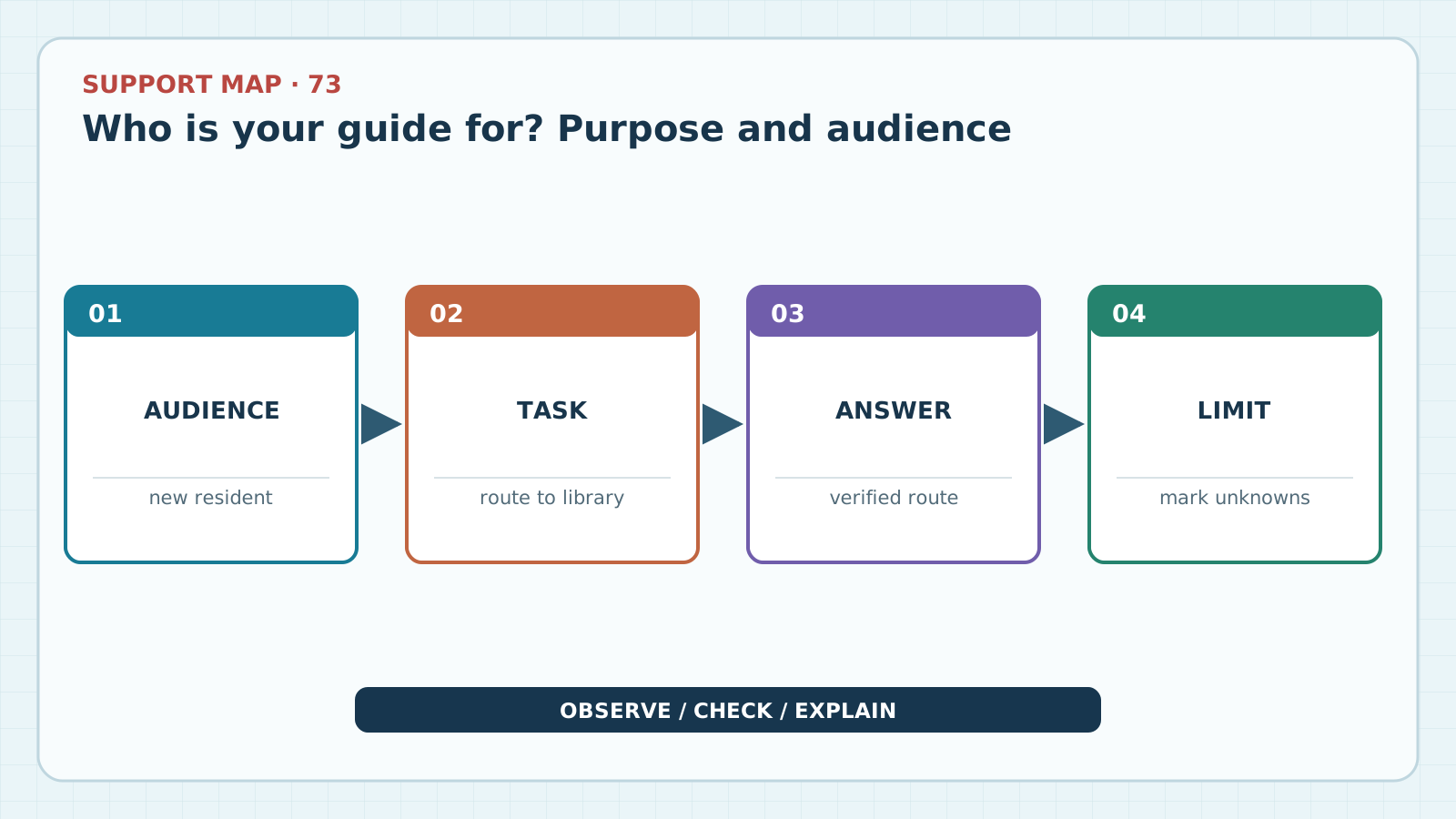
Trace the four nodes of the support map with a finger and name the job of each one. Then hide it. Colours make the checking sequence visible; they do not stand in for evidence. If a node lacks information, leave it blank and explain why. These figures are invented practice data, not statistics from a real library.
A real-life scene
A fictional neighborhood welcomes new residents. One person needs the library; another needs an accessible route to it. Before decorating the map, your group decides whom it will help and why.
Listen and respond
Listen: Бұл жолсілтеме жаңа тұрғындарға арналған. — This guide is for new residents.
Listen: Олар кітапхананы іздеп жүр. — They are looking for the library.
Listen: Алдымен оларға бағыт керек. — First they need a route.
Listen: Бұл карта жолды табуға көмектеседі. — This map helps people find the way.
Listen: Кімге қандай ақпарат қажет? — Who needs which information?
Listen: Білмейтін мәліметті қоспаймыз. — We do not add information we do not know.
How to practise
First listen with the transcript hidden and state the main point even if you miss some words. On a second pass write only anchor words and numbers; on a third, open the text and find one error in your initial prediction. Repeat the full Kazakh sentence at a natural pace rather than spelling it out. If a detail remains unclear, use the repair question from lesson 60 and ask a partner to repeat just that part.
The precise model
Ask who the guide is for, state the task, then choose content. Арналған links a resource to its audience; көмектеседі names its benefit. A new resident needs a verified route, not just a pretty description.
Support signal
ТЫҢДАУШЫ → МІНДЕТ → ЖАУАП → ШЕК
Limit of the rule
Do not infer someone’s age, language or needs from appearance. Define the audience by its task; verify route accessibility separately.
Predict before the explanation
Before reading the model, write the conclusion you expect and what you can actually verify. Name one word or number that might change your answer. Compare your prediction with the evidence afterward; revising it is a sign of careful reading, not failure.
Recall without the support
Hide the text and diagram. Sketch four nodes in one minute, say two connected Kazakh sentences, and explain to a partner where the known information ends. Reopen the page, compare every detail and repair one imprecise word.
Find and repair the mistake
A learner writes “for everyone” without naming a task. Choose one audience, state its question and remove irrelevant details.
Transfer to a new scene
Now the reader knows the neighborhood but needs opening hours. Which part of the guide is no longer first?
Change to the My World project
My World 2.1 remains a fictional learning guide without personal data. For every conclusion keep the original message, the date you checked it, and what you still do not know. On page one of My World 3.0, record the audience, their question, a verified answer and an open gap.
Exercise
Without the model, name the audience, task and one checked answer. Tell a partner what must stay out of the guide for now.
Review after 1, 7 and 30 days
- Tomorrow listen to one line without text and recover its meaning and source.
- After seven days apply the same map to a new fictional notice or a fresh set of numbers.
- After thirty days explain your decision to someone else without the map and ask them to find an unsupported part.
If you have found a mistake or a typo in this article, tell us about it
Comments (0)
Log in to leave a comment →
No comments yet. Be the first.