


Kazakh: start speaking from the first meeting Lesson 19 of 48
What time is it, and when does class begin?
You will understand whole hours, halves, and quarter hours, and separate ‘What time is it?’ from ‘When does it happen?’
This text was translated with AI.
Where we are on the map
The support is a route rather than a poster to memorise. Find the starting point, trace the arrows, and name the meaning of each step. Then hide the map and rebuild it on a blank sheet.
A real situation
A clock hangs by the entrance and a timetable is posted on the door. You must report the current time and the start of a lesson, break, and meeting without sending someone an hour late.
Listen and respond
Listen: Сағат неше? — What time is it?
Listen: Сағат сегіз болды. — It is eight o’clock.
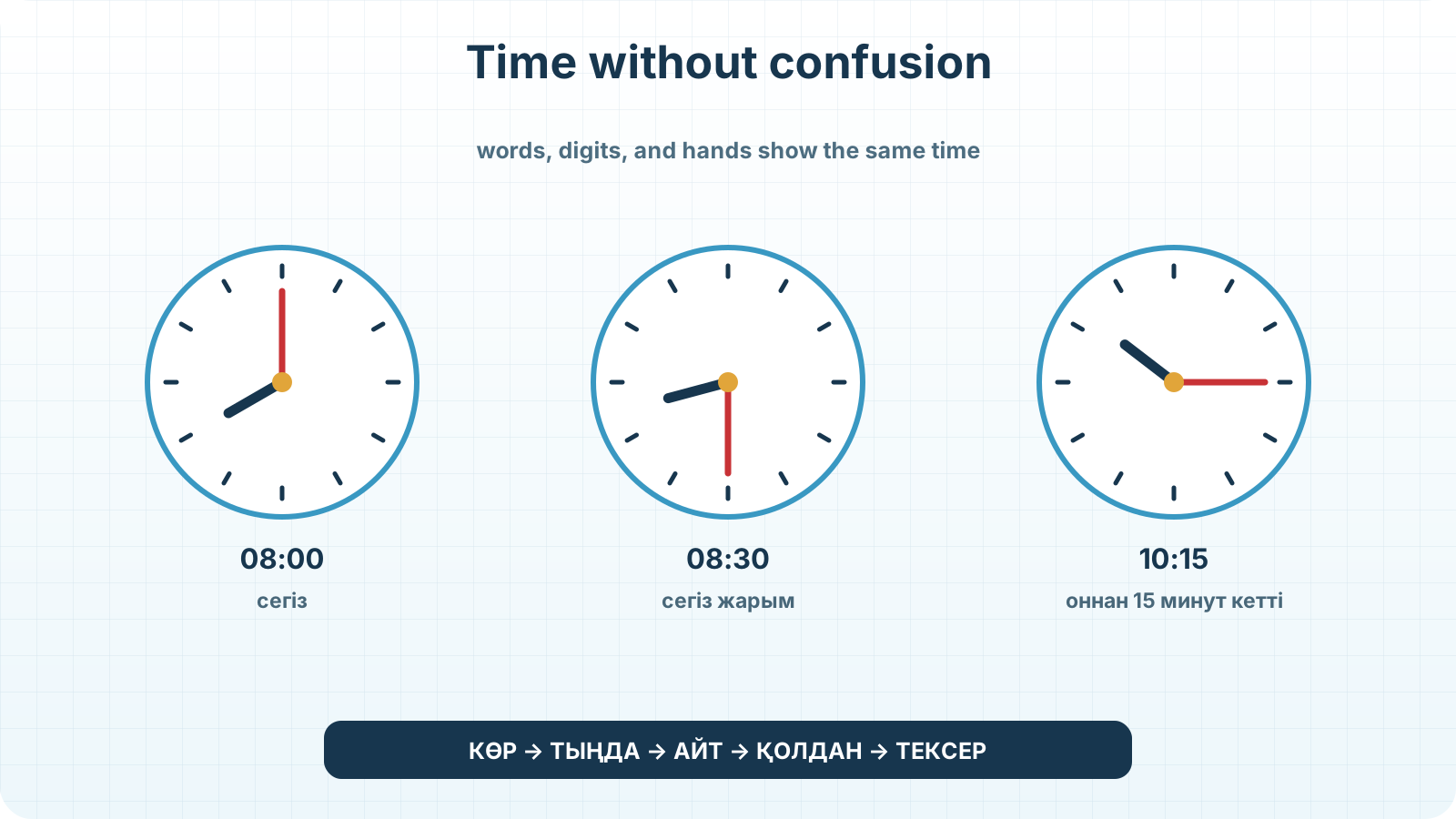
Listen: Сабақ сағат сегіз жарымда басталады. — The lesson starts at 8:30.
Listen: Үзіліс сағат онда. — The break is at ten.
Listen: Сағат оннан он бес минут кетті. — It is 10:15.
Listen: Мен он минут ерте келемін. — I will arrive ten minutes early.
How to practise
On the first listen, hide the text and identify only the situation. On the second, reveal the Kazakh line, point to its meaning units, and repeat after the recording. On the third, remove the model, change a place, time, or direction card, and produce a new sentence. The recording supplies a pronunciation model; compare your speech with it or ask a live speaker to check it.
The precise model
Сағат неше? asks for the clock reading. Қашан? asks for the time of an event. A whole hour takes -да/-де: сегізде, онда. Сегіз жарым is 8:30, literally eight and a half. In оннан он бес минут кетті, fifteen minutes have passed after ten. Always anchor the spoken form to a clock face or digital display.
The support signal
ҚАЗІР? → Сағат неше? | ОҚИҒА? → Қашан? → 08:00 / 08:30 / 10:15
The limit of the rule
English ‘half past eight’ and Kazakh сегіз жарым happen to point to the same clock position, but learners should still build the Kazakh meaning directly. A digital 08:30 beside an official announcement reduces ambiguity. Natural speech has additional time patterns; this lesson deliberately secures only the tested core forms.
Predict before the explanation
Before reading the rule, inspect the new cards and choose a form by meaning: where an action happens, where a route starts, where it ends, when an event starts, or which rule applies. Record the prediction, then explain which signal confirmed or changed it.
Rebuild it without the prompt
Hide the page and draw the support from memory in sixty seconds. Use it to say three lines: the familiar model, one changed line, and one entirely your own. If a link is missing, reveal only that link, hide the page again, and rebuild the whole chain.
Find and repair the mistake
A learner treats сегіз жарым as a vague time around eight. Place the hands exactly at 8:30, shade eight full hours and the next half, and say the Kazakh phrase together with the digits.
Transfer to a new setting
Change the situation rather than replacing a single word: use another school, day, time, route, or rule. A partner supplies one unseen card and checks whether your ending still matches the intended meaning.
Change to the My World project
Add start and finish times for two fictional events to the project timetable. Keep a digital display beside each spoken form.
Exercise
Required. Set clock hands to 08:00, 08:30, 10:00, and 10:15 and label each in Kazakh. Answer two Сағат неше? questions and two Қашан? questions. Transfer check. A partner changes one clock; update only the affected part of the announcement.
Retrieval after 1, 7, and 30 days
- Tomorrow rebuild the support and say four lines without reading.
- After seven days work with a new route or timetable and meet at least 7 of 10 criteria.
- After thirty days use the construction in a safe real setting and mark the support you no longer need.
Next lesson: Straight, right, left: guiding someone politely
If you have found a mistake or a typo in this article, tell us about it
Comments (0)
Log in to leave a comment →
No comments yet. Be the first.