

Kazakh: start speaking from the first meeting Lesson 53 of 56
If the plan changes: condition and backup route
You will build a condition with `-са/-се` and name a calm backup action.
This text was translated with AI.
Where we are on the map
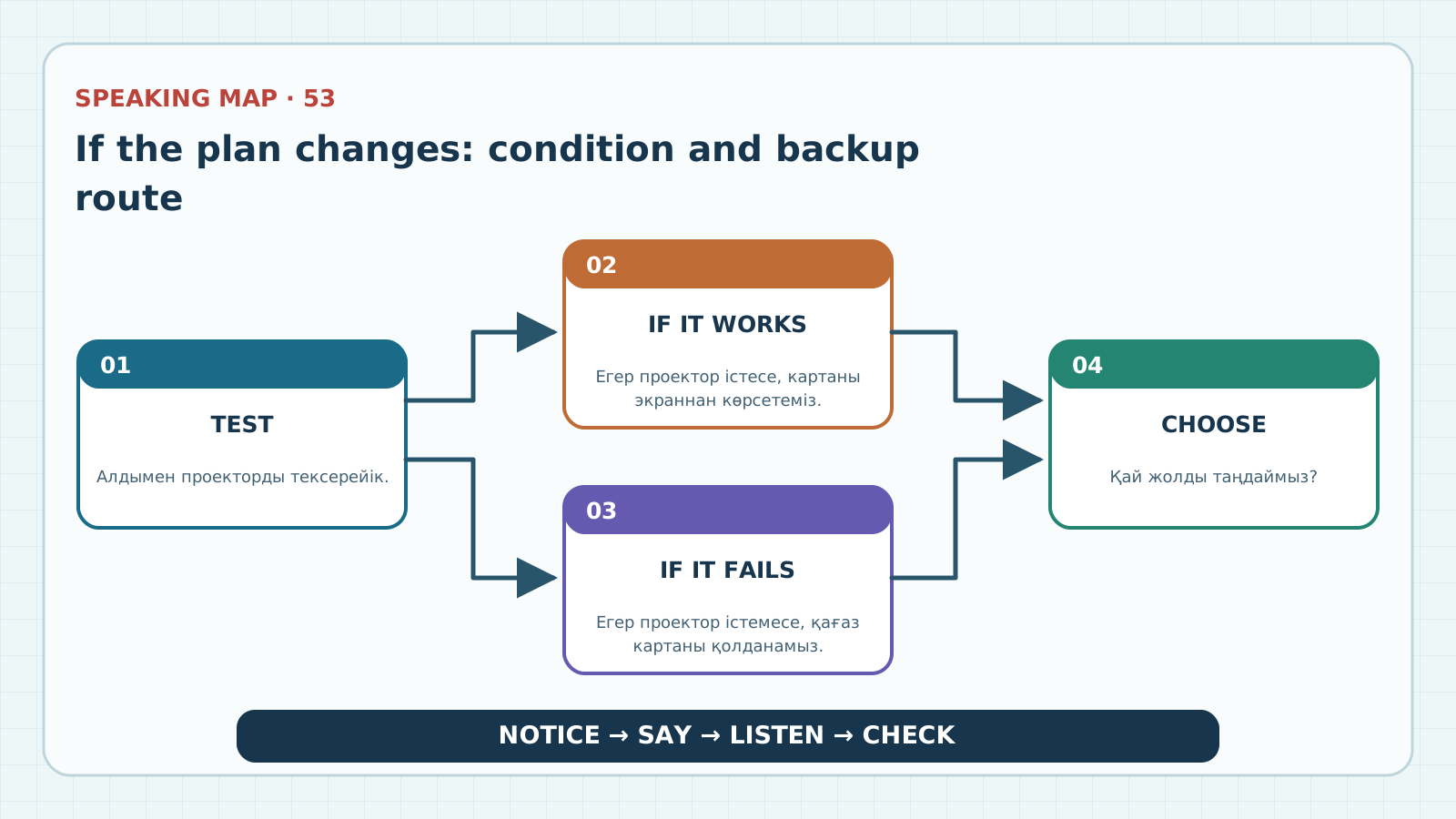
This support map leads from a situation to a solution: notice the need or obstacle, choose a precise utterance, hear the reply, and check that both people understand the outcome alike. Trace the path with a finger, hide the map, and rebuild it from memory. Each node serves a real exchange rather than the memorisation of a rule name.
A real situation
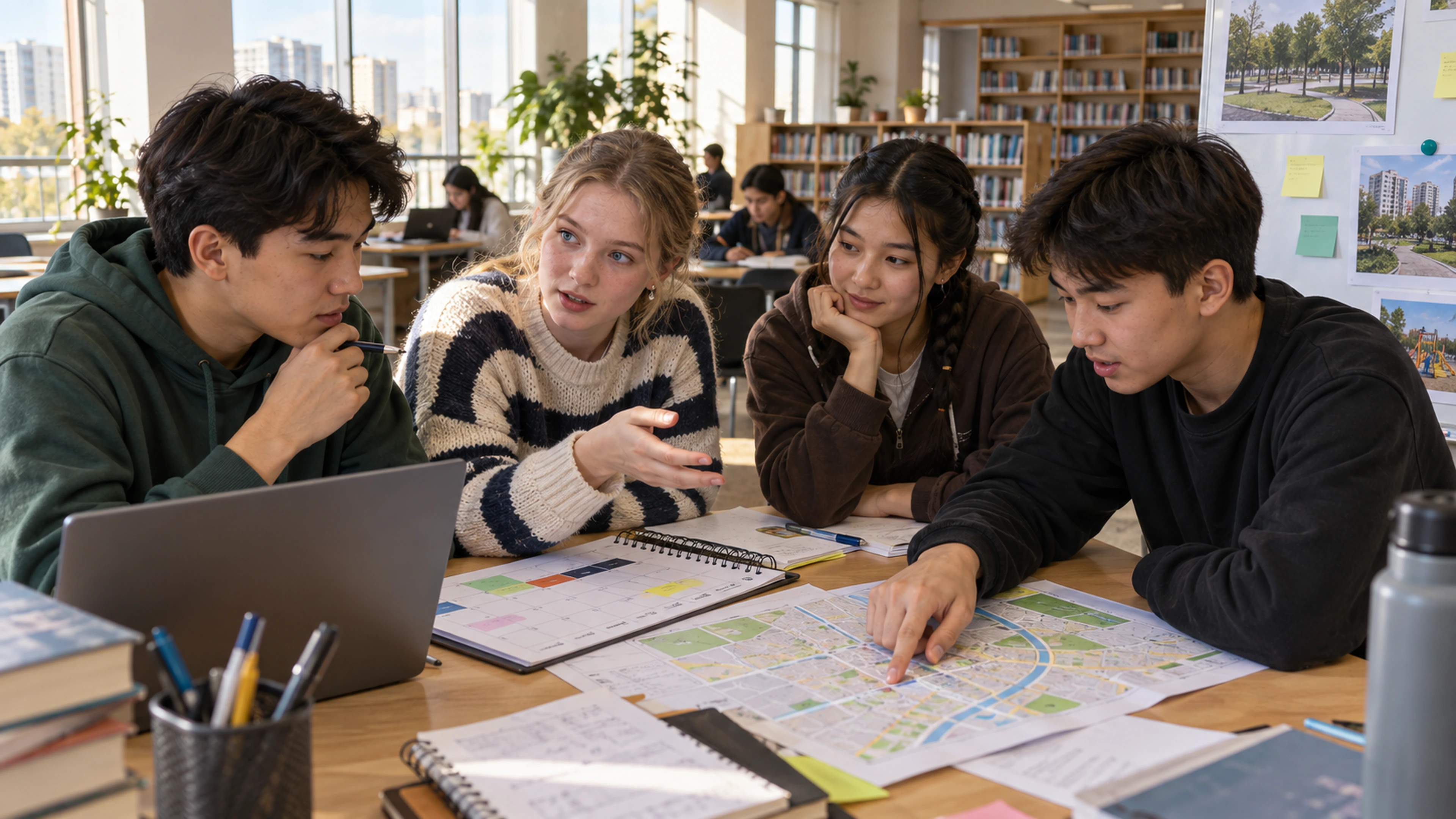
The team hopes to show its map on a screen. It does not yet know whether the projector will work. Instead of declaring failure, the team needs a backup triggered by a clear condition.
Listen and respond
Listen: Егер проектор істесе, картаны экраннан көрсетеміз. — If the projector works, we will show the map on screen.
Listen: Егер проектор істемесе, қағаз картаны қолданамыз. — If it does not work, we will use the paper map.
Listen: Жаңбыр жауса, үйде кездесеміз. — If it rains, we will meet indoors.
Listen: Уақыт жетпесе, екі аялдаманы ғана көрсетеміз. — If time runs short, we will show only two stops.
Listen: Қай жолды таңдаймыз? — Which route will we choose?
Listen: Алдымен проекторды тексерейік. — Let us test the projector first.
How to practise
First play the recording without reading the Kazakh line. Decide whether the speaker is requesting, replying, explaining, or confirming. Then uncover the line, repeat it as a whole after the speaker, and point out the word that changes the meaning. On the third pass, alter one condition and say your own line. If a partner understands it differently, ask for clarification; that is a communication skill.
The precise model
The first clause holds the condition: істесе means ‘if it works’; істемесе means ‘if it does not’. The following clause states the action. Егер makes the condition conspicuous for beginners, but -са/-се already carries the conditional meaning. Compare both branches and cover both test outcomes.
The support signal
ТЕКСЕР → ІСТЕСЕ → ІСТЕМЕСЕ → ТАҢДА
The limit of the rule
A condition does not claim the projector is broken. Егер alone does not replace the verb’s -са/-се form. The example with үйде does not require sharing anyone’s address.
Predict before the explanation
Before reading the model, write your first response to the situation. Which facts are known and which are guesses? Choose an action supported by what you know. After the explanation, compare not only word endings but also whether the request or agreement kept its intended meaning.
Rebuild it without the prompt
Hide the page. In one minute draw the four nodes, say a familiar line, the partner’s reply, and your answer. Then change one fact such as time, place, or available object and travel through the path again without the example.
Find and repair the mistake
A learner writes Егер проектор істейді, қағаз картаны қолданамыз: the conditional form is missing and the branch is wrong. Choose the observation, then build істемесе → қағаз карта.
Transfer to a new setting
Your partner changes the constraint: time is short but the projector works. Build two new branches and explain which one applies.
Change to the My World project
Add two possible obstacles and one safe action for each. Write testable conditions separately from decisions.
Exercise
Draw two forks for two unseen cards. Say both branches, reveal the fact card, and perform only the branch that applies.
Retrieval after 1, 7, and 30 days
- Tomorrow rebuild the four nodes and speak a new two-line exchange without reading.
- After seven days solve an unseen task with a partner; they must restate your final plan in their own words.
- After thirty days return to the project card, change one condition, and repair an unclear utterance yourself.
If you have found a mistake or a typo in this article, tell us about it
Comments (0)
Log in to leave a comment →
No comments yet. Be the first.