


Kazakh: start speaking from the first meeting Lesson 70 of 72
Disagree respectfully and check the evidence together
You will disagree, cite a specific source and invite a joint check.
This text was translated with AI.
Where we are on the map
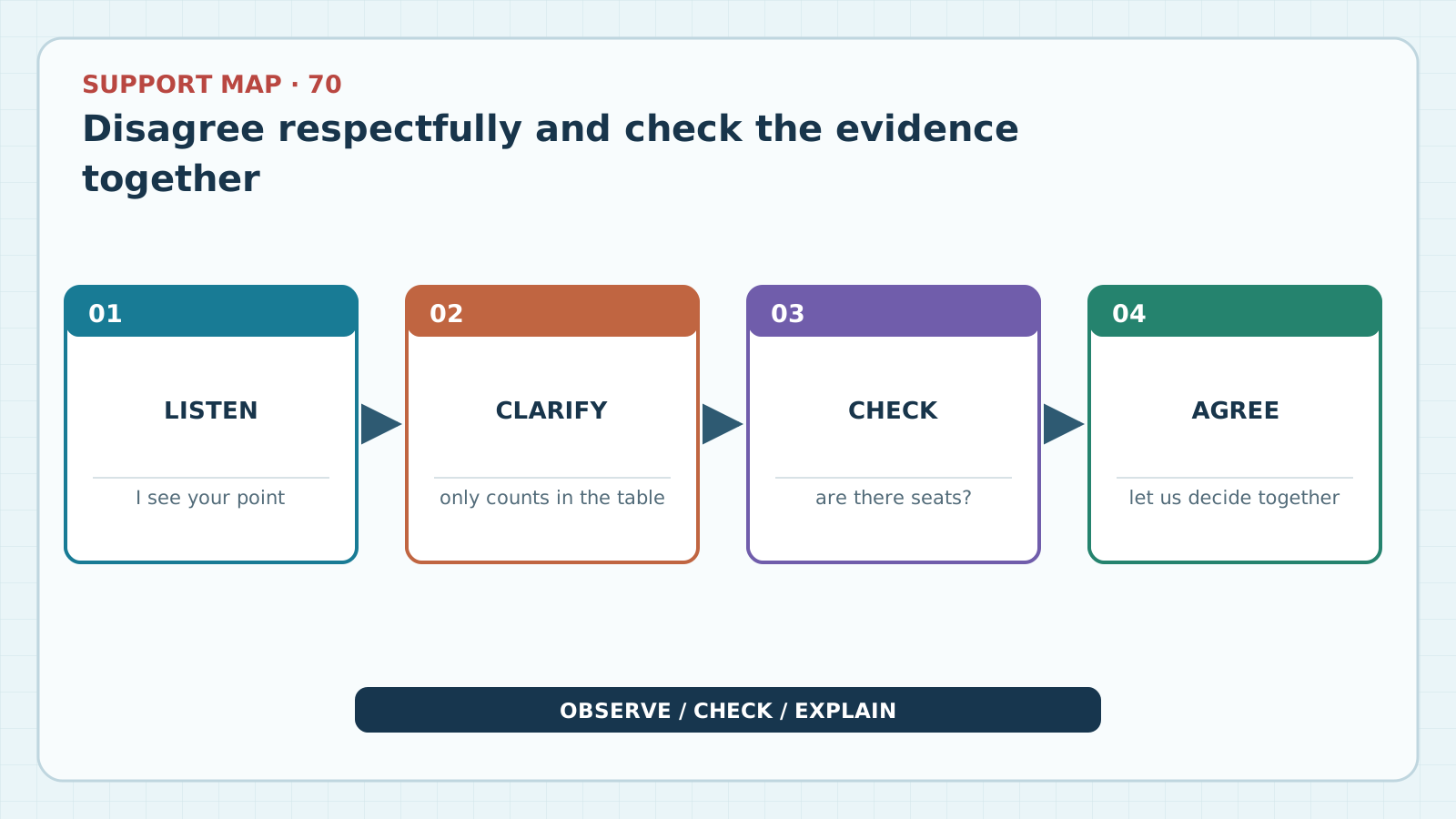
Trace the four nodes of the support map with a finger and name the job of each one. Then hide it. Colours make the checking sequence visible; they do not stand in for evidence. If a node lacks information, leave it blank and explain why. These figures are invented practice data, not statistics from a real library.
A real-life scene
One member favours Tuesday because attendance is higher. Another worries the room may be booked. They need to resolve this without attacking one another’s ability to read the chart.
Listen and respond
Listen: Мен сіздің ойыңызды түсіндім. — I understand your point.
Listen: Мен басқаша ойлаймын. — I see it differently.
Listen: Кестеде келуші саны ғана бар. — The table only has visitor counts.
Listen: Залдың бос уақытын да тексерейік. — Let us check the room’s available times too.
Listen: Мүмкін, мен бір нәрсені байқамаған шығармын. — I may have missed something.
Listen: Дерек анықталса, шешімді бірге өзгертеміз. — Once the evidence is clear, we can revise the decision together.
How to practise
First listen with the transcript hidden and state the main point even if you miss some words. On a second pass write only anchor words and numbers; on a third, open the text and find one error in your initial prediction. Repeat the full Kazakh sentence at a natural pace rather than spelling it out. If a detail remains unclear, use the repair question from lesson 60 and ask a partner to repeat just that part.
The precise model
Start with a shared fact, then locate the disagreement: Мен ... түсіндім. Бірақ кестеде ... ғана бар. ... тексерейік. That keeps the disagreement about the claim. Мүмкін honestly marks uncertainty, but it does not replace checking. If new evidence corrects you, revise your view aloud.
Support signal
ТЫҢДА → НАҚТЫЛА → ТЕКСЕР → КЕЛІС
Limit of the rule
Respect does not require treating every claim as proven. Challenge the inference, not the person; postpone a decision if crucial facts are missing.
Predict before the explanation
Before reading the model, write the conclusion you expect and what you can actually verify. Name one word or number that might change your answer. Compare your prediction with the evidence afterward; revising it is a sign of careful reading, not failure.
Recall without the support
Hide the text and diagram. Sketch four nodes in one minute, say two connected Kazakh sentences, and explain to a partner where the known information ends. Reopen the page, compare every detail and repair one imprecise word.
Find and repair the mistake
Replace “you do not understand the table” with a line about what the table cannot show and one check to make.
Transfer to a new scene
In a text chat with no tone of voice, what short Kazakh line would keep disagreement from reading like an accusation?
Change to the My World project
My World 2.1 remains a fictional learning guide without personal data. For every conclusion keep the original message, the date you checked it, and what you still do not know. Keep both decision versions and a verifiable source in the project. Mark why the decision changed instead of erasing the earlier record.
Exercise
Hold a two-minute exchange. One person proposes Tuesday; the other checks room availability. Swap roles, then record what is confirmed and what remains open.
Review after 1, 7 and 30 days
- Tomorrow listen to one line without text and recover its meaning and source.
- After seven days apply the same map to a new fictional notice or a fresh set of numbers.
- After thirty days explain your decision to someone else without the map and ask them to find an unsupported part.
If you have found a mistake or a typo in this article, tell us about it
Comments (0)
Log in to leave a comment →
No comments yet. Be the first.