


Kazakh: start speaking from the first meeting Lesson 67 of 72
Read three bars without guessing
You will state the period, unit and exact values before drawing a conclusion from a chart.
This text was translated with AI.
Where we are on the map
Trace the four nodes of the support map with a finger and name the job of each one. Then hide it. Colours make the checking sequence visible; they do not stand in for evidence. If a node lacks information, leave it blank and explain why. These figures are invented practice data, not statistics from a real library.
A real-life scene
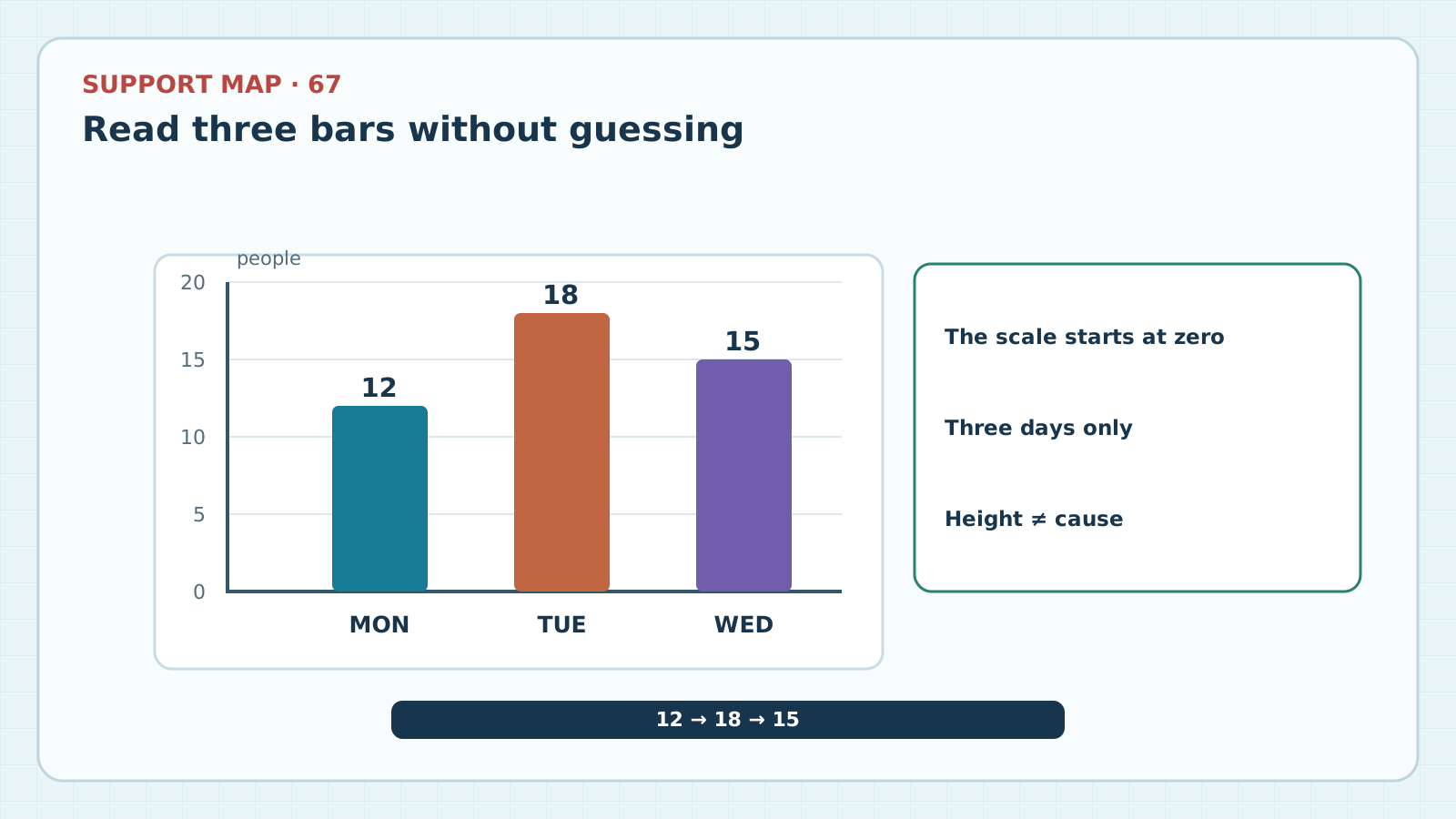
A fictional library gives the group a three-day practice table: Monday 12, Tuesday 18, Wednesday 15 visitors. These are invented exercise values. The group draws equal-width bars starting at zero.
Listen and respond
Listen: Дүйсенбіде он екі адам келді. — Twelve people came on Monday.
Listen: Сейсенбіде он сегіз адам келді. — Eighteen people came on Tuesday.
Listen: Сәрсенбіде он бес адам келді. — Fifteen people came on Wednesday.
Listen: Өлшем бірлігі — адам саны. — The unit is number of people.
Listen: Ең биік баған сейсенбіге тиесілі. — The tallest bar belongs to Tuesday.
Listen: Бұл дерек тек үш күнді қамтиды. — These data cover only three days.
How to practise
First listen with the transcript hidden and state the main point even if you miss some words. On a second pass write only anchor words and numbers; on a third, open the text and find one error in your initial prediction. Repeat the full Kazakh sentence at a natural pace rather than spelling it out. If a detail remains unclear, use the repair question from lesson 60 and ask a partner to repeat just that part.
The precise model
Read left to right: day label, bar height and the unit “people.” Say 12–18–15 before stating that Tuesday is highest among these three days. Use the same zero baseline: a truncated scale exaggerates the gap. Three days cannot describe the whole month.
Support signal
КЕЗЕҢ → ӨЛШЕМ → МӘНДЕР → ШЕК
Limit of the rule
A taller bar shows a larger count, not why it happened. We do not know whether Tuesday had a holiday, different weather or an event.
Predict before the explanation
Before reading the model, write the conclusion you expect and what you can actually verify. Name one word or number that might change your answer. Compare your prediction with the evidence afterward; revising it is a sign of careful reading, not failure.
Recall without the support
Hide the text and diagram. Sketch four nodes in one minute, say two connected Kazakh sentences, and explain to a partner where the known information ends. Reopen the page, compare every detail and repair one imprecise word.
Find and repair the mistake
A learner labels Wednesday 18 because its bar looks tall. Return to the source table and correct the label.
Transfer to a new scene
A partner shows unlabeled bars. Which four questions must you ask before publishing the graphic?
Change to the My World project
My World 2.1 remains a fictional learning guide without personal data. For every conclusion keep the original message, the date you checked it, and what you still do not know. Keep the practice table beside its chart; label it “fictional exercise data,” with dates and unit.
Exercise
Draw a 0–20 scale in steps of five and bars for 12, 18 and 15. Label days and unit. With the table hidden, say the values and the limit of your conclusion.
Review after 1, 7 and 30 days
- Tomorrow listen to one line without text and recover its meaning and source.
- After seven days apply the same map to a new fictional notice or a fresh set of numbers.
- After thirty days explain your decision to someone else without the map and ask them to find an unsupported part.
Next lesson: Six more is not twice as many: compare with a baseline
If you have found a mistake or a typo in this article, tell us about it
Comments (0)
Log in to leave a comment →
No comments yet. Be the first.