


Kazakh: start speaking from the first meeting Lesson 9 of 16
Ы and І: a quiet sound is not a silent letter
You will hear and produce Kazakh ы and і as very short vowels, avoid replacing them with strong familiar vowels, and recognise the particular forms in which a vowel really disappears.
This text was translated with AI.
Where we are on the map
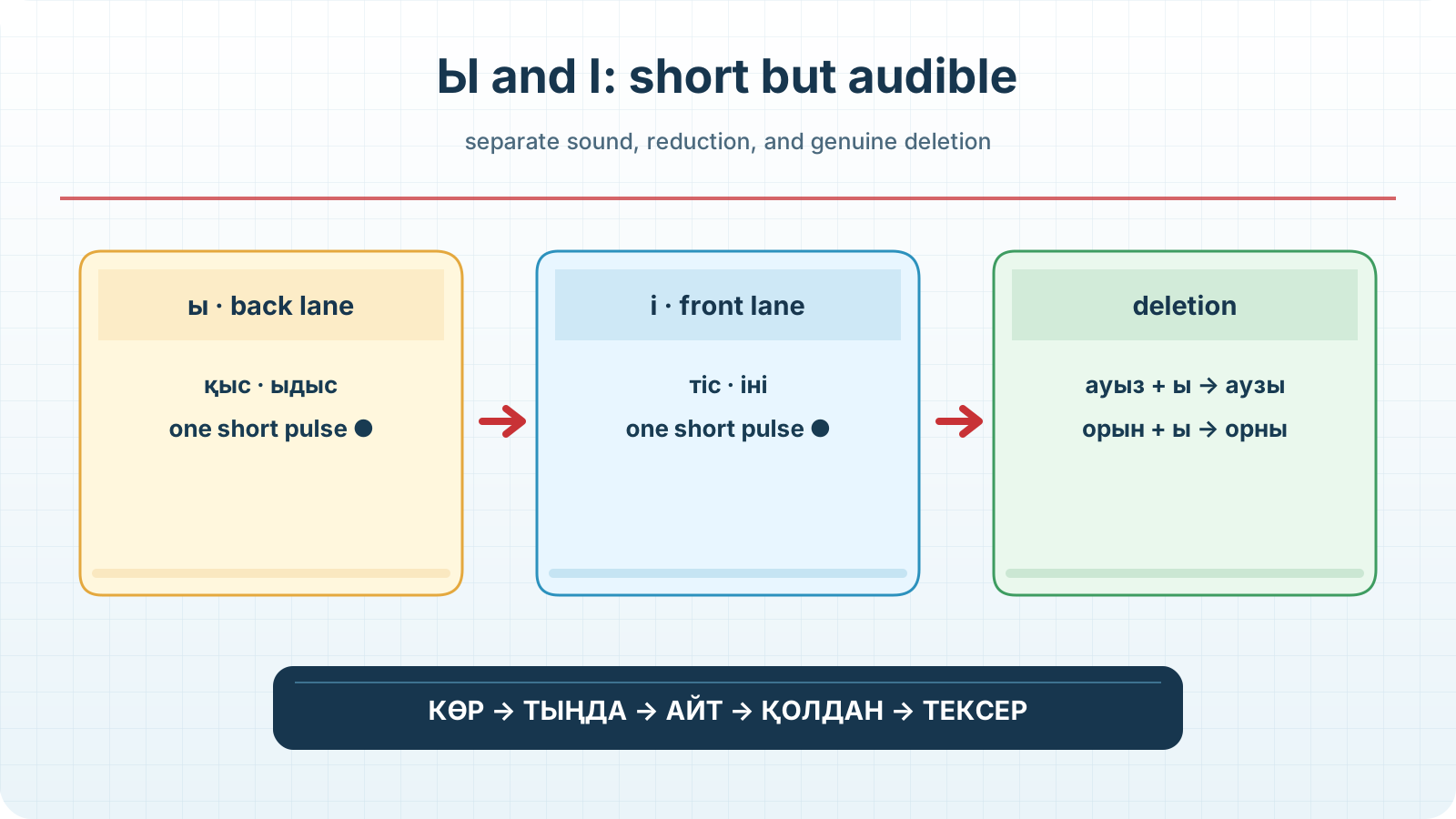
The support map shows one complete meaning link. Trace it with a finger, then rebuild the route without the picture.
A real situation
A new learner may see ы and turn it into a separate heavy syllable, or replace і with a long English or Russian-style vowel. The extra beat changes the rhythm of Kazakh. A native speaker often makes these vowels so short that a beginner thinks the letter is silent. Our task is to reduce the duration without deleting the sound.
Listen and respond
Listen: қыс — winter: a short back ы
Listen: тіс — tooth: a short front і
Listen: ыдыс — dish: ы is audible but not stretched
Listen: іні — younger brother: both і vowels are short
Listen: ауыз — аузы — mouth — his or her mouth: ы really drops in the second form
Listen: орын — орны — place — his or her place: a specific deletion pattern
How to practise
Listen with the text hidden and catch only the target meaning. Next, trace the map with a finger and repeat after the model. On the third pass, hide the model, tap its short rhythm with your palm, and make a sentence of your own. Device speech is a model; use a speaker, teacher, or comparison with your own recording as evidence of pronunciation.
The precise model
Ы is a close unrounded back or central vowel and і is its front partner. Modern descriptions analyse them as vowel phonemes, even though transcription varies. They preserve the back or front melody of a word and help select a suffix: ыдыс-тар, but тіс-тер. An apostrophe cannot replace both letters without losing that information. In connected speech a close vowel may be reduced, and in certain inflected forms it is deleted: ауыз + ы → аузы, орын + ы → орны, ерін + і → ерні. That is a particular morphological change, not evidence that every ы or і is silent. The sounds also predate Cyrillic Kazakh: the 1929 Latin alphabet represented ы and і separately. Sources: JIPA illustration of Kazakh, study of close-vowel deletion, and the 1929 alphabet.
The support signal
Ы = short back pulse ● | І = short front pulse ● | ауыз + ы → аузы
The limit of the rule
Do not turn shortness into silence, and do not treat the vowel as a command to strengthen a consonant. Voicing continues, the jaw opens little, and the tongue is farther back for ы and farther forward for і. Learn deletion only in verified forms: ауыл → ауылы, for example, keeps its vowel.
Predict before the explanation
Sort қыс, тіс, ыдыс, and іні into back and front lanes before listening. Predict where your palm should make one short tap and where a beginner might incorrectly stretch the vowel over two counts.
Rebuild it without the prompt
Hide the words. Place two fingers lightly on your throat: voicing should continue through the vowel. Show duration with the other hand, using a short touch for ы/і and a long stretch only for a deliberately wrong version. Rebuild four words from pictures and name their harmony lane.
Find and repair the mistake
A learner says that ы in қыс has no sound and produces almost қс; then they overcorrect to қыыс. Both extremes miss the target. Restore one short voiced pulse between the consonants. Use ауыз — аузы to explain why the second form is genuinely different.
Transfer to a new setting
Compare бір бөлме, алты орын, and менің інім. Record an intentionally overlong version and then a short version. Do not judge the voice as good or bad; listen only for extra duration and preserved meaning.
Change to the My World project
Add a sound panel to the project: two coloured harmony lanes, four words, and two deletion pairs. You may draw an apostrophe above a timeline as a temporary cue for “very short”, but never substitute it for standard spelling.
Exercise
Required. Write қыс, тіс, ыдыс, іні, ауыз, and орын. Mark ы or і, the harmony lane, and one short beat in each. Then say аузы, орны, and ерні, and explain in writing why they do not prove that all ы and і letters are silent.
Transfer check. Hear two unfamiliar words containing ы or і three times and describe tongue position and duration without replacing the sound with an English or Russian model.
Retrieval after 1, 7, and 30 days
- Tomorrow identify the six words from sound alone and rebuild their spelling.
- After seven days explain the difference among short duration, reduction, and deletion to someone else.
- After thirty days find ы/і in one minute of natural speech and compare their duration with а/ә.
Next lesson: Бұл кім? Talking about family accurately and respectfully
If you have found a mistake or a typo in this article, tell us about it
Comments (0)
Log in to leave a comment →
No comments yet. Be the first.