


Kazakh: start speaking from the first meeting Lesson 7 of 16
Repair a conversation and speak politely
You will use six short lines to stop misunderstanding, request repetition or slower speech, and return the exchange to meaning.
This text was translated with AI.
Where we are on the map
The map holds the whole route; we will add its details one at a time.
A real situation
No one knows every word in a real conversation. Silence or a random yes hides the problem, while a short repair line helps both speakers. Repair is an independent language skill: stop the stream, name the obstacle, change the conditions, and check the recovered meaning.
Listen and respond
Listen: Кешіріңіз. — excuse me
Listen: Түсінбедім. — I did not understand
Listen: Қайталаңызшы. — please repeat
Listen: Баяу айтыңызшы. — please speak more slowly
Listen: Бұл нені білдіреді? — what does this mean?
Listen: Дұрыс айттым ба? — did I say it correctly?
How to practise
Press the button and look away from the text first: catch the overall meaning and just one new sound or structural choice. On the second pass, follow the phrase and the support map with your finger. Hide the model, rebuild it from two or three signs, and say a version of your own. Finish with a partner or a voice recorder: respond without preparation and note one place where you paused. Return to that link only instead of rereading the whole lesson.
The precise model
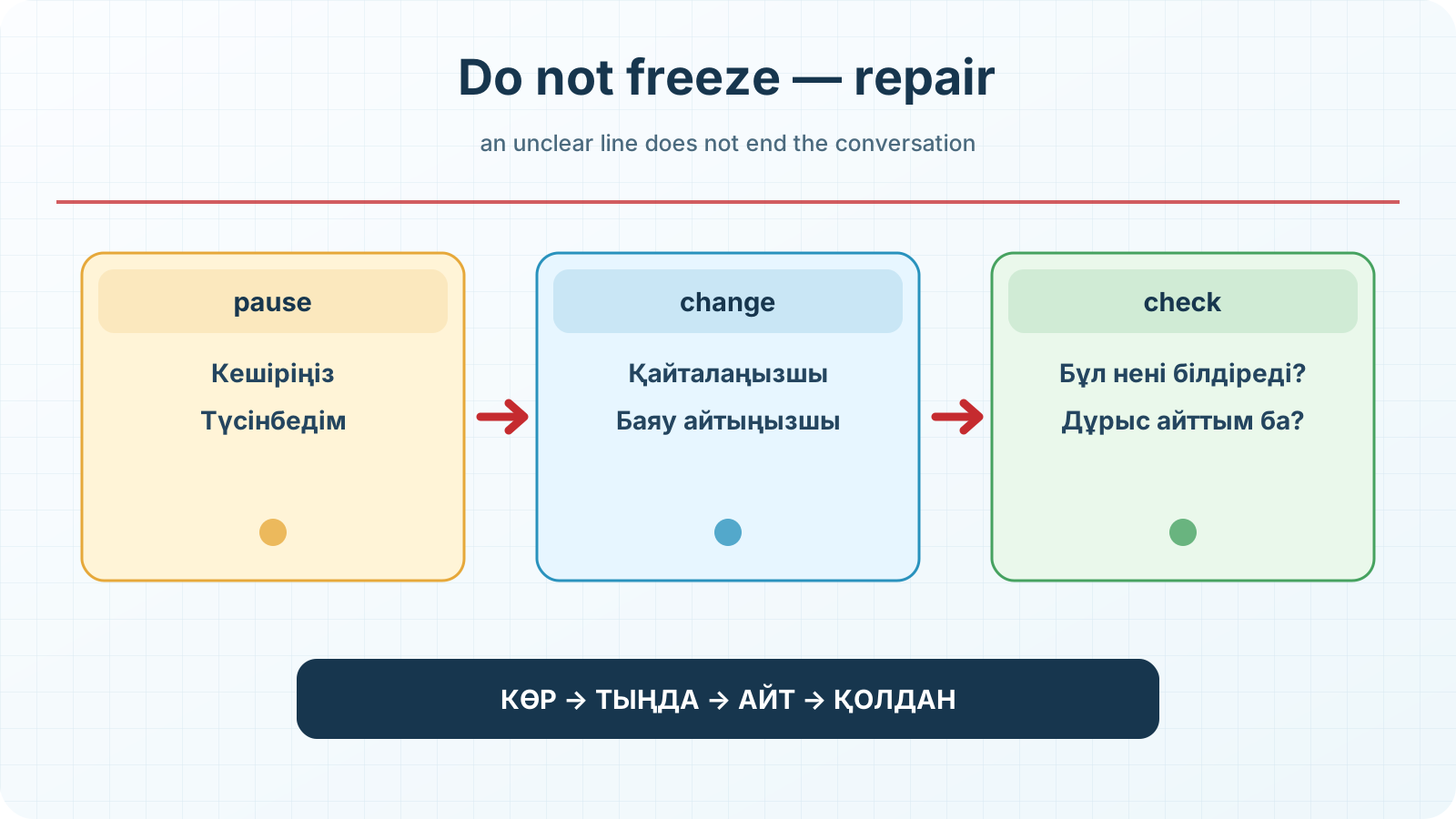
The repair route has three actions. Pause: Кешіріңіз, түсінбедім. Change the conditions: Қайталаңызшы or Баяу айтыңызшы. Check: Бұл нені білдіреді? or Дұрыс айттым ба?. The -шы/-ші in these ready forms softens a request. A calm pause afterwards gives the partner room to respond.
The support signal
ТОҚТАТ → ЖАҒДАЙДЫ ӨЗГЕРТ → МАҒЫНАНЫ ТЕКСЕР
The limit of the rule
There is no need to fire all six lines at once. Select the one that identifies the obstacle. Қайталаңызшы may not help when speed is the problem; ask for slower speech instead. Keep the respectful form in a formal setting. Repair does not replace listening: after the response, say which part you understood.
Predict before the explanation
Imagine three obstacles: the last word was inaudible, one word is unknown, and the whole line was too fast. Before reading further, choose one repair for each and state the change you expect from the partner.
Rebuild it without the prompt
Hide the page and rebuild a three-step ladder: pause, change, check. Put one Kazakh line on each step. Act out a case where the first request fails and move to another step without switching to English or Russian.
Find and repair the mistake
A learner does not understand but answers Иә to keep the conversation moving. This creates false confirmation. Replace it with one repair line, wait for the changed input, and restate the understood part. In another case, reduce a pile of requests to one precise request.
Transfer to a new setting
Ask a partner to deliver a familiar introduction quietly, quickly, and with one new safe word. Choose a different repair each time. The partner responds to it and you prove understanding with a short restatement.
Change to the My World project
Add an If It Is Unclear panel to the project with three buttons or cards: repeat, slow down, and explain a word. Write the expected partner action beside each. Check that colour is not the only carrier of meaning and that every line is readable on a phone.
Exercise
Required. Write an eight-line dialogue containing one misunderstanding, a suitable request, changed speech from the partner, and confirmation of recovered meaning. Perform it a second time without reading.
Transfer check. Receive an unexpected line made of familiar words and choose the repair yourself. Explain why another repair would be less precise.
Retrieval after 1, 7, and 30 days
- Tomorrow rebuild the three steps and one phrase on each.
- After seven days, deliberately use one repair in a one-minute conversation.
- After thirty days, hear a new short recording and choose a repair without the list.
Next lesson: Mastery checkpoint: a first meeting without a script
If you have found a mistake or a typo in this article, tell us about it
Comments (0)
Log in to leave a comment →
No comments yet. Be the first.