


Kazakh: start speaking from the first meeting Lesson 2 of 16
Nine distinctive letters: see, hear, and say them
You will connect nine Kazakh letters to the lips, tongue, back of the mouth, and nose, then read short words without replacing their sounds with Russian or English ones.
This text was translated with AI.
Where we are on the map
The map holds the whole route; we will add its details one at a time.
A real situation
A sign says Қазақ тілі, yet a beginner reads it as if the letters were ordinary Russian ones. The meaning may survive while four important contrasts disappear. We are not chasing perfect pronunciation in one sitting. We are building a map of where each sound starts, what the lips do, and which clue lets the ear separate it from a neighbour.
Listen and respond
Listen: Әке, іні, ұл. — three tongue positions: Ә, І, Ұ
Listen: Өмір, үш күн. — rounded lips: Ө and Ү
Listen: Қазақ тілі. — the deep Қ and unrounded І
Listen: Ғалым жаңа кітап оқыды. — back Ғ and nasal Ң
Listen: Қаһарман. — the light breath of Һ
How to practise
Press the button and look away from the text first: catch the overall meaning and just one new sound or structural choice. On the second pass, follow the phrase and the support map with your finger. Hide the model, rebuild it from two or three signs, and say a version of your own. Finish with a partner or a voice recorder: respond without preparation and note one place where you paused. Return to that link only instead of rereading the whole lesson.
The precise model
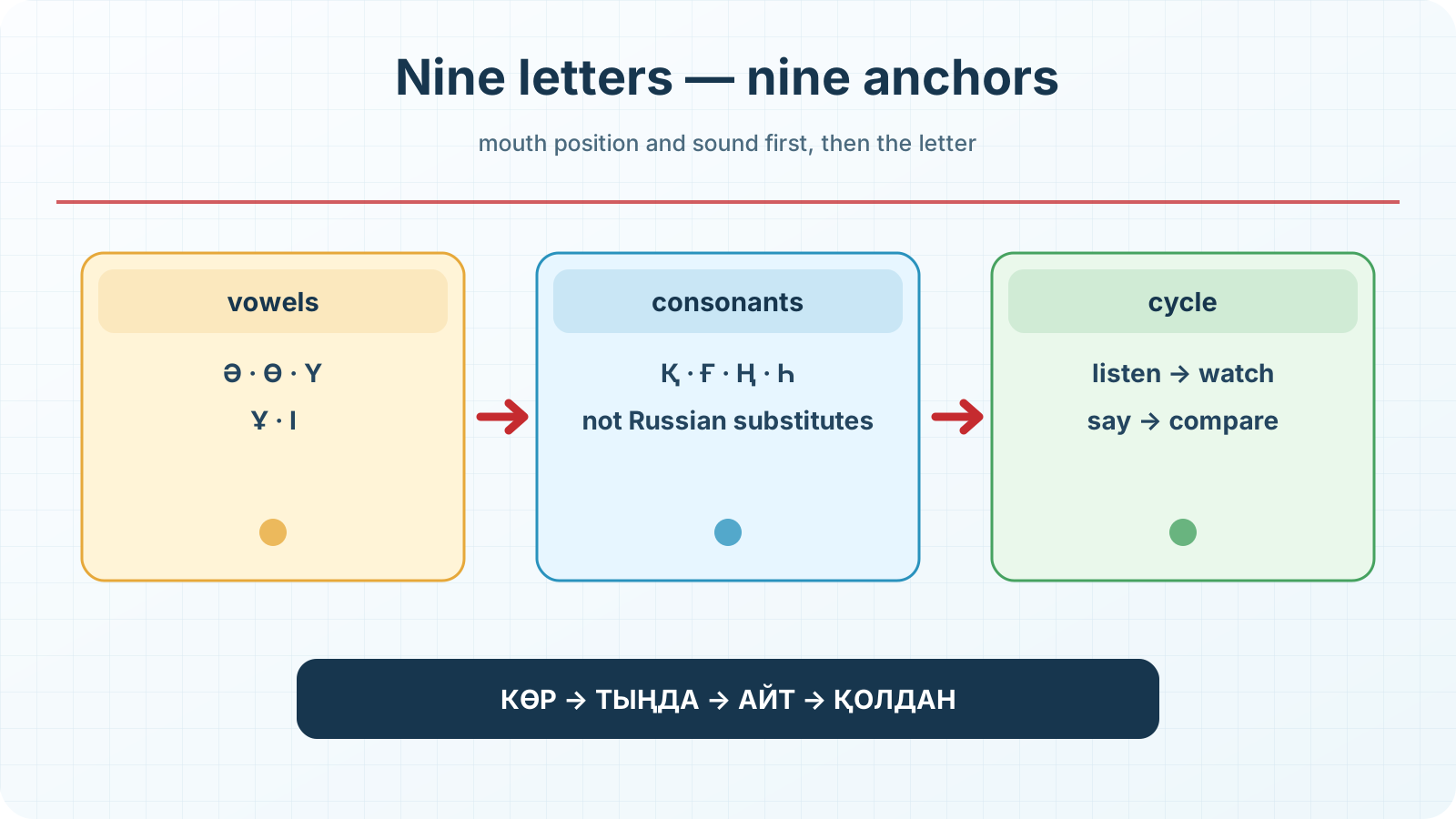
Five vowels give five anchors. Ә is open and forward; Ө and Ү keep the tongue forward while the lips round; Ұ is deeper with rounding; І is deeper without rounding. The four consonants use different cues: Қ forms farther back than К; Ғ adds voice and friction there; air passes through the nose for Ң; Һ is a light breath rather than a heavy substitute. Say each item slowly and then at an ordinary pace.
The support signal
Ә · Ө · Ү · Ұ · І | Қ · Ғ · Ң · Һ → КӨР · ТЫҢДА · АЙТ
The limit of the rule
A mouth description is an anchor rather than a pronunciation diagnosis. A sound shifts slightly beside other sounds, speakers have different voices, and the device voice cannot replace live listening. Do not search for one exact English or Russian substitute for every letter: a substitute erases the contrast that the learner needs to hear.
Predict before the explanation
Look at күн, ұл, өмір, and әке. Before listening, group them by two clues: whether the lips round and whether the tongue is nearer the front or the back of the mouth. Check each prediction with one word, leaving a short silence before you imitate it.
Rebuild it without the prompt
Draw two rows from memory. Put the five vowels Ә Ө Ү Ұ І in the first and mark rounded lips beside the rounded ones. Put Қ Ғ Ң Һ in the second with signs for the back of the mouth, voice, nose, and breath. Open the map only after recall and repair one missing connection.
Find and repair the mistake
A learner writes the words with ordinary Russian letters and says that only their appearance changed. Find the four places where a sound contrast disappeared, restore the Kazakh spelling, and explain what the mouth or nose does for two of them. Copying the finished phrase is not enough evidence.
Transfer to a new setting
Find the nine letters in a public sign, a school or shop name, or another safe open text. Choose two unfamiliar words, predict their sounds from the letters, and then check a dictionary recording or a speaker. There is no need to publish a person’s name or a private address.
Change to the My World project
Add a small How to Say It panel to the project card: the nine letters, five safe sample words, and a note about your hardest contrast. Make a private ten-second recording and date it. In seven days, compare the clarity of the contrasts rather than the beauty of the voice.
Exercise
Required. Choose five Kazakh words that together contain all nine letters. Mark one observable pronunciation cue for each word and read the list twice: slowly and as one connected phrase.
Transfer check. Take two more words absent from the lesson and explain why replacing their Kazakh letters with Russian or English approximations changes the sound.
Retrieval after 1, 7, and 30 days
- Tomorrow rebuild the nine letters and four consonant signs without the page.
- After seven days, record the same five words and compare only how distinct the sounds are.
- After thirty days, find all nine letters in a new short text and read it without marking it first.
If you have found a mistake or a typo in this article, tell us about it
Comments (0)
Log in to leave a comment →
No comments yet. Be the first.