


Kazakh: start speaking from the first meeting Lesson 50 of 56
Agree on a time and confirm the meeting
You will propose a time, check convenience, and end with an explicit confirmation.
This text was translated with AI.
Where we are on the map
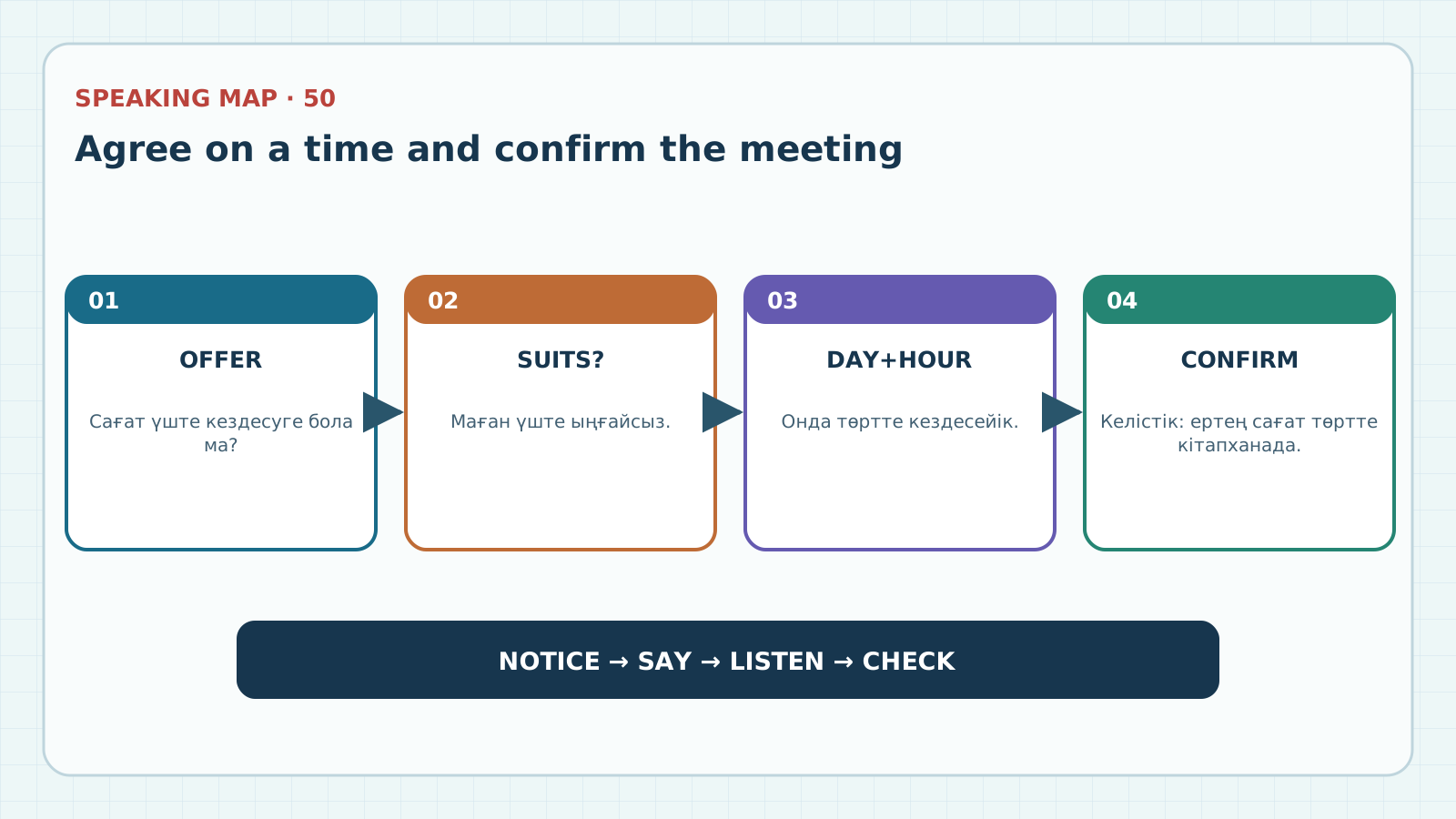
This support map leads from a situation to a solution: notice the need or obstacle, choose a precise utterance, hear the reply, and check that both people understand the outcome alike. Trace the path with a finger, hide the map, and rebuild it from memory. Each node serves a real exchange rather than the memorisation of a rule name.
A real situation
The team can discuss its model only after class. Two people are free at different times. ‘See you tomorrow’ leaves the place and hour unknown.
Listen and respond
Listen: Сізге қай уақыт ыңғайлы? — What time suits you?
Listen: Сағат үште кездесуге бола ма? — Could we meet at three?
Listen: Маған үште ыңғайсыз. — Three does not suit me.
Listen: Онда төртте кездесейік. — Then let us meet at four.
Listen: Кітапханада кездесеміз бе? — Shall we meet at the library?
Listen: Келістік: ертең сағат төртте кітапханада. — Agreed: tomorrow at four at the library.
How to practise
First play the recording without reading the Kazakh line. Decide whether the speaker is requesting, replying, explaining, or confirming. Then uncover the line, repeat it as a whole after the speaker, and point out the word that changes the meaning. On the third pass, alter one condition and say your own line. If a partner understands it differently, ask for clarification; that is a communication skill.
The precise model
An arrangement has three checkable parts: day, exact time, and place. Сізге қай уақыт ыңғайлы? invites a choice. -уге бола ма? proposes an option; the question itself is not agreement. Finish with Келістік: ... and all three details.
The support signal
ҰСЫНЫС → ЫҢҒАЙЛЫ МА? → КҮН+САҒАТ → РАСТАУ
The limit of the rule
Сағат үште names the meeting time; сағат үшке can mark a deadline ‘by three’. Check the meaning instead of swapping endings mechanically. Do not publish a child’s real timetable.
Predict before the explanation
Before reading the model, write your first response to the situation. Which facts are known and which are guesses? Choose an action supported by what you know. After the explanation, compare not only word endings but also whether the request or agreement kept its intended meaning.
Rebuild it without the prompt
Hide the page. In one minute draw the four nodes, say a familiar line, the partner’s reply, and your answer. Then change one fact such as time, place, or available object and travel through the path again without the example.
Find and repair the mistake
After asking Кітапханада кездесеміз бе?, a learner records the meeting without a reply. Wait for an answer and repeat the complete arrangement.
Transfer to a new setting
Take a new card: the library is closed at the proposed hour. Offer another place and confirm the revised plan.
Change to the My World project
Add a fictional team meeting with day, hour, place, and confirmation from both sides. Do not record students’ real addresses.
Exercise
Find one common time among three options, clarify the place, state the full arrangement, then renegotiate after a condition changes.
Retrieval after 1, 7, and 30 days
- Tomorrow rebuild the four nodes and speak a new two-line exchange without reading.
- After seven days solve an unseen task with a partner; they must restate your final plan in their own words.
- After thirty days return to the project card, change one condition, and repair an unclear utterance yourself.
If you have found a mistake or a typo in this article, tell us about it
Comments (0)
Log in to leave a comment →
No comments yet. Be the first.