


Physics around us: from a first experiment to your own lab Lesson 57 of 66
Why can a magnet lift a clip but not every coin?
Test what an object is made of rather than its colour or weight, and begin the magnetic page of the lab notebook.
Situation and prediction
A steel paper clip, aluminium foil and a plastic lid lie on a table. The magnet lifts the clip although the foil is shinier. Predict each result before reading on. If you do not know a coin’s composition, do not promise attraction: different issues use different alloys.
New words, step by step
A magnet produces a magnetic field. A magnetic interaction is an effect on another magnet or a suitable material without direct contact. Iron, some steels, nickel and cobalt can be strongly attracted; wood, plastic and aluminium do not behave that way in this ordinary test. Material means what an object is made of, not its shape or colour. A magnet does not attract every metal: aluminium is a metal too.
Working through supplied data
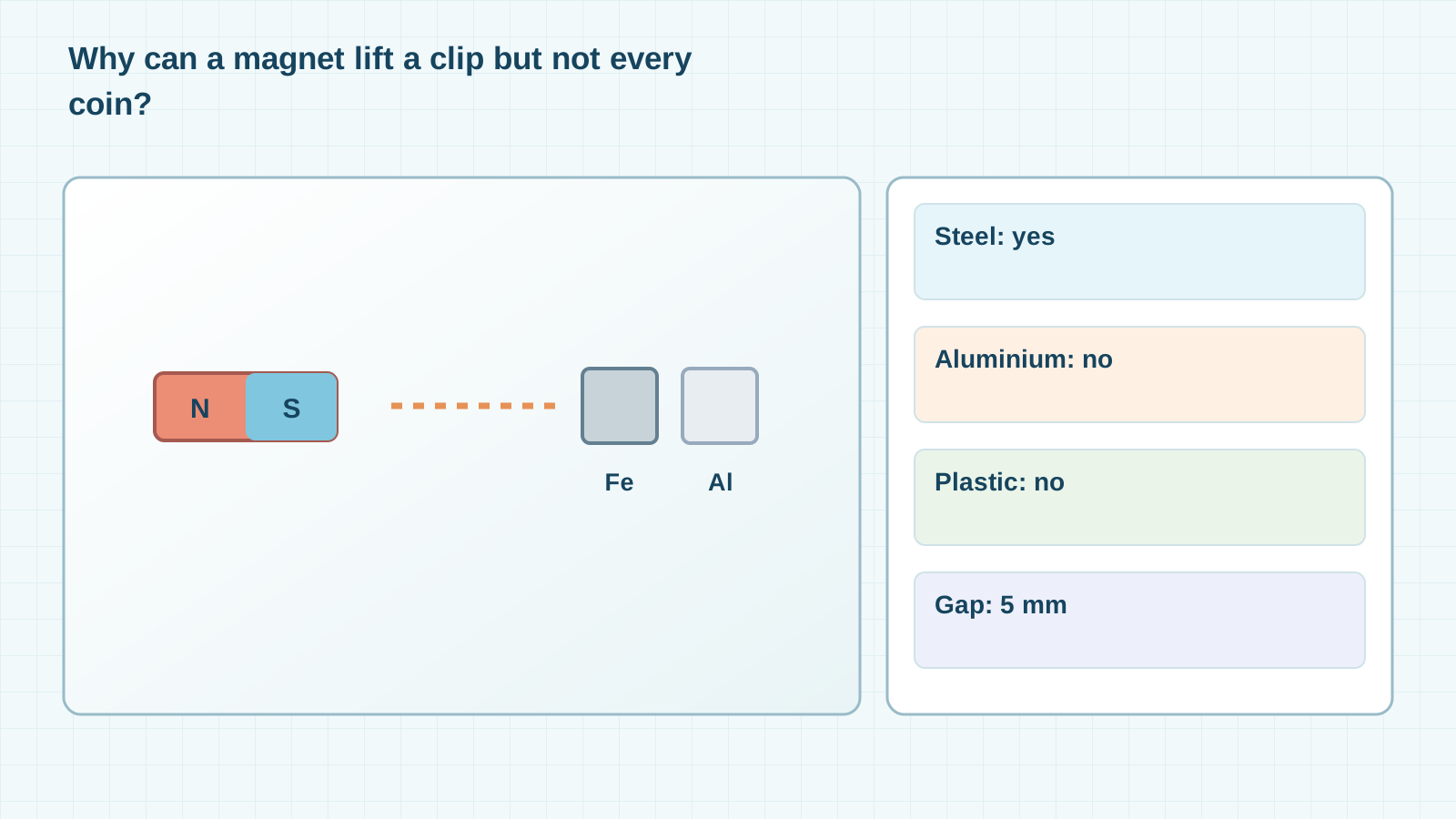
Compare three items with the same 5 mm gap. Supplied example data: steel clip — noticeable attraction; aluminium strip — none noticed; plastic lid — none noticed. This is a qualitative observation, not a force measurement. If a coin is lifted, check its composition before making a claim about all coins.
A safe check
Set three small objects on a table and approach each from the same side with an enclosed classroom magnet. Change only the object and keep the gap similar. Keep strong magnets away from electronics, medical implants and small children; do not dismantle devices for magnets. Without equipment, mark a filled table as predictions rather than results.
Where the reasoning breaks
The claim ‘magnets attract all metals’ fails for aluminium foil. Another mistake is to picture a field as a visible fluid surrounding the magnet. A field is a model of an effect; next we will map its direction.
Support diagram
Transfer to a new case
Two screws look equally silver: one is steel and one aluminium. What do you predict? How would you test an unlabelled pair, and why can colour alone not settle the question?
Check your understanding
Close the explanation and say in your own words what was really observed, which figures were supplied for teaching, and which conclusion remains a prediction. Change one condition and predict the result before rereading. If it disagrees, find the first step where your reasoning parted from the diagram. A strong answer names the model’s limits rather than just a correct word or number. You can do this check on paper, without equipment or registration.
Lab notebook entry
Add a page to My World Lab Notebook. Record the question, a prediction made before testing, a sketch and a table of conditions. Keep actual observations separate from supplied teaching numbers. In the final line say what changed, what stayed constant, what the evidence supports and what it does not yet prove. If you did no experiment, label the work ‘calculation from supplied data’ or ‘prediction’, never ‘measured’.
Next lesson: Why do two magnets sometimes stick and sometimes push apart?
If you have found a mistake or a typo in this article, tell us about it
Comments (0)
Log in to leave a comment →
No comments yet. Be the first.